Progress: 11 years of running

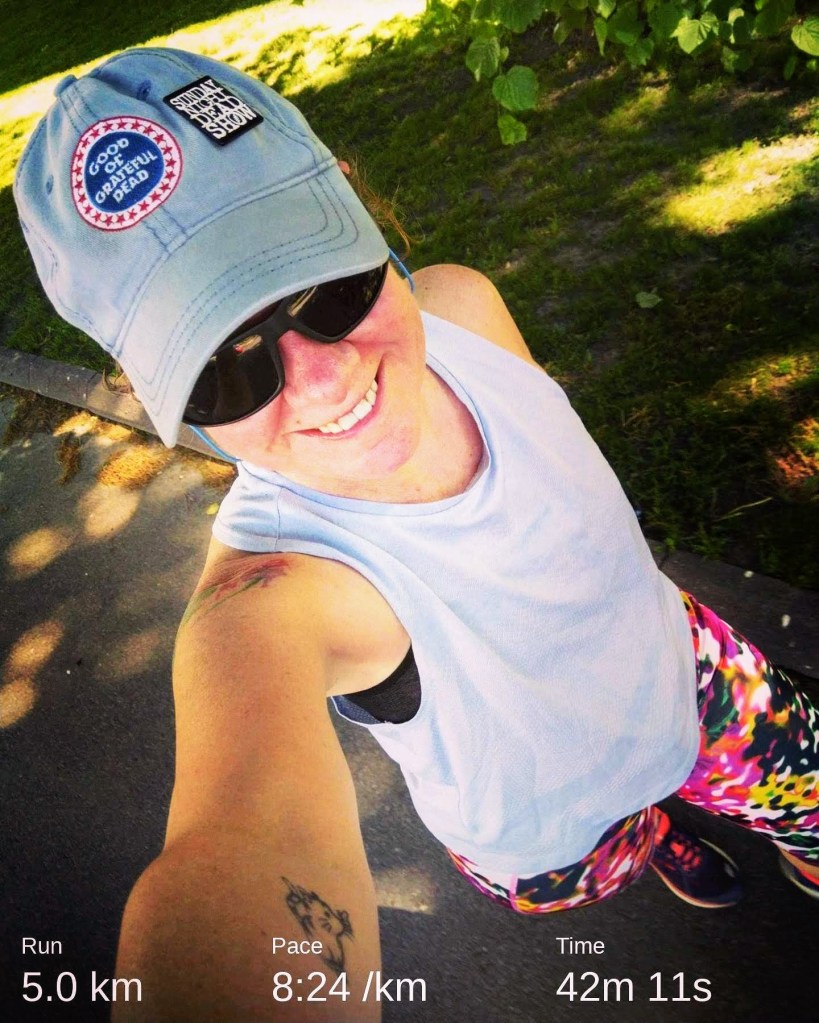
I love running. I really do. And, that surprises me. Still.

In July 2012, a crafting friend of mine was training for the Helsinki Midnight Run and invited me to join her on a run. Realising that I could certainly do with a bit of physical activity and understanding that I was far from in shape, I accepted her invitation. That first ‘run’ was more walking than running, but it was a start. Without much training and far from confident, less than two months later in September 2012, we finished that 10-k run dead last, neither one of us running the entire route, but simply focused on finishing.

Since then, I’ve logged a lot of miles (my SportsTracker app tells me, 11 203 km in total). But, it wasn’t until 2017 or 2018 that I really approached anything resembling consistency in my running habit, although winter running was still a bit more challenging. I was a run-walker, occasionally managing a 20- or 30-min run without walking, and a few very slow 5ks here and there.

Something shifted in 2020, however, moving from sporadic to consistent runs. By 2021, I became a daily runner, affectionately known in running circles as a ‘streaker’. [No, I am not a ‘naked runner’, also a term with a very different understanding amongst runners.] I blame Covid-19 — not testing positive, but the luxury of time in my schedule once commuting was no longer necessary, along with the desire and need to do something besides sit behind a computer all day every day, prompting me to go outside every day for a run. Run streaks — running at least 1.6 km or 1 mile daily — challenge and motivate me in equal measure, and have taught me that smaller goals help achieve much grander and seemingly impossible, unattainable ambitions.

Since 2021, running a full 10k was no longer impossible — I’ve achieved that once unachievable target. Just running daily for months on end, once unthinkable, is now normal; not running is abnormal. My current run streak, during which I have run on 118 consecutive days as of yesterday, is inching ever closer to my longest run streak (run streak day or RSD 173, which was halted thanks to a rogue appendix and emergency appendectomy last September). Barring injury or illness, my plan is to reach 174, hopefully reaching RSD 180, and then we shall see. Another goal is to run a 5k in 30 min or less (I’m currently inching closer, with new personal best of 33:07, down from ~42 min just a few years ago). My running goals shift, and that’s absolutely fine.

Had you asked me in 2012 if any of these things were possible, I’d have told you that you’re crazy.

None of this happened overnight. Comparing the woman who took those first tentative steps towards running in July 2012 to the woman writing this who kitted up for yesterday’s run astounds me. I see (and feel) how far I’ve come. It’s been an incredibly long journey, not just in terms of miles, but in terms of the mental battles I’ve fought on various runs, losing some, winning others. More than anything, I am much more confident in my ability to set running goals, forgiving (of myself) when I abandon or alter them regardless of reason, and knowing that not every run will leave me feeling awesome either about myself or the world. Some runs sucks, just like some days suck. But, I now know I can achieve the goals I set for myself, bit by bit, navigating peaks and valleys along the way, eventually reaching that destination I’ve mapped out for myself.

I’m currently reading Running Like a Girl, by Alexandra Heminsley. So much of her own journey resonates with me, from those first awkward runs to not knowing or understanding the specific lingo and language specific to runners, terms like pronation, wicking fabric, pace or hydration or fuelling needs, chafing, and the all-important but simple understanding that consistency matters and that it takes more than one run to make any progress at all.

Running has afforded me some mental space to process … shit. My own shit. I use that time on trails and paths working towards my running goals to also work through various problems and concerns in the rest of my life, to disentangle and leave behind the day’s woes. And, I yet to regret a run, even the bad ones. Weirdly, I also approach my daily life like I do most runs, particularly the harder ones. It’s all about the simple action of continuing to place one foot in front of the other, one step at a time, until I get where I need / want to.

But, running daily has also allowed me time to step away from everything else in life and this world, and simply focus on run the run I’m in, sometimes focusing on a single solitary kilometre. No comparison to others, beyond a comparison to myself. No competition or race, other than attempting to outpace myself.

My approach to running works for me, and demands I find my own path in order to reach that finish line, whatever and wherever it is.

And, these lessons have so much relevance to life as well. To my life specifically.

I have learned these last several years that I can do hard things. More so, the hard things seem less daunting more manageable and reasonable when broken up into smaller bits. Just as there have been days when simply getting out of bed has been hard, the hardest part of some runs has simply been kitting up or getting out the door. But, I also know that I can do all of these things, and then some.

Over time, hard things become easier. More accurately, I become stronger. Because I *am* stronger.

And, more than anything, this is why I love running.

The Power of Writers

Yes, I read. A lot. It opens me up to other worlds and perspectives. I embrace that possibility, particularly since travelling over the past few years has been impossible and in my own life rather limited over the last decade or so.

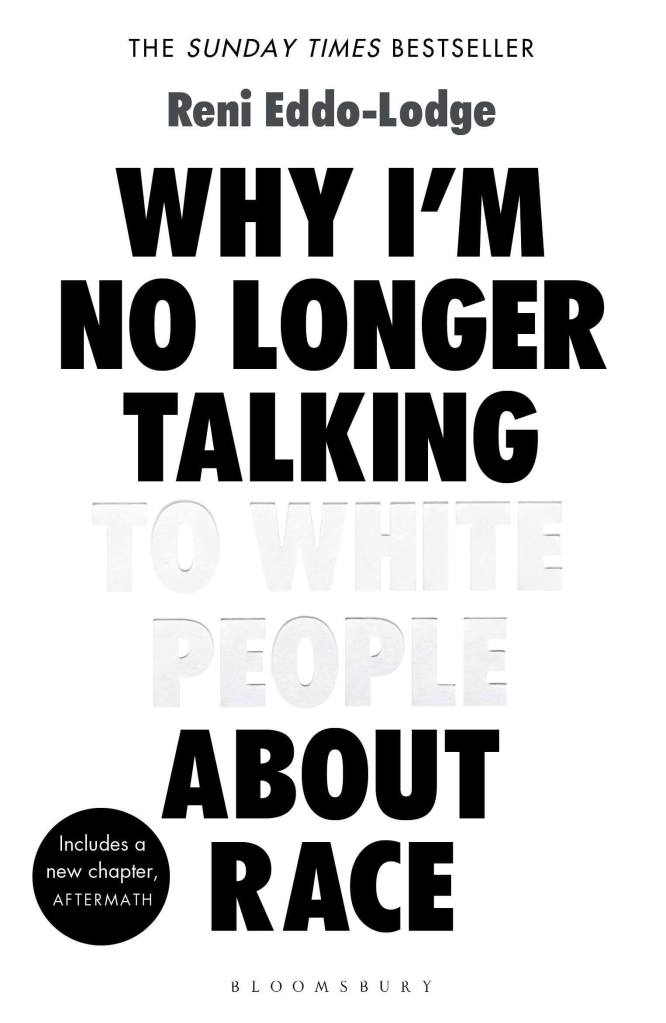
Reni Eddo-Lodge‘s book, ‘Why I’m No Longer Talking to White People About Race‘, is still one of the most important books I’ve read in the last few years. One of my students recommended it to me long before the murders of George Floyd, Breonna Taylor and Ahmaud Arbery. I bought it shortly after that recommendation and it sat on my shelf until the summer of 2020. Whilst focused on race history and racism in Britain / the UK, there are so many parallels to our history in the US, a painful yet important-to-understand history if we have any hope of ever truly creating a society based on justice and equity.

As inspiring as the summer of 2020 was, 2022 feels rather disappointing given … well… everything. From additional book bans and a paranoia around CRT to the House GOP voting together to not support efforts to root out white nationalists and Nazis from the military and police forces, it’s depressing in many ways.

Recently, I was fortunate enough to spend a rather intimate few hours at a reception for one of my writing heroes, Colson Whitehead. A quote of his was mentioned in the conversation from an interview he did with the Helsinki Sanomat, something to the effect that he viewed his place as a writer as not so much able to change attitudes or the world [I’m paraphrasing and likely butchering the conversation]. It struck me as odd, since I have found so much of his writing as well as the writing of others fundamentally shift my world and my perspective. And, historic events unknown previously to some after being fictionalised became known to others. Perhaps it isn’t for me to say how any one author’s works affect the broader public. But, I do feel like whether through random musings and social commentary or fictionalised worlds created, writers all have the power and ability to make us think and perhaps think in ways different to what we’ve always ‘known’. That ain’t nothing.

Following Reni’s lead, I am inclined to rely on the words of another writing hero, James Baldwin, a man long dead, but still painfully and rather chillingly seemingly more relevant now:

“The bottom line is this,” James Baldwin told the New York Times in 1979. “You write in order to change the world, knowing perfectly well that you probably can’t, but also knowing that literature is indispensable to the world. In some way, your aspirations and concern for a single man in fact do begin to change the world. The world changes according to the way people see it, and if you alter, even by a millimetre, the way a person looks or people look at reality, then you can change it.”

From Reni Eddo-Lodge on anti-racism: ‘The backlash amazes me’

#blm
#antiracism

On ‘The Man They Wanted Me To Be’ by Jared Yates Sexton

The Man They Wanted Me to Be: Toxic Masculinity and a Crisis of Our Own Making by Jared Yates Sexton

My rating: 5 of 5 stars


I’ve been following Jared Yates Sexton on Twitter and other outlets for several years. Given his own background and my own, there’s a certain resonance that echoes loudly and clearly for me in his writing and works. His voice makes sense out of chaos, particularly since he’s living in a country which seems like a complete strange land filled with strangers to me after decades of living aboard despite always and first most being my home. It doesn’t hurt that he is an incredibly beautiful writer.

This book is equally informative and heart-breaking. I honestly just want to give him a giant hug and the offer of a shoulder because goodness me he has lived through some shit. I honestly had no idea.

But, I also want to place this book gently into the hands of so many of the men I’ve known in my life, beginning with most of those I grew up with, beginning with my uncle. Toxic masculinity does not merely hurt women — it’s just as harmful and dangerous to the men who must adhere to and live up to it. Perhaps even more so as evidenced by the self-harm and suicide they experience or rely on in order to ease their own pain.

I’ve long held the belief and attempted to live by the ideals that feminism is not simply a practice for women. If we as a society hope to live up to the idea of equality and justice for all — and I do mean all of us — then feminism must enfold men as well as women.

This books is not just a memoir or a survival tale, documenting and recounting one man’s journey through toxic masculinity, a journey he continues to traverse. It’s a treatise on how we might begin to heal very, very deep, festering, unhealing wounds. It’s a warning and an offer of hope of what we might lose if we don’t begin to unburden ourselves of ideals for men (and women) that relegate half of us to living up to standards which are far, far from possible and the other half of us as mere vehicles to reproduce a system and serve as shock absorbers for the inevitable rage that will bubble up from unending frustrations.


View all my reviews

On ‘This Land Is Our Land’ by Suketu Mehta

This Land Is Our Land: An Immigrant’s Manifesto by Suketu Mehta

My rating: 5 of 5 stars


This book resonated with me on so many levels. I hope that everyone I know, particularly those who think of migrants / immigrants as individuals to fear, reads it. With an open mind and an open heart.

This week marks the beginning of the twenty-third year I’ve lived in a country other than my home country. And, I would not change a thing. Perhaps that is why I read it both with a sense of hope and a longing for my own home.

I am and always will be a citizen and product of the United States, and I remain steadfast in my hope for her future as a country and for her people, whether they’ve lived there for millennia or recently arrived. But, I also understand that as much, as I love her as a nation, both her troubled and horrific as well as impossibly hopeful history, that we as a people have much to learn from others and that we must look at ourselves not as exceptional but as one of many people who share this big beautiful blue planet.

I can only speak of my experiences as an American living abroad. I view the wealth of our nation in skewed terms these days given my own personal lens. Whilst migrants exist everywhere, those seeking a life in the US occupy a central position within this book.

Our richness as a nation does not come from simple monetary wealth, but in the richness of the various people who arrive on her shores in search of something better and brighter for themselves and their children. To me, the diversity of our people offers glimpses into the richness of us as a species. Our ways of life. Our traditions. Our glorious, luscious, delicious foods. And, this melding of ideas and ideologies as well as cuisines offers us bits and pieces we may both carry onward and leave aside or savour so completely and fully.

Yes, I am an American. But, I am also one of millions of migrants in this world. My circumstances are my own, but the reality of being a migrant — both setting up and creating a new home whilst missing that which I left — is a reality I share with every other migrant in this world. All we ever hope to find is a place of peace and acceptance, and an opportunity to flourish and survive. Not as outcasts or others, but as valued and valuable members of the communities we now choose to call home.


View all my reviews

On ‘Surviving Autocracy’, by Masha Gessen

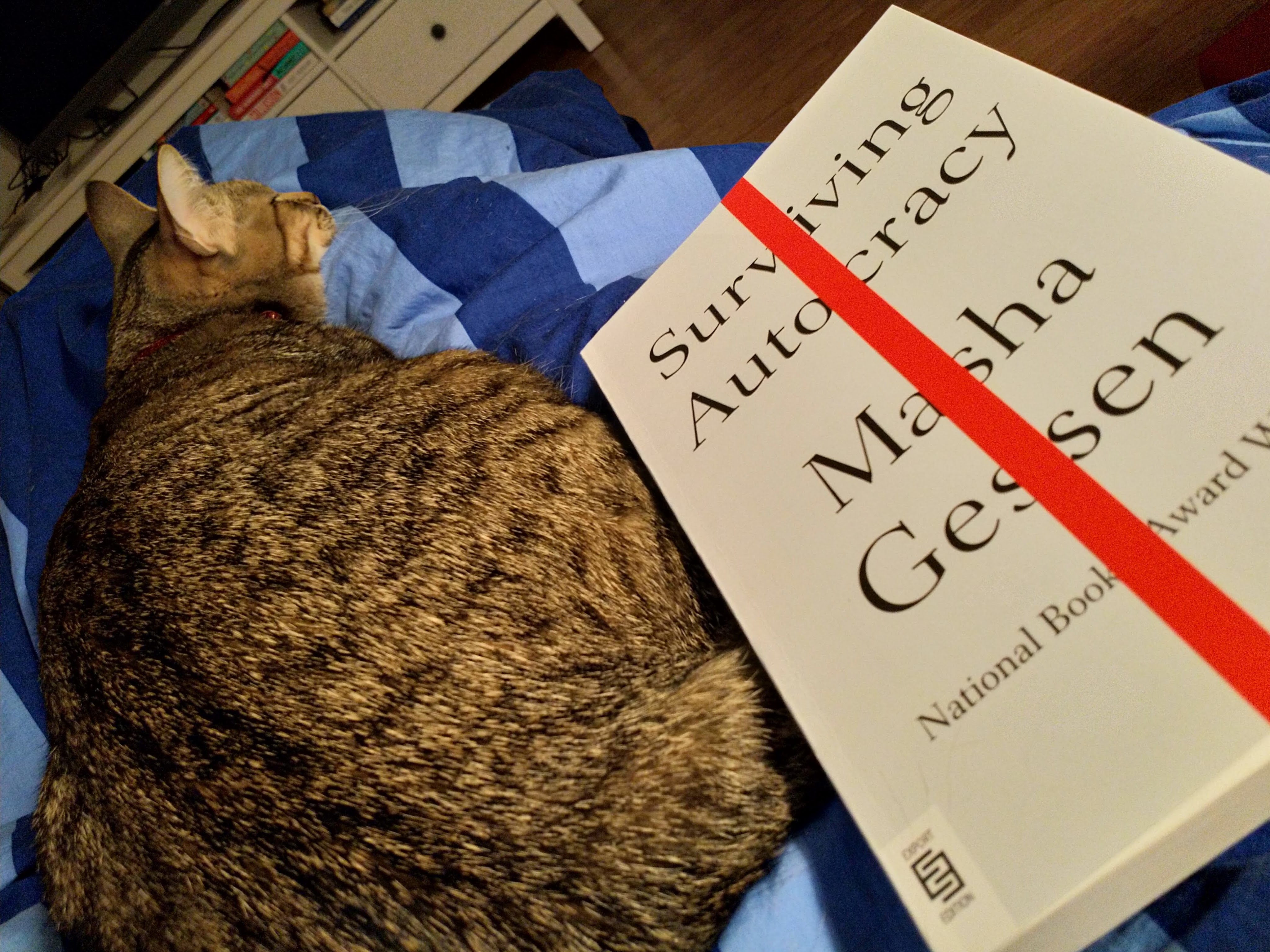
I did not intend on sitting down and ploughing through the remaining two-thirds of Masha Gessen‘s latest book, Surviving Autocracy, yesterday evening. But, that’s precisely what I did.

I regret nothing. (Although I did completely lose track of time and miss my weekly Ashtanga Zoom class, damnit. Let’s talk about white privilege and first-world problems a bit later, eh?)

It’s incredible to me how much of the past four-plus years have faded into our distant, collective memory. So, so much happened during the Trump administration, so many things which are frankly unimaginable, and so, so many things frankly made infinitely worse during the pandemic.

And, yet, so many of those atrocities were normalised rather efficiently and easily, as we moved from one insanity to another at a breakneck, mind-numbing and soul-crushing speed during his presidency (and seem to be continuing in his post-presidency period). It seems only fitting that now, just a week after his reign of terror (and I chose the word specifically) has ended officially he will also be tried in the Senate for a Second Impeachment. [It is not entirely lost on me or many that 45 Senators whose lives were also put in harm’s way during the Capitol siege voted to not proceed with that Impeachment trial because of course they did. I’m looking at you, Senator McConnell. Directly at you.]

Congratulations, asshole. You truly are the best at impeachments. No one single president has more, and you have 50% of them all to yourself. Well done.

Masha Gessen lays out with surgical precision just how utterly dangerous and quickly all of this has happened. And, I’m guessing, somewhat unintentionally provides sufficient evidence for why we are not quite out of danger of succumbing to Trumpism or quelling full-fledged and inescapable autocracy just yet. Chapter after eye- and wound-opening chapter, and in each of the three primary sections, Gessen provides more than ample evidence that we are in the midst of surviving autocracy.

Years of gaslighting, some of which predates Trump’s ascension, and more than 30,000 lies — not tiny embellishments or repeated falsehoods, but full on lies — and we are still dealing with those untruths, thanking no longer from his Twitter account. But, they are there. And, they continue, perhaps articulated a bit more eloquently and in a better package from a more polished messenger. But, those lies and the gaslighting continue. And, so many lap them up all for individuals so reckless, so vile and so callous and with a blatant disregard for lives of others in their charge.

But, this book is not a pity party or focused entirely on the rage-inducing history we are living. There is hope in between the despair. For instance, Masha applauds the civil society institutions and those with the moral authority who continually and unabashedly stood up to the injustices and atrocities and crimes these last four-plus years. Those institutions, sadly and surgically decimated in Putin’s Russia before they really had an opportunity to flourish and gain a foothold in Russian society and so precious to our own American experiment both at home and abroad, largely saved us. Yet, even they are exhausted and battered and bruised after four-plus years of battle. This final year, specifically, the final moments of mayhem notwithstanding, it’s a wonder any of those civil society agencies or agents still exist. But, resistance is a long war, not a single battle. And, that continued, tireless and sustained pushback has helped us perhaps prevented us from sliding in to complete autocracy. We still have far to go, however, and we can’t forget that more than 400,000 individuals have now lost their lives to Covid-19 in the USb alone from the inactions and lies spun by a White House and administration who cared not about us, but a great deal about themselves and holding on to power by any means necessary.

Since Masha finished this book in April of 2020, they did not have the opportunity to add their reflections on the protests that sprung up nationally and globally following the 8-minute live-lynching of George Floyd or the slaughter of Breonna Taylor of the hunting down and slaughtering of Ahmaud Arbery. Nor did they have an opportunity to fold into their book the genuine attempted to coup in the wake of the November elections and the siege of the Capitol as Joe Biden and Kamala Harris’ wins were verified, albeit somewhat delayed by those who sought to undermine free and fair(ish) elections in the US. Both of those broader events and the administration’s role in them are incredibly relevant to Surviving Autocracy. I’ll be looking for those reflections.

To me, the power of this book lies not just in Gessen’s arguments and the weaving together of a narrative that fits these last four-plus years flawlessly alongside the brutal realties of autocratic leaders elsewhere in the world. The power lies in Masha’s own history. Maybe it takes an individual who stood up to and faced Putin to rip off the mask of ugliness in a second homeland for us all, showing us those parallels we often think of as ‘other’, when in fact it is ‘us’ in this specific moment. That is, it takes the clarity of hindsight after witnessing an autocratic takeover of your homeland once to lay it all out for those who are too naïve or too hopeful or too optimistic and blindly faithful to an idea to realise that it is already happening to them in your second home.

This is an important book. Along the lines of Timothy Snyder’s On Tyranny and Sarah Kendzior’s Hiding in Plain Sight. It’s also tragic. And, that’s truly what these last four years have been: tragic, and sickeningly real.

But, we have survived (most of us), and we must endure and ensure that this never happens again. First, however, we really must stop the autocratic designs being laid out so carefully from taking a firmer hold over us and over those institutions we trust to prevail and protect us.

It might take all of us. But, we can survive autocracy.

On ‘Hiding in Plain Sight’ by Sarah Kendzior

Hiding in Plain Sight: The Invention of Donald Trump and the Erosion of America by Sarah Kendzior

My rating: 5 of 5 stars

Sarah Kendzior is a writer and journalist I admire, for her ability to cut through the noise and get to the point. For her ability to pinpoint larger, more systemic issues which remain largely ignored by far too many. The View From Flyover Country is necessary reading. And, so is this.

Despite buying this book shortly after its release, I put off reading it for some time because I knew it would be too enraging and I was too fragile. I knew, in part, it would break me just a little bit more.

That’s quite something given where we have collectively been these last five years, how we got here and where we are headed.

However, finishing this book the morning after Trump was impeached for the second time, after a mere 10 of 207 House Republicans voted for that impeachment, has left me shattered.

Why?

Because many of those remaining 197 Representatives, all of whom swore an Oath to uphold and protect the US Constitution, despite having survived that horrid event and admitting during the debate that the President was directly responsible for inviting the siege and encouraging the attempt to overthrow the Legislative branch of the government, still voted against impeachment.

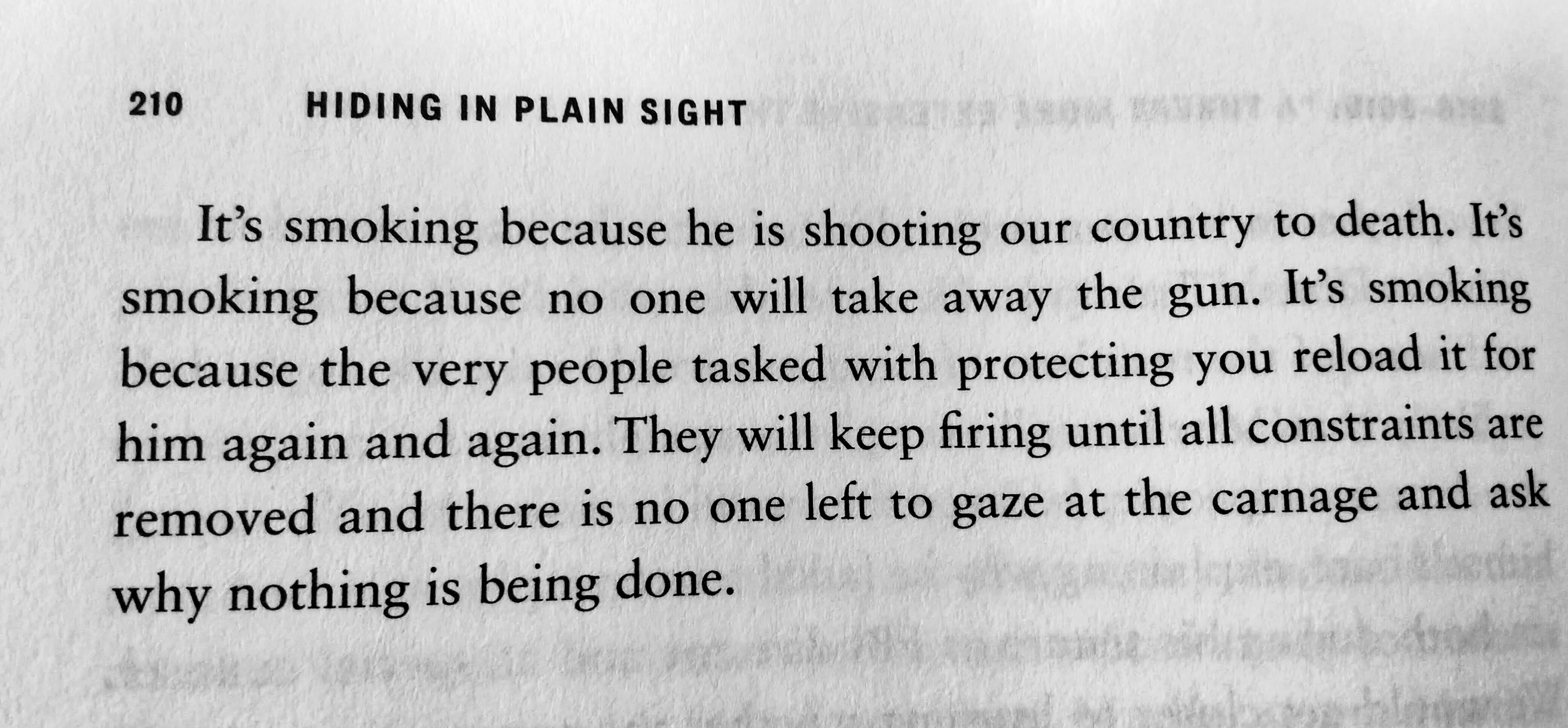
Because, yet, another smoking gun from the President himself was ignored. And, whilst individuals in positions to hold him accountable, individuals who feel he is not fit to lead or occupy the Oval Office, watched him hold that smouldering gun and refused to use the very tools in place to preserve the rule of law and those precious checks and balances they claim to hold up as so sacred.

They did nothing. One hundred and ninety seven of them did nothing.

As enraging and tragic and heart-breaking it is to read, Kendzior’s writing is so, so beautiful. Sadly, it is also necessary, primarily to preserve this tale of American tragedy for future historians. Perhaps they can better describe and disentangle how the US ended up here, and ultimately how half of us cheered this madness on.

View all my reviews

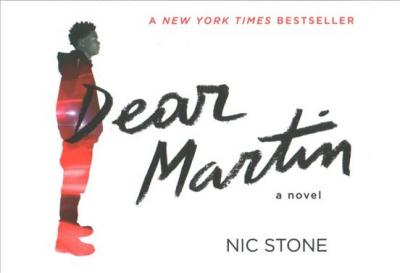
On ‘Dear Martin’ by Nic Stone

Dear Martin by Nic Stone

My rating: 5 of 5 stars

I wasn’t expecting to plough through a book this morning before sitting down to work, but that’s precisely what I did.

What an incredibly important, thought-provoking, emotional, heart-breaking and yet hope-filled gem of a novel.

I cannot imagine what it is like to be a young, black man in today’s world. But, this book certainly does much to help me to understand the unreal expectations and choices, the absurd stereotypes they must respond to and attempt to dispel, and the unending pain and confusion and frustration and anger as well as joys tempered by bullshit that they face every minute of every single day.

Damn…. What a profoundly important and beautiful book. I need to sit with this for a while.

View all my reviews

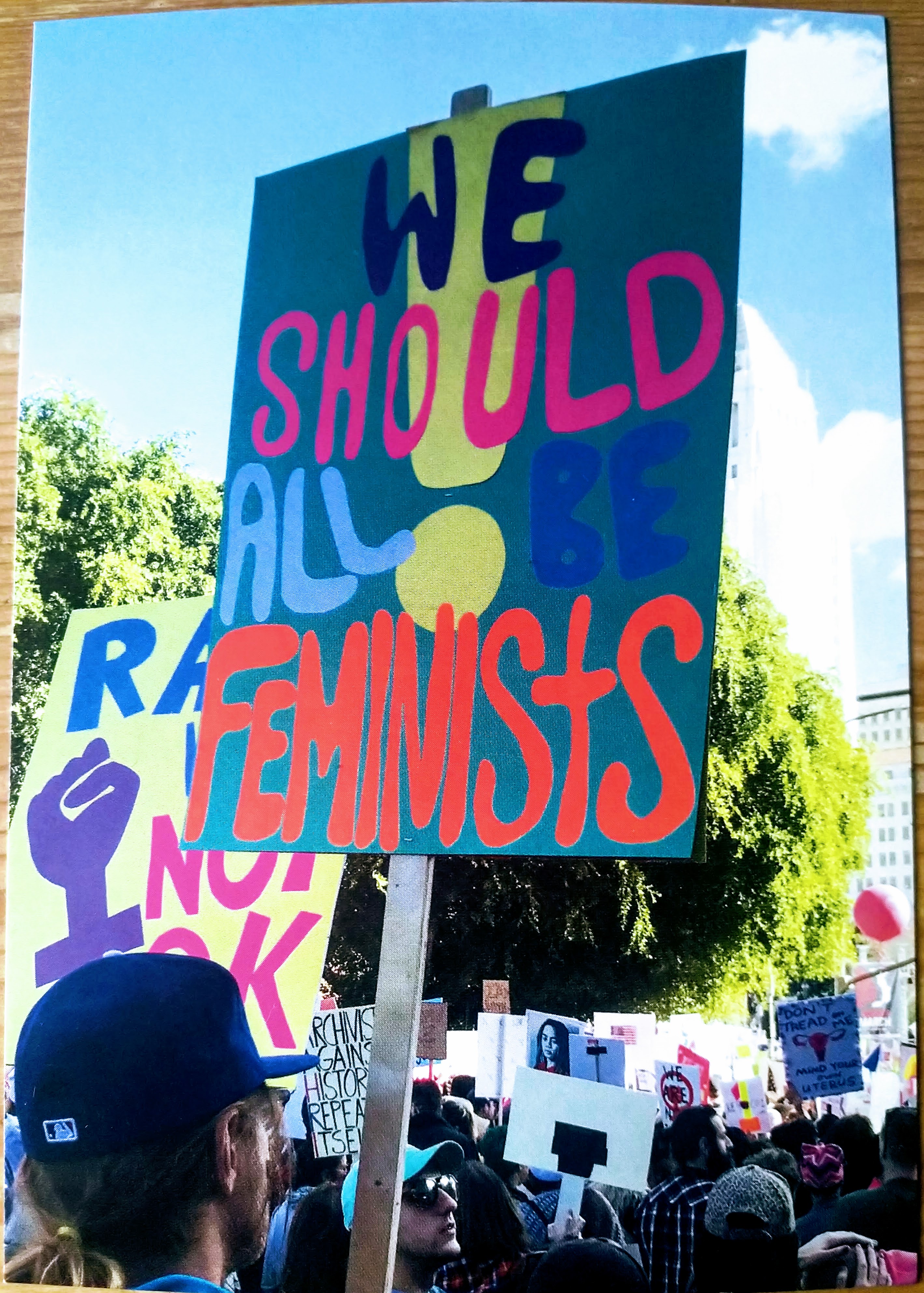
We should all be feminists

We should all be feminists.

There’s a brilliant little book by the same name by one of my favourite authors, Chimamanda Ngozi Adichie. She’s far more eloquent than I, and I agree with her every word. We should all be feminists.

Indeed. There’s nothing more that I really need to say about this, is there?

If I do, here’s what I have to say: More rights for you does not mean fewer for me. It means we all benefit and enjoy equal rights and protections for and of those rights. And, it might just mean that women will not receive less pay for equal amounts of work, not needing to pull double duty by caring for all things related to the home and childcare whilst also excelling in our careers. And, it might just mean that we are finally be seen as belonging in positions of leadership. That we are capable.

Because, we are more than capable. And, we do it wearing heals and whilst also taking on the primary household management responsibilities.

I’m not sure why ‘feminism’ as a word conjures up man-hating women with no tolerance for men. But, it does. And, that fundamentally speaks to the primary reason why we need feminism.

And, why we should all be feminists.

Protest postcard #9 of 50

On ‘Steering the Craft’ by Ursula K Le Guin

Steering the Craft: A Twenty-First-Century Guide to Sailing the Sea of Story by Ursula K. Le Guin

My rating: 5 of 5 stars


I clearly need to read more from Ursula K Le Guin.

I picked this book up based on the review a friend and colleague posted about it several months ago. As an instructor for PhD students and postdocs who seek to improve their writing skills, this seemed like an interesting read and possible source for new ideas and tips to share.

I’m delighted to say this book proved more than useful and highly insightful, and already appears to have influenced my own teaching as well as revising for various clients. (I’m not kidding: I caught myself yesterday hearing Ursula’s guidance as I proofread a manuscript for a client, finding several highly ambiguous and awkwardly phrased sentences that desperately required reshuffling.)

Filled with insight, tips, and useful examples from masters of prose, as well as exercises for both writing and critiquing, this is a highly useful book, both for those writing fiction or memoirs as well as for those like my own students attempting to tell the story of their research. As time (and energy levels) permits, I plan to work through the exercises. At the very least, I’ll be incorporating them into my own courses and gladly share them with colleagues.

This is a gem of a resources for those who seek to write as well as for those working with writers regardless of genre, style, length or topic. It’s also a bloody good read.


View all my reviews

On ‘The Chicken Chronicles’ by Alice Walker

The Chicken Chronicles by Alice Walker

My rating: 4 of 5 stars


I found this book at a tiny little indie bookshop in the Cabanyal neighbourhood of Valencia when we were on holiday last December and January, which seems like a lifetime ago now. I bought this book because it was written by Alice Walker, one of my favourite writers, and because I’d never heard of the book before. It wasn’t until I started reading it that I realised it was a memoir. Despite the title, I didn’t really expect it to be about real-life chickens. Truthfully, I honestly love that she writes about her chickens, creatures I did not know she tended or owned.

This a a delightful little read. Given the weight of this very heavily burdened world, Walker offered me a brief and welcome respite from those burdens in her musings on chickens. Some of those musings are rather weird for me or somewhat silly. But, the simplicity of sitting with chickens and watching and meditating on their actions and movements is incredibly appealing to me at the moment. This book is like a very long letter or series of letters to her chickens, and that’s quite sweet in a world filled with too much sourness.

I envy her, and her chickens. And, now, I rather want my own chickens to tend and watch.

If like me, you need an escape from all that troubles you, this little book might just satisfy you. It did me.

View all my reviews