One conversation at a time

NB: Like many, I’m genuinely struggling to put into words what I feel or to process what we’re collectively witnessing and experiencing in this moment. This is my own first step, based on a personal experience from this morning and how it might help me, at least, move forward and do something — anything — to affect positive change within my own network. The specifics of this morning’s experience are anonymised in order to protect my friend’s identity. This is my own perspective and reflects that alone.
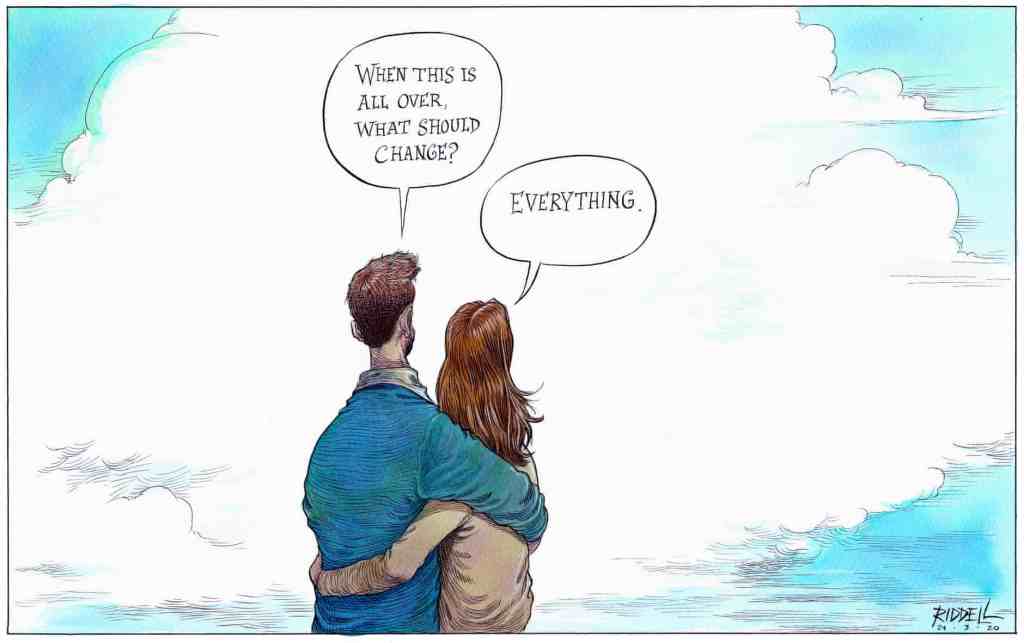
Uncertain future. Illustration: Chris Riddell

I am not necessarily good at difficult conversations. I have never have been, and it’s perhaps the flaw I recognise as most unfortunate about myself. And, the flaw I struggle with the most.

If I am completely honest, I see the ugliest parts of myself surface during those moments. Specifically, I do not deal with criticism well at all, despite being more critical of myself than anyone else could ever hope to be. Contrary to understanding its necessity in helping me do and be better as a wife, friend, instructor, writer, [insert descriptor/role here], constructive criticism makes me exceedingly uncomfortable in the moment. I have no problem questioning my own beliefs on my own, but publicly I find such instances particularly painful and typically shy away from them whenever and as much as possible. I am also working on this. Because I want to grow as a person and be a better person for those in my life as well as my own community. But, it’s damn hard work.

Given the current backdrop of various bits of chaos that has become 2020, and the unreal events unfolding in the United States specifically, difficult and uncomfortable conversations are necessary. So, when a friend with whom I share very little ideologically reached out to ask me about a sensitive topic, I took a deep breath and dove in head first.

And, you know what? I regret nothing. It felt good. It worked. It was respectful and honest. Unresolved, but solid and a step in a direction we both welcomed. And, that’s something.

Because neither of us approached this conversation from the perspective of needing to be right or correct or proving our point, it worked.

To me, this moment provided an opportunity, not only offering the chance to reach an understanding of a perspective and the thoughts of someone with whom I do not share a world view. But, also, a chance to help someone I know understand a bit more about where to find resources and perhaps look at their own world view in a slightly different way, one which might prove more beneficial to those unlike us who desperately need allies who look like us. This moment hearkened back to a time when liberals and conservatives / Democrats and Republicans / blue states and red states could discuss the issues of the day and find a way forward rather than ripping one another apart.

This friend and I conversed with the intention of listening and gaining insight rather than being heard and judging one another. We challenged one another (I hope), but we also chatted aiming to help one another rather than selfishly and myopically support and validate our respective viewpoints. We did not approach the conversation intending to pick apart everything; instead, we tried to unpack one thing. We asked probing questions and patiently waited for responses. We left labels aside, placed pins in other important topics which were tangential to this specific topic and focused instead upon the meanings we might have missed by using various labels previously.

And, we left the conversation with points to think about and consider, with an agreement return to our discussion later. We did not leave feeling frustrated, angry, hurt of belittled.

We provided ourselves with a way to move ourselves as well as our communities forward. And, that’s huge.

So many of us right now are hurting, whether we agree on what pains us or not. So many of us lament and despair the loss of innocent lives and the inhumanity we are collectively witnessing, all in the middle of a global pandemic that demands social distancing and has impacted our social and economic realities if the not the very fabric of our lives. We may not necessarily agree on what causes the pain or anguish, or indeed upon on what specifically what must change. But, we agree that the wounds run deep and divisions are killing us. And, that change is necessary.

To me, we must also confront continuing injustices such as institutionalised racism and a system rigged to maintain the status quo and extreme power differentials in place. Doing so requires finding common ground and understanding wherever and whenever we can. It won’t be easy, and perhaps might result in more than a little blood, sweat and tears, for some real and for others allegorically and metaphorically. But, the difficult, sensitive and hard conversations and discussions must take place.

So, here’s an invitation: Come talk to me.

I will listen. I will do my best to be open to those difficult conversations, without judgement or justification. I will do my best to be respectful and less reactionary or defensive. Primarily, rather than shy away from them, I invite those discussions and conversations, welcoming them and genuinely consider them. I may not always agree, but I will seek out ways to reach consensus where possible and check my own biases and privileges and assumptions as necessary. I hope all of us will do likewise. Otherwise, nothing will change.
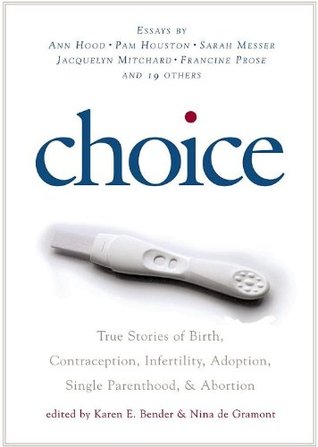
On ‘Choice’

Choice by Karen E. Bender

My rating: 5 of 5 stars


This was my first read during women’s history month, and with the full awareness that we are increasingly edging our way towards a reality in which choice no longer exists.

I absolutely think everyone — and I do mean everyone — should read this book. Make it mandatory reading in sex education classes as a minimum.

It’s no secret that I am staunchly and firmly pro-choice. And my life has largely been possible because I’ve been free to make decisions regarding my own desire to reproduce. Had I not had some options open to me, it’s very much unlikely that I’d have gone to graduate school or landed in Moscow or met The Cuban. What an astounding reality and one I’m so grateful I don’t have to contemplate for long.

I’ll never question any choices any other woman makes regarding what she chooses to do with her own body. Those are decisions she must live with as I live with my own decisions. And I will never stop fighting for the young women who follow me so that they will have all of the choices they need available to them.

Abortion should be legal, and safe and rare. And the only way that becomes a reality is if we stop trying to regulate women’s bodies. And my favourite bumper sticker is still this:

‘How can you trust me with a baby if you can’t even trust me with a choice?’

My body, my choice. Full stop.

#womenshistorymonth


View all my reviews

On ‘No Friend But the Mountains’ by Behrouz Boochani

No Friend But the Mountains: Writing from Manus PrisonNo Friend But the Mountains: Writing from Manus Prison by Behrouz Boochani
My rating: 5 of 5 stars

I wasn’t really sure what I thought about this book until I finished it. This book was certainly not an easy read; but, it is a necessary read.

Behrouz Boochani, a Kurd originally from Iran, has been detained on Manus Island off the coast of Australia since 2013. Six years, without any indication of when he may be freed.

He is neither a refugee nor a migrant. He is neither here nor there, but trapped in legal limbo, imprisoned without a charge or end date in sight. His only crime was seeking refuge from a life largely untenable in his homeland. No trial, no hearing, no consideration preceded his detention.

He is sadly not alone.

This book does not provide a justification for why he left Iran, risking his life along the route and now ‘living’ in conditions we can only imagine because of his writing. He dwells not on why he left Iran, but on the ‘life’ he and those like him now live day in and day out on Manus. His reasons for seeking refuge are not the issue; the conditions under which he and others like him must exist are.

What makes this work even more impressive is that he wrote it entirely on a mobile phone from Manus Island.

As we in the West demonise those who seek refuge, we justify the conditions under which we detain them when the flee unimaginable suffering and conditions of systemic violence. We do not consider how bad it must be if individuals will leave their homes with only what they wear or what they can carry in order to seek something better. Nor do we consider the toil of confinement or the inhumanity of how we discuss and treat those individuals seeking refuge when they exist in limbo. As discussions about the detention of children reach a fevered pitch in the US, Boochani’s work provides not just the meaning of indefinite detention on the psyche of an adult man, but a critical examination of it from inside. And, it leaves me shuddering. Imagine, then, what such confinement and conditions mean to a child, separated from their parents and left to fend for themselves or rely on other children for their care.

This work is important. And, we should all be shamed by it so long as we allow such practices to continue, regardless of country of origin or country of destination or country of detention.

View all my reviews

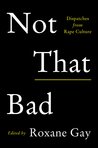
On ‘Not That Bad’, edited by Roxane Gay

Not That Bad: Dispatches from Rape CultureNot That Bad: Dispatches from Rape Culture by Roxane Gay

My rating: 5 of 5 stars

This should be required reading for every single man and boy, particularly for those who continue to objectify women and girls, who think we’re just ‘asking for it’ because of how we look or dress, or that catcalling and leers and unwelcome attention are simply their way of telling us we look good.

This should be required reading for all those who question women and girls who step forward and name their harassers and attackers. Who scream foul when we who have survived remember some details so, so vividly and others escape us. We lived through our nightmares, and we continue to do so years later.

And, this should be read aloud every single minute of every single day out loud to Brett Kavanaugh. Just play it in his inner ear and mind on endless repeat until he and those who enabled him get it. In fact, the same treatment should apply to all those who supported and voted for his nomination and confirmation to sit on the Supreme Court. Because watching Dr Blasey-Ford reminded all of us who do not need reminding that it was just that bad.

Here’s to the survivors.

View all my reviews

On ‘Shrill’, by Lindy West

Shrill: Notes from a Loud WomanShrill: Notes from a Loud Woman by Lindy West

My rating: 5 of 5 stars

Witty. Brutally honest. Raw. Genuine. Empowering. Righteous. And unapologetic.

I love this book. So, so much. And I love that I feel more empowered reading it.

Thank you, Lindy. You rock, girlfriend! I have no idea what you look like, but you embody beauty beyond measure.

View all my reviews

On #Web30

A day late, but who cares? Here’s to the #Web30.

I use an image in my grant writing courses of a user experiencing a 404 error when they attempt to connect to the internet. Finland, given its near-compulsive internet use, quite naturally grants each of its citizens access to the internet as a basic right. Finland was the first country to grant this right, and did so in 2009.

I fondly reminisce lament the utter misery and frustration of attempting to connect to servers via dial-up connections oh so typical up until the early 2000s, and the glacially slow uploading speed at times losing a race againgst a turtle on quaaludes. My students, however, will never understand slow connection speeds or the inability to connect instantaneously and whenever or wherever they like. [Seriously, there are so few places in Finland where you cannot access the internet via at least 3G services. It’s at once fantastic and impressive, and annoying until opting for air plane mode.]

I well remember accessing my email via main frame access when in graduate school. It was so simple and so utterly thrilling to see ‘new messages’ then. Not so much now, as the inbox glutter and spam take on lives of their own.

Funny how our vocabulary has shifted as well in the last 30 years to accommodate this not-so-new technology.

As much as online life can annoy and rile me, particularly when viewing the news these days, it still thrills me.

Chatting with a friend or family on the other side of the globe in real-time. Organising events and rallying interest for one cause or another amongst strangers. Catching up with folks I’ve not seen in years. Planning meet ups in countries none of us live in. Bonding with individuals I’ve never met in person over shared interests and passions. Supporting causes and garnering support for issues that are important to me. And, work. Being able to work from literally anywhere at any time, as long as there is a stable internet connection.

It’s mind-blowing and brilliant. And necessitates new ways of both minimising procrastination and protecting myself from those workaholic and obsessive-compulsive tendencies.

I love digital life, and all that affords us. I also fear it at times, mostly because of misuse by nefarious individuals and interests.

Whilst we all continue to learn how to safeguard the web and address the challenges online life presents us, we must also continue to ensure that everyone everywhere has equal, open and safe access to the internet. Just as individuals in the ‘real world’ face threats to their privacy, security and fundamental rights, those threats also affect the virtual world we now increasingly inhabit. 

Let’s also ensure that everyone enjoys the benefits of the web. Even if they’ll never know the annoying sound of the busy dial-up connection tone.

To safe guard the online community as a whole and demonstrate your commitment to an open web, get involved via A Contract for the Web

30th-anniversary-of-the-world-wide-web-4871946884874240-2xa

Holocaust Remembrance Day

A day late, but no less important.

It’s absolutely shocking to me that far, far too many know nothing about the Holocaust.

May we never allow something like this to happen again. And, may we continue to honour the memory of those who needlessly and senselessly suffered such horrors by fighting injustice and racism whenever and wherever it faces us.

To learn more or share resources on the Holocaust, please visit the US Holocaust Memorial Museum‘s website.

On ‘The View from Flyover Country’

The View from Flyover Country: Dispatches from the Forgotten AmericaThe View from Flyover Country: Dispatches from the Forgotten America by Sarah Kendzior

My rating: 5 of 5 stars

If we ever hope to move beyond that which divides us, we must collectively rip off those band-aids, acknowledge various problems that plague us as a nation and society, and begin the truly difficult discussions in order to find long-term and permanent solutions to address those problems.

This book helps with that first step: ripping off the band-aids, and highlighting how we did not simply arrive at this particular moment. We should have expected it. And, anyone living in or from a flyover region most likely intuitively knows this. Class. Race. Gender. All of these issues have divided us for much longer than the current political rhetoric of divisiveness. Really, rather than collectively rising up against a system rigged from day one to benefit those already in power at the expense of the rest of us, we fight one another based on characteristic X [insert identity here]. Yet, we all continue to struggle. We all continue to lose our footing or positions. And, we all continue to work harder to move towards attaining that American dream as we navigate the worst sort of nightmare.

Thank you, Sarah Kendzior, for this collection of rather timeless essays and commentaries on the condition of life in flyover America. It’s brutal. It’s real. And, it’s completely necessary.

View all my reviews

On World AIDS Day 2018

Red AIDS ribbons concept tree. Vector illustration layered for easy manipulation and custom colouring.

This World AIDS Day, as with many in the past, I am hopeful. More cautiously optimistic than equally hopeful, however. Thirty years ago, the first World AIDS Day passed, allowing us to collectively raise our voices to raise awareness of HIV. Globally and locally.

This morning, as I scrolled through my news feed, in addition to the traditional AIDS red ribbon tree of life I’ve posted for years on this day, another image gut-punched me, just as it did the first time I saw it and every time since.

The men in white represent the surviving members of the original San Francisco Gay Men’s Chorus. Eric Luse, 1993. 

This image of the San Francisco Gay Men’s Chorus reminds me why this day isn’t so much a simple celebration of how far we’ve come, but of how vigilant we must remain in our resolve to continue to respond to this most pernicious virus. But, more so, we must resist and overcome the various prejudices and judgements attached to HIV. Far, far too many have died senseless, needless and agonising deaths only because we refused to act to prevent further infections, because we isolated and demonised those living with HIV, and because we refused access to live-saving and life-preserving treatment for those who desperately needed it. 

Why? 

Fight AIDS, not people affected or living with HIV. Fight the damn virus and the cultural, social, political and economic institutions which continue to allow it to spread and allow people to die when, today, they don’t need to. Fight the injustices borne through stigma and fear that allow the virus to flourish.

Do not fight the individuals most affected and least wanted by society.

HIV doesn’t care where you live, what you look like, what you do for a living to simply survive. Nor does it care who or how you love.

Today, and every day, we must collectively remember what inaction and isolation do to those affected when society shuns them and deems them unworthy and undesirable. Every. Single. Day.

So, on this World AIDS Day, here’s to all those affected and living with HIV, and here’s to all those who continue working damn hard and often thanklessly to ensure no one is left behind and that we can all live in a world more just and more equitable. For all. 

And, here’s to those we failed. Your memory lives on and you will not be forgotten.