A series of lasts

Bloody hell the last few weeks have been emotionally draining and exhausting. And, quite simply, so very, very emotional.

Since definitively learning that I did not secure a job I desperately wanted and believe I would have done well in, a job I have also done albeit informally for nearly a decade, I’ve been extremely busy.

Doing what? Well, *that* job.

My teaching schedule this spring has been insane, particularly this last month. From 1 to 31 May, I logged 92 academic hours of teaching, which included 7 different groups of students for specific courses and a two-day workshop on grant writing to researchers from SE Asia. I’ve also had more revision work than I normally do this time of year. Sleep and rest have taken a back seat.

This week, however, the pace slowed down significantly. In total, I *only* had two lectures: one on Monday and one this morning. Today’s class meeting, one of my largest ever groups for the advanced grant writing workshop I designed, adjusted-based-on-feedback, and taught and one of the most active classes ever, concluded. It was also a few doors down from the very first classroom I stepped into as an educator at the University of Helsinki in August 2014.

After we finished and the last students left, I took a few moments to linger and just … be.

What am I feeling right now?

Resignation. Sadness. A sense of injustice. And, gratitude. Mostly, a profound sense of grief as well as accomplishment.

One thing I’ve learned in these last few weeks is that my time in these classrooms has not been wasted. Not only have I learned a tremendous amount about the topics I have taught, I’ve also heard from so many students, current and former, how much they’ve learned and taken from our time together. Out a sense of respect for the students I have had this month in particular, I was honest with them about my fate and future, because this affects them as well. And, perhaps more than it affects me — future course offerings available to them will undoubtedly change and shift next autumn.

I’ve also learned a hell of a lot about myself, in these past few weeks as well as looking back on my evolution as an instructor. And, I have absolutely no regrets about any of it at all.

None of this has been easy. Far, far from it. In fact, this has been one of the most difficult professional moments of my life. Partially because I know it is coming to an end based on decisions entirely beyond my own control. Partially because I do not know what comes next (other than a mountain of reviewing of student work). And, partially because I have had so many last moments over the past several weeks. Lasts I’d rather not be ‘the last’.

The last class meeting on the Meilahti campus and for the doctoral programme in health sciences, the programme I initially felt most able to and comfortable working with. [The room itself was bloody awful; the kindness and support from the students were immense and powerful.]

The last two courses on the Kumpula campus, the fields I felt least capable of communicating with because they focus on things like chemistry, mathematics, computer science and (space) physics — the natural sciences. [Forgive me for thinking of space lasers and robots, but I can’t help myself.] My last courses were immeasurably rewarding and the students were incredibly kind and supportive, as well as engaged and vocal, something I wasn’t really expecting, to be honest.

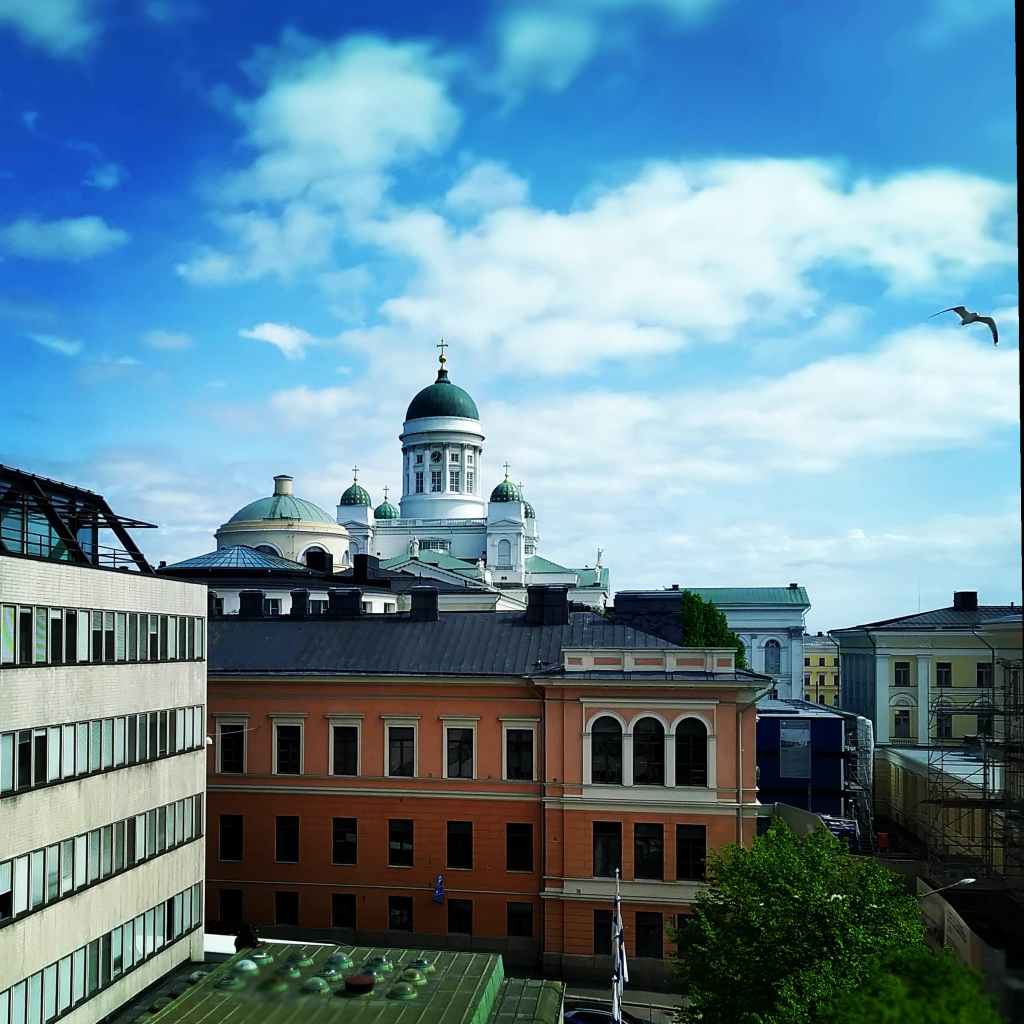
The last class meeting on the City Centre campus and in the humanities and social sciences. This class was in a room with one of my favourite views of Helsinki, and was with a group which remained in the classroom for more than 30 minutes after our course officially concluded to simply talk and commiserate with me. Leaving with three of the participants, they asked me if I needed a hug, which left me just a weebit more broken.

The last class meeting this morning for students in the environmental sciences was just down the hall from where it all began for me, and the last time I’ll teach my favourite course, Grant Writing, Part II. This group was amazing. They all are, but there was something about the dynamics of this specific course that made it … work. And, as I write this now, I am bereft.

And, come Monday, I will have my very last class meeting for UH’s doctoral researchers as a transferrable skills instructor. I am dreading it.

When I arrived back home this afternoon after class, I received feedback from the first of these lasts. Here’s three snippets from that feedback:

‘Everything in this course had a clear purpose, and it was all beneficial to my learning. I know constructive feedback is important for making improvements, but I can’t think of anything needing improvement. Great course, great lecturer, very unfortunate this is apparently the last time it’s taught.’ – Participant 1, Health 135, Spring 2023

Google translate version: ‘Course instructor Vanessa Fuller is excellent at her job! Grant writing 1 and 2 were both full of information and really provided heaps of learning for real life. Vanessa’s teaching style is very good, she gets the audience interested, focused and talking. She has a positive and encouraging attitude towards every student, and that’s why the audience dares to participate in the conversation, even if the level of the English language is not perfect. The lectures are a good immersion in the necessary academic vocabulary. Since she is a native speaker of the English language, it is really pleasant to listen to her speech. I will be very sad if Vanessa cannot continue to teach these courses. These teachings should be offered to every HY doctoral student in the future.‘ – Participant 2, Health 135, Spring 2023

‘Best teacher’ – Participant 3, Health 135, Spring 2023

I don’t know what’s next. But, at least I know I made some difference, helped some of these amazing young scholars achieve their own dreams. They’ve certainly allowed me to realise my own dreams, one’s I scarcely imagined possible.
On ‘The Uncounted’ by Sara ‘Meg’ Davis

The Uncounted by Sara L.M. Davis

My rating: 5 of 5 stars


In today’s world in particular, there are days when it seems as though we are drowning in information. Too much data. Too much ‘stuff’ to process and make sense of. That feeling is only partially true, however. Across various areas and arenas, we know far too little, particularly when we focus on issues surrounding health and human rights. All too often we take the absence of information or data or evidence as a sign that we may relax a bit.

We desperately need to shift that thinking. The Uncounted, by Sara ‘Meg’ Davis provides a road map for how we may begin to shift our thinking and perspectives in order to adjust how, amongst whom and what we collect data in a relatively simple way, and in a way which may pay huge dividends, particularly amongst those most in need and previously most neglected in policy planning and financing.

‘The Uncounted’ is a fantastic read, one which profoundly challenges the notion that in the absence of information or evidence we don’t need to worry about issue X. That is, if we carefully examine those variables for which we have no data or evidence, perhaps upon digging deeper and enlisting assistance from those more acutely and intimately aware than we are, we will find previously hidden information and data. And, that data and information are likely to radically shift how we design programmes or policies on various issues. We will no longer be able to simply dismiss an issue as unproblematic. Quite simply, ‘The Uncounted’ provides a profound argument for carefully considering how we examine and apply the absence of evidence as an indicator.

‘The Uncounted’ is rich in ethnographic descriptions, documenting the various assumptions made by multilateral agencies charged with dispersing funding to and establishing guidelines for countries in how they respond to HIV, tuberculosis and malaria (e.g., The Global Fund to Fight AIDS, TB and Malaria, UNAIDS, WHO, PEPFAR, etc) and local-level agencies and individuals best situated to argue for expanding programmes and funding schemes within communities. For those unfamiliar with such agencies, Dr Davis disentangles these various personalities and agencies rather neatly, making it clear who does what and whose voice is perhaps most necessary in deciding upon programmes and policies to address HIV in particular. Following the progress and steps necessary to count the uncounted within the Caribbean region provides evidence for how we can begin to shift our thinking and truly ensure full inclusion of all individuals affected by HIV and specifically those least likely to date to receive crucial services and support.

Reading ‘The Uncounted’ during a global pandemic proved rather surreal,not simply because some of its key characters are also playing a crucial role in current events vis-a-vis Covid-19. As our global health-related realities have been thrown into chaos this year with the emergence of Covid-19, I’m curious to see how various elements of Dr Davis’ careful and thorough work play out. Whilst focused primarily on HIV, and the very real oversights in counting typically hidden populations such as men who have sex with men, transgender people, sex workers and people who use drugs, certainly many individuals, and perhaps the most vulnerable, will go uncounted in the wake of Covid-19. Will health, social, and economic policy makers and planners at local, national, and international levels solicit the perspectives from those at the community levels most intimately associated with the epidemics and acutely aware of problems in providing treatment, care and support to those affected in order to understand who, what, why and where? Or will they rely on the absence of evidence as evidence of absence simply because individuals are not counted by the powers that be? How will key populations be accounted for? Will they?

My hope is that the powers that be across power structures would heed the advice and road maps provided by Dr Davis. The reality is that in some places, that advice and those road maps are not being considered. And, in those places it seems as those Covid-19 is raging unchallenged. [Insert heavy sigh here.]

‘The Uncounted’ provides this cynic with a bit of hope, however, particularly with regards to HIV. Hope that we expand our perspective ever so slightly, yet in a way which we can make a huge difference to communities and key populations who may have previously faced stigma, discrimination and institutional neglect, and who may finally receive the crucial support to transform structures that place them at the response to HIV. It won’t be easy, but it is necessary. And, to my mind, long overdue.

Clearly, we can no longer that that ‘absence of evidence as evidence of absence’.


View all my reviews

On ‘Write It Up’, by Paul Silvia

Write It Up! Practical Strategies for Writing and Publishing Journal ArticlesWrite It Up! Practical Strategies for Writing and Publishing Journal Articles by Paul J. Silvia
My rating: 5 of 5 stars

As an instructor to young (and older) PhD students, specifically providing guidance on the wonderfully wacky world of academic publishing, I think this book rocks.

It’s not just a how-to for each individual section of a manuscript, it’s also a bit like a personalised cheerleader, cutting off each objection and ‘but what about’ as it crops up. Never dull, always insightful and on point, Paul Silvia offers a delightful primer on academic writing and putting together academic articles that will be read rather than simple consigned to the published rubbish heaps that litter various libraries, virtually and otherwise. 

I’d require my students to read this book if they were undergraduates and took my classes for actual letter grades. However, they’re adults and can and will do what they want with their valuable time. So, let’s just say that I will strongly encourage them to heed his advice (along with mine to read this book), particularly if they question what we discuss and do in my own classrooms.  

One particularly useful bit of this book is the chapter on the publication process itself, from submission to journals through to revising and resubmitting based on that most dreaded process called ‘peer review’. If you, my dear students, read nothing else, read that chapter. [And, as you do, you will hear my voice, saying, ‘See? I told you so!’]

Thank you, Professor Silvia, for having our instructors’ backs, as well as providing an example of an academic writer with wit, charm and intellect that shines through careful writing. I’ll be recommending this gem of a book to all of my students forevermore.

View all my reviews

Simple, necessary changes

l’ll be honest — climate change has become one of the things that keeps me up at night. The more I read, the more I fear for the future world we will likely face. It may not be a world I personally face, but I definitely fear the world we leave for the next generation.

So, I’m taking more steps to limit the impact my life has on the lives of those who follow me.

We use LEDs more these days, after seeing first-hand how much brighter they are during the long, cold and beyond-dark winter months in Helsinki. I no longer drive since my US driver’s licence expired more than a decade ago. I walk when I have the time more often than not. And, since last September I’ve been a vegetarian (completely unrelated, but now I can’t imagine going back). For those who understand my undying devotion to every single cheese ever made, I now eat about half if not a quarter of what I once consumed. And, because y’all understand you’ll need to pry my coffee cup from my cold dead hand, oddly, I prefer Oatly for my daily java jolts. I tried it after being dazzled by a rather witty ad blitz earlier this year, and it’s actually quite tasty. Since they also make other non-dairy ‘dairy-like products, I’ve tried them and like them as well.

I’m fairly certain my own carbon footprint sucks. But, I’m working on as many changes as possible to reduce it as much as possible. And, my life is largely unchanged if not fitter. Walking (and running) about 50 km per week has it’s benefits, from reducing my carbon footprint to allowing me to process the anxiety related to it.

You don’t need to go to extremes to reduce your carbon footprint. Small changes can make a huge difference. If you aren’t that concerned about the world you’ll inhabit in your own future, perhaps you’ll pause to think about the world your children and grandchildren will be forced to endure. That world may not be nearly as beautiful nor as hospitable, and that’s on us. Particularly if we continue to shirk our collective responsibility to implement incredibly simple changes in addition to larger ones that might just save us all.

Words matter

Words matter. The words we use and choose reflect where and upon what we place importance. They convey our emotions; they create our narratives, and help others understand our positions as well as our passions. We all need to choose them a bit more carefully and with far more thought, particularly on those issues which are most important to us.

As various white men in the US decide that women must be incubators in some states, the world is melting. Rather than do something that requires immediate action and would potentially save countless thousands if not millions of humans lives (never mind plant and animal species) from the very real possibility of the devastating coming climate crisis we’ve created and accelerated, let’s instead focus on forcing women to breed.

Thank you, The Guardian, for changing your language and not sugar-coating your coverage. Climate crisis, climate heating, species extinction, and all that comes with it petrifies me. Because I’d like to see my friends’ children thrive and live long lives to enjoy their own children and so on.

And, I’d like that world in which they live to feature more than mere pictures of various creatures that once existed.

On ‘Headstrong’: 52 Women in STEM

Headstrong: 52 Women Who Changed Science-and the WorldHeadstrong: 52 Women Who Changed Science-and the World by Rachel Swaby

My rating: 5 of 5 stars

Women in STEM. Yes! Yes! Yes!

This delightful book places women firmly at the centre of their work and contributions to various breakthroughs and discoveries. Rather than being relegated to the status of ‘wife’ or ‘assistant’, they are the pioneers in their respective fields. It’s ever-so refreshing, although at times infuriating if only that some women did not receive the recognition they deserved until after their deaths.

Whether as a ray of light and hope during these odd times, or as inspiration for young scientists, this is a lively read. If I had a daughter, I’d read it with her, and perhaps dive into the extensive bibliography documenting women’s many contributions to STEM.

View all my reviews

Their success…

I am shattered.

In truth, I’m running out of ways to describe just how exhausted and spent I am at the moment — mentally and physically, but particularly mentally. This does not serve me well when my vocation depends upon the mental acuity to not only communicate well, but to help others communicate their own ideas, plans and findings more effectively.

As a consequence of the need for a mental break and at least a week (or more) of decent nights’ sleep, I confess: lately, I’ve felt less than successful at my job. In fact, I’ve felt like I’m letting my colleagues and my students in particular down.

Today, however, two things happened which reminded me that I’m still doing okay. First, I received an email from a former student, thanking me for helping her with grant writing. After multiple attempts and failures in the past, she received two years of funding for her PhD research. Reading this over my morning coffee made me smile. But, this evening, during an entirely different class on conference presentations, one of the participants shared that she actually won a prize for her presentation at a local conference last week. And, she believed that recognition resulted from her experiences in and feedback from that class particular over the preceding three weeks.

Today was a good day.

My success as an instructor and a member of the extended University of Helsinki community isn’t so much about cataloging accolades for my own resume. It’s much more about these seemingly small-scale successes for my students and colleagues. Their successes are my successes. Their awards reward me even if I am neither recipient or beneficiary. I don’t need to be.

If I am at all effective in my job, these individuals—who spend 12 to 24 hours sitting in a classroom with me or painstakingly address each of my seemingly infinite number of suggestions and revisions—gain one skill or another to help them along in their careers. Whilst I don’t often know what happens to them once they leave my classroom or inbox, I thrive on hearing their success stories and victories. And, it could not be more meaningful; it could not make me happier.

Several weeks ago, I noticed balloons randomly placed around the city centre campus. They seemed so celebratory, although at the time I did not feel at all festive. I honestly cared now why they were there; I just liked seeing them and snapped a picture.

This evening, they seem relevant. And, celebratory in an altogether different way. And, this evening, as with most, I am immensely proud and honoured to serve as a member of this community of brilliant scholars. Here’s to our collective success.

University of Helsinki


Bigger picture & wider lens

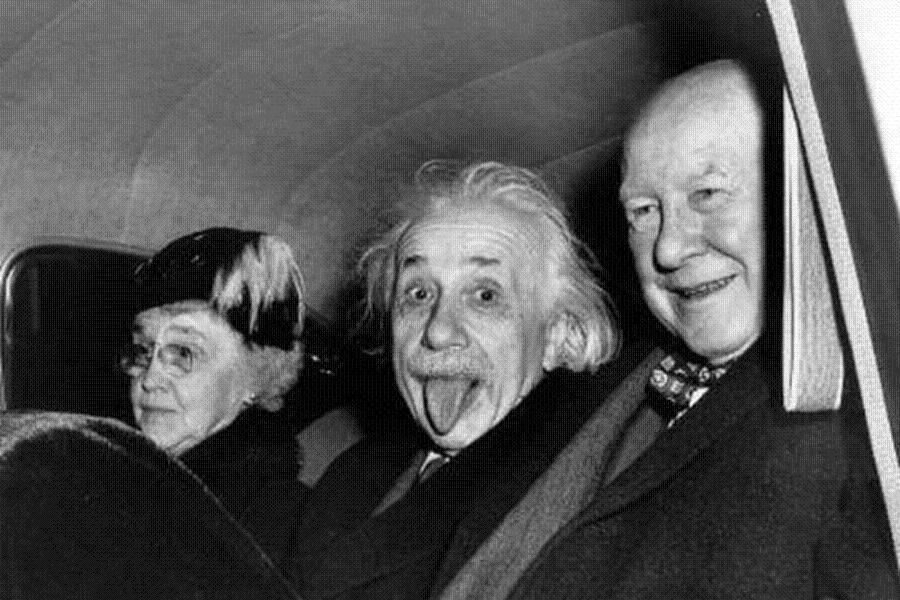
einstein-picture-full-uncropped

Arthur Sasse / AFP

Maybe it’s because I love the notion of the mad scientist. But, I love Einstein.

His brilliant mind aside, I love his wit and eccentricity, along with his passion for communicating science and his own work within it.

One of my favourite images of Einstein other than him sat in wacky dress donning furry slippers (naturally) features the not-so-mad scientist sticking his tongue out. I’ve had a version of that image for as long as I can remember, and it never fails to cheer me up and remind me to embrace the silliness whenever I can.

I decided to use the image for a talk I’m giving later today to women in STEM at the University of Helsinki. The talk itself is on communicating science. And, as I’ve been thinking about and formulating precisely what I want to say on communicating science vis-á-vis the dreaded conference presentation, that image of Einstein has popped up in my head over and over again.

When looking up images as I was preparing, I found a bit on the history of it, and love it even more now.

My original intention and own message for including it focused on simply ‘being yourself’ during presentations. When we attempt to assume someone else’s notion of what it means to be a researcher or scientist or instructor (in my case), we become disingenuous and lose credibility amongst our audiences. We aren’t actors, after all. And, we shouldn’t pretend to be.  We also lose the plot of our message as well. Rather than water down our own personalities and individualities, I say bring them to the forefront when presenting.

But, also, I think this image reminds us to have fun with our presentations, particularly when we care most about the messages we are communicating. Most of those with whom I work research incredibly interesting yet at times troubling or difficult topics. It’s hard work no doubt. But each of us are truly passionate about our work (I hope) and I’d like to think that we also have fun with it.

In addition and after reading the back story behind this image of Einstein and his tongue, to me the image now serves as a reminder to never assume that the audience will intuitively get the full picture of the story we’re attempting to tell. Unless, that is, we actually tell the story well.

Details matter. As does the bigger picture and wider lens.