A series of lasts

Bloody hell the last few weeks have been emotionally draining and exhausting. And, quite simply, so very, very emotional.

Since definitively learning that I did not secure a job I desperately wanted and believe I would have done well in, a job I have also done albeit informally for nearly a decade, I’ve been extremely busy.

Doing what? Well, *that* job.

My teaching schedule this spring has been insane, particularly this last month. From 1 to 31 May, I logged 92 academic hours of teaching, which included 7 different groups of students for specific courses and a two-day workshop on grant writing to researchers from SE Asia. I’ve also had more revision work than I normally do this time of year. Sleep and rest have taken a back seat.

This week, however, the pace slowed down significantly. In total, I *only* had two lectures: one on Monday and one this morning. Today’s class meeting, one of my largest ever groups for the advanced grant writing workshop I designed, adjusted-based-on-feedback, and taught and one of the most active classes ever, concluded. It was also a few doors down from the very first classroom I stepped into as an educator at the University of Helsinki in August 2014.

After we finished and the last students left, I took a few moments to linger and just … be.

What am I feeling right now?

Resignation. Sadness. A sense of injustice. And, gratitude. Mostly, a profound sense of grief as well as accomplishment.

One thing I’ve learned in these last few weeks is that my time in these classrooms has not been wasted. Not only have I learned a tremendous amount about the topics I have taught, I’ve also heard from so many students, current and former, how much they’ve learned and taken from our time together. Out a sense of respect for the students I have had this month in particular, I was honest with them about my fate and future, because this affects them as well. And, perhaps more than it affects me — future course offerings available to them will undoubtedly change and shift next autumn.

I’ve also learned a hell of a lot about myself, in these past few weeks as well as looking back on my evolution as an instructor. And, I have absolutely no regrets about any of it at all.

None of this has been easy. Far, far from it. In fact, this has been one of the most difficult professional moments of my life. Partially because I know it is coming to an end based on decisions entirely beyond my own control. Partially because I do not know what comes next (other than a mountain of reviewing of student work). And, partially because I have had so many last moments over the past several weeks. Lasts I’d rather not be ‘the last’.

The last class meeting on the Meilahti campus and for the doctoral programme in health sciences, the programme I initially felt most able to and comfortable working with. [The room itself was bloody awful; the kindness and support from the students were immense and powerful.]

The last two courses on the Kumpula campus, the fields I felt least capable of communicating with because they focus on things like chemistry, mathematics, computer science and (space) physics — the natural sciences. [Forgive me for thinking of space lasers and robots, but I can’t help myself.] My last courses were immeasurably rewarding and the students were incredibly kind and supportive, as well as engaged and vocal, something I wasn’t really expecting, to be honest.

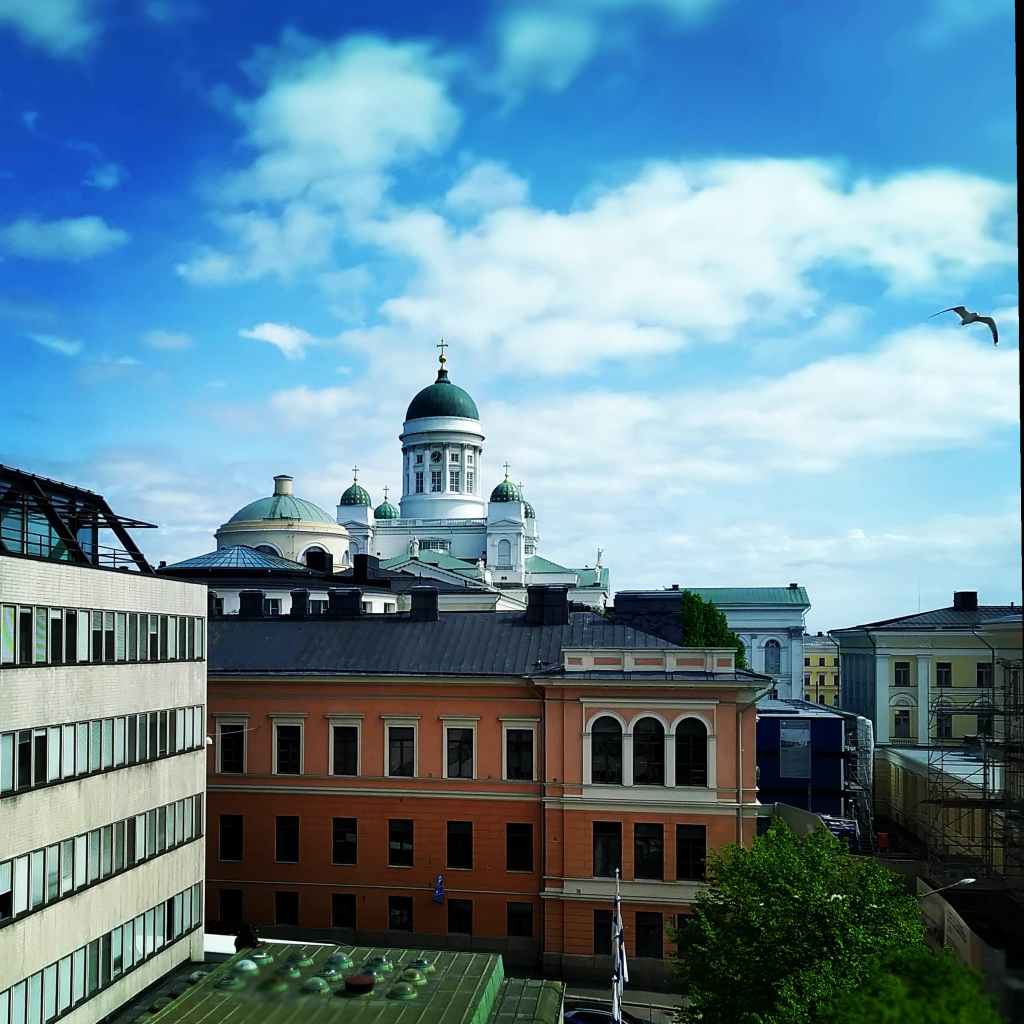
The last class meeting on the City Centre campus and in the humanities and social sciences. This class was in a room with one of my favourite views of Helsinki, and was with a group which remained in the classroom for more than 30 minutes after our course officially concluded to simply talk and commiserate with me. Leaving with three of the participants, they asked me if I needed a hug, which left me just a weebit more broken.

The last class meeting this morning for students in the environmental sciences was just down the hall from where it all began for me, and the last time I’ll teach my favourite course, Grant Writing, Part II. This group was amazing. They all are, but there was something about the dynamics of this specific course that made it … work. And, as I write this now, I am bereft.

And, come Monday, I will have my very last class meeting for UH’s doctoral researchers as a transferrable skills instructor. I am dreading it.

When I arrived back home this afternoon after class, I received feedback from the first of these lasts. Here’s three snippets from that feedback:

‘Everything in this course had a clear purpose, and it was all beneficial to my learning. I know constructive feedback is important for making improvements, but I can’t think of anything needing improvement. Great course, great lecturer, very unfortunate this is apparently the last time it’s taught.’ – Participant 1, Health 135, Spring 2023

Google translate version: ‘Course instructor Vanessa Fuller is excellent at her job! Grant writing 1 and 2 were both full of information and really provided heaps of learning for real life. Vanessa’s teaching style is very good, she gets the audience interested, focused and talking. She has a positive and encouraging attitude towards every student, and that’s why the audience dares to participate in the conversation, even if the level of the English language is not perfect. The lectures are a good immersion in the necessary academic vocabulary. Since she is a native speaker of the English language, it is really pleasant to listen to her speech. I will be very sad if Vanessa cannot continue to teach these courses. These teachings should be offered to every HY doctoral student in the future.‘ – Participant 2, Health 135, Spring 2023

‘Best teacher’ – Participant 3, Health 135, Spring 2023

I don’t know what’s next. But, at least I know I made some difference, helped some of these amazing young scholars achieve their own dreams. They’ve certainly allowed me to realise my own dreams, one’s I scarcely imagined possible.
Teaching in the time of Corona

I’ve been thinking a lot about time lately, largely because it has so very little meaning these days. It passes, certainly. But, how we classify it seems all confused and out of sorts. For instance, I’m not sure if today marks the beginning of the last course to close out my fifth academic year (2019-2020) or the official beginning of my sixth academic year (2020-2021) teaching at the University of Helsinki. Why this confusion? Well the course that began today was originally planned for last spring, but was rescheduled due to Covid-19. Thus, we met for the first time today. Ambiguous time, right?

Thus, I’m straddling a weird place. Rather apropos for 2020, I suppose.

Regardless, as the time for that first ‘meeting’ of this specific course neared, I realised two things:

  1. I’ll never not be a bundle of nerves on the first day of the academic year or just prior to meeting a new group of students for the first time. It doesn’t matter how often I’ve taught the material or how comfortable I feel with it, I’m a nervous Nellie on the first day and through the first few moments of a class. Perhaps given that this was my first real-time Zoom class, I was even more nervous.
  2. This year more than most I am feeling so much solidarity with and love for every single teacher / instructor / professor I know at the moment. Whether their academic year features in-person, online or some hybrid format given Covid-19, and whether they teach the tiniest people or more seasoned and budding young scholars, educators everywhere deserve so much recognition and kudos as a special cadre of underappreciated superheroes in these times. I don’t know a single educator friend who is not a badass with the compassion of the Buddha to back up their mad skills. And, I know a fair many who are terrified for their students and themselves, which breaks my heart.

Today’s class went well enough all things considered. All of us are attempting to be a bit more forgiving and more patient with ourselves as well as with one another than perhaps we would be normally (speaking for myself here). We — students and educators alike — are all navigating strange times, and simply must deal with things as best we can and as they present themselves to us.

Hopefully, we all emerge from this surreal experience and academic year a little wiser and having met our individual and collective objectives as educators. And hopefully our students learn what we intended or planned for them and feel fortified and fulfilled, and ready to embark on whatever future awaits them.

I’m fortunate: my courses at least for the autumn term are entirely online. I would naturally prefer to meet my students in person. But, I’d much rather they and I remain healthy in these times. I genuinely hurt for those educators and students forced to enter situations in which daily they wonder if they are risking their own or their family’s health and well-being. No one should be forced into such a situation.

So, as Finnish school children and teachers across the country return, here’s to all of the educators entering the 2020-2021 academic year. In Finland, the United States and everywhere.

Be safe, y’all. And, I hope you feel supported and loved and recognised for your heroism and extraordinary efforts in continuing to inform, enlighten and educate your students. You’re value and worth are immeasurable and I for one and for what it’s worth salute you.

Google Doodle for 13 August 2020

School’s out

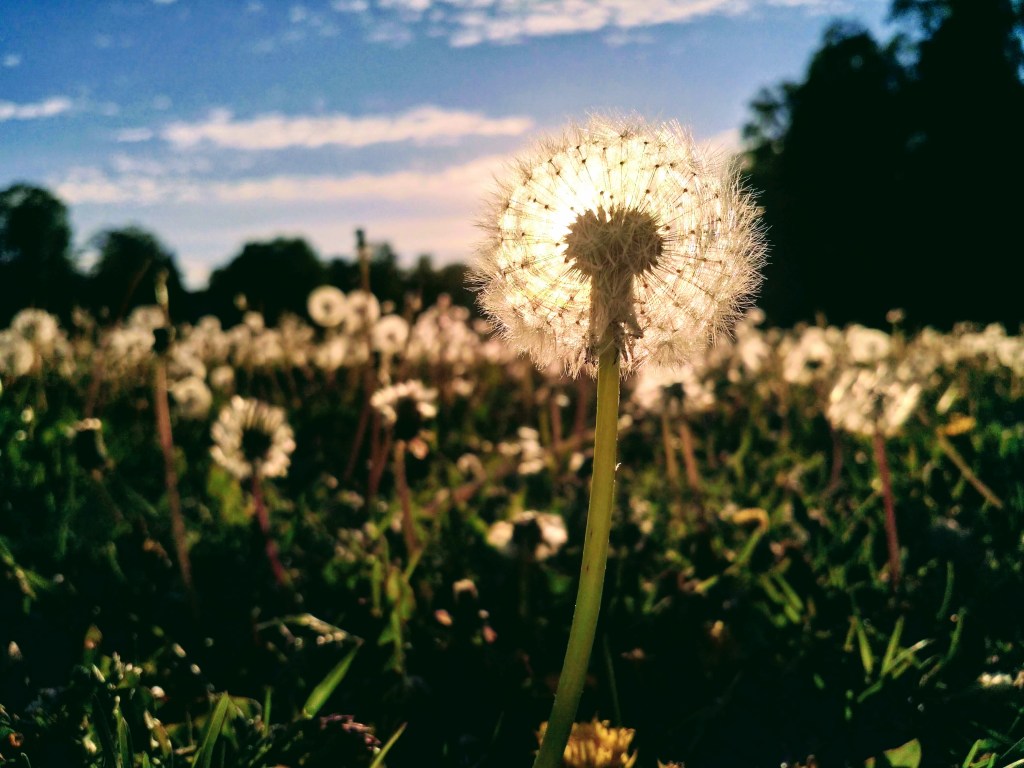
Taken on a Nokia 8. Munkkiniemi Frisbeegolf Course, Finland, 1 June 2020.

What a truly bizarre academic school year.

My last lecture for the 2019–2020 academic year was scheduled to take place this morning. But, covid-19 ensured that I would not physically meet with my students, and the entire last dash towards the end of the year was rather anticlimactic. I spent a portion of this weekend recording and cleaning up the audio files for my last lecture and sorting through my slide decks. And, by about 9.30 this morning, all of the lecture materials were uploaded and visible via various distance learning tools the University of Helsinki has made available to both instructors and students alike.

Now, I’m left with sorting through my inbox as final assignments filter in and submitting my final reports and student grades. No lovely send offs. No in-person thanks and well-wishes for equally productive and restorative summer holidays. No fanfare at all, it seems.

It kind of sucks, to be honest.

And, most educators I suspect have felt something similar for the last several months. specifically as they close the books (pun intended) for this school year. And, certainly at the end of this most memorable and challenging of academic years.

Teaching and lecturing are exhausting during the best of times, and more so when you must quickly adapt and adjust to new realities with relatively little warning at all. I’m fortunate. I love my job and find the exhaustion infinitely rewarding because of the returns earned through inspiration and continual intellectual challenges and breakthroughs for me and my students. I’m infinitely fortunate to have the continual support from my direct supervisor and immediate colleagues, and incredible students, all of whom as graduate students are more than capable of using their own reserves to draw upon for self-discipline and time management necessary to learning asynchronously.

But, goodness I miss lecturing.

The worry for me and the source of my overwhelming exhaustion this year relates to that constant concern that the courses and materials are not meeting their needs. That all of these tools and technologies made available to us are poor and rather inadequate substitutes for the real-life, in-person interactions we typically enjoy and use to gauge engagement and understanding. Interactions I enjoy, and ultimately use to measure my own performance as much as theirs.

Summer may have arrived in Helsinki for this university instructor and her students. But, much of this summer for me means revamping and reexamining how to make distance learning a little more palatable for my students as well as for me. How to make achieving our mutual learning objectives a bit more possible and attainable. And, how to make the experience a little less lonely and a little more fulfilling and more interactive even with social distancing measures in place.

And, here, again, I suspect I’m not alone.

We are all redefining what ‘normal’ means to and for us. [Instructor and teacher friends, we’ve got this!] We are all adjusting to new realities and wondering what various seeds of change drifting on one wind or another will sprout in the near and distant futures.

Solidarity

I’m of the mind that educational institutions should be palaces — and those who educate should be paid more than just about any other profession. To me, investing in education, particularly through public support to universities and research institutions, helps all of us within and across societies. When we know how to process information and distinguish fact from fiction, we can discuss issues which affect us all through informed debate, and shift our thinking as new information and evidence comes available.

Society at large in my mind should reward the many, many, many individuals who ceaselessly and unrelentingly dedicate their lives to educating others. It simply makes sense to me, as an individual, as a member of society and as an extended member of the University of Helsinki staff and faculty.

As further cuts to education and research are discussed and pushed forward as sound policy, I am appalled. I may not be a member of a particular union at the university; but I unequivocally support the unions and their members as they strike today. All those who work at and with the university to make it one of the best in the world deserve better. This collective of amazing, talented and indefatigably dedicated individuals should certainly be valued rather than continuously and rather callously put under increasing pressure to do more with stagnant (if not falling) wages and with the added understanding that their jobs and vocations may be but fleetingly secure.

Academic life is no joke. Nor is it particularly lucrative for the vast majority of us who have chosen it. And, most academics do not expect outrageously generous salaries or benefits. However, most of us understand that continual cuts result in increasing burdens on the entire system. Certainly, as employees, we suffer. But, more importantly, those seeking an education and knowledge suffer more.

If I were a member of one of the university unions, I would be striking today. Proudly. And resolutely.

Solidarity, my comrades! Your worth is immeasurable!

Solidarity-fist

Their success…

I am shattered.

In truth, I’m running out of ways to describe just how exhausted and spent I am at the moment — mentally and physically, but particularly mentally. This does not serve me well when my vocation depends upon the mental acuity to not only communicate well, but to help others communicate their own ideas, plans and findings more effectively.

As a consequence of the need for a mental break and at least a week (or more) of decent nights’ sleep, I confess: lately, I’ve felt less than successful at my job. In fact, I’ve felt like I’m letting my colleagues and my students in particular down.

Today, however, two things happened which reminded me that I’m still doing okay. First, I received an email from a former student, thanking me for helping her with grant writing. After multiple attempts and failures in the past, she received two years of funding for her PhD research. Reading this over my morning coffee made me smile. But, this evening, during an entirely different class on conference presentations, one of the participants shared that she actually won a prize for her presentation at a local conference last week. And, she believed that recognition resulted from her experiences in and feedback from that class particular over the preceding three weeks.

Today was a good day.

My success as an instructor and a member of the extended University of Helsinki community isn’t so much about cataloging accolades for my own resume. It’s much more about these seemingly small-scale successes for my students and colleagues. Their successes are my successes. Their awards reward me even if I am neither recipient or beneficiary. I don’t need to be.

If I am at all effective in my job, these individuals—who spend 12 to 24 hours sitting in a classroom with me or painstakingly address each of my seemingly infinite number of suggestions and revisions—gain one skill or another to help them along in their careers. Whilst I don’t often know what happens to them once they leave my classroom or inbox, I thrive on hearing their success stories and victories. And, it could not be more meaningful; it could not make me happier.

Several weeks ago, I noticed balloons randomly placed around the city centre campus. They seemed so celebratory, although at the time I did not feel at all festive. I honestly cared now why they were there; I just liked seeing them and snapped a picture.

This evening, they seem relevant. And, celebratory in an altogether different way. And, this evening, as with most, I am immensely proud and honoured to serve as a member of this community of brilliant scholars. Here’s to our collective success.

University of Helsinki


Bigger picture & wider lens

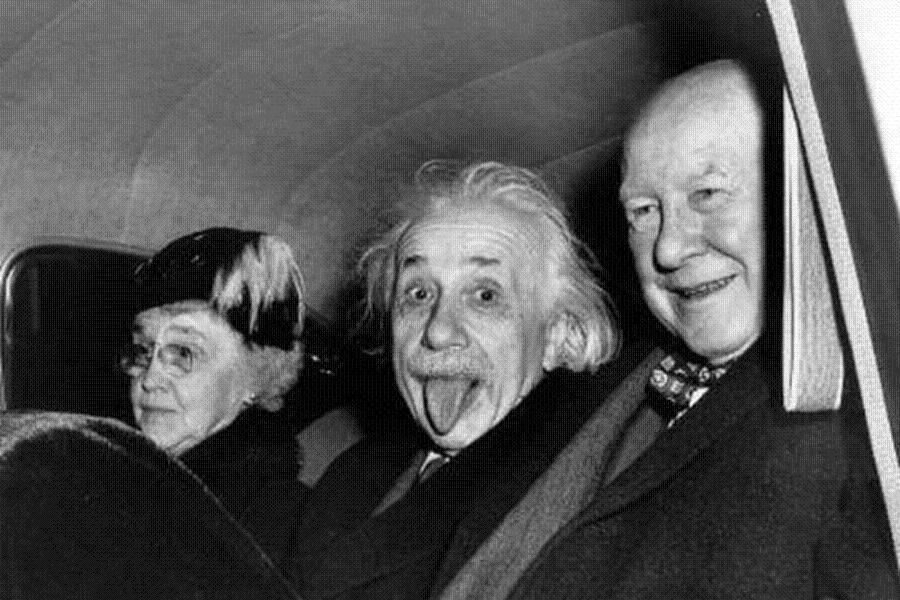
einstein-picture-full-uncropped

Arthur Sasse / AFP

Maybe it’s because I love the notion of the mad scientist. But, I love Einstein.

His brilliant mind aside, I love his wit and eccentricity, along with his passion for communicating science and his own work within it.

One of my favourite images of Einstein other than him sat in wacky dress donning furry slippers (naturally) features the not-so-mad scientist sticking his tongue out. I’ve had a version of that image for as long as I can remember, and it never fails to cheer me up and remind me to embrace the silliness whenever I can.

I decided to use the image for a talk I’m giving later today to women in STEM at the University of Helsinki. The talk itself is on communicating science. And, as I’ve been thinking about and formulating precisely what I want to say on communicating science vis-á-vis the dreaded conference presentation, that image of Einstein has popped up in my head over and over again.

When looking up images as I was preparing, I found a bit on the history of it, and love it even more now.

My original intention and own message for including it focused on simply ‘being yourself’ during presentations. When we attempt to assume someone else’s notion of what it means to be a researcher or scientist or instructor (in my case), we become disingenuous and lose credibility amongst our audiences. We aren’t actors, after all. And, we shouldn’t pretend to be.  We also lose the plot of our message as well. Rather than water down our own personalities and individualities, I say bring them to the forefront when presenting.

But, also, I think this image reminds us to have fun with our presentations, particularly when we care most about the messages we are communicating. Most of those with whom I work research incredibly interesting yet at times troubling or difficult topics. It’s hard work no doubt. But each of us are truly passionate about our work (I hope) and I’d like to think that we also have fun with it.

In addition and after reading the back story behind this image of Einstein and his tongue, to me the image now serves as a reminder to never assume that the audience will intuitively get the full picture of the story we’re attempting to tell. Unless, that is, we actually tell the story well.

Details matter. As does the bigger picture and wider lens.

Metamorphosis

As a twenty-something graduate student, I never imagined teaching. The prize that I kept my eye on at that time was research, ideally in a position related to policy in some way, shape or form. At that time, as an arrogant graduate student rather myopically focused on her own research, I thought landing a teaching gig would be the worst possible outcome of all those hours and years spent as a graduate student.

Oh, the irony. Life has a way of reminding us of just how foolish we can be as young (or, even, older) idealists.

Fast forward 20-plus years, and here I am lecturing to graduate students. What’s weirder still, I love it. After three full academic years of teaching at the University of Helsinki, I cannot imagine not teaching.

Part of my enthusiasm for teaching lies within the topics I teach: academic writing, conference presentations and presentations in general, and grant writing, along with a few other transferrable skills courses. I was fortunate as a graduate student to have incredible mentors, professors-turned-friends who I still rely on for their wisdom and guidance, even if I don’t constantly pester them or hover in their doorways. The lessons they taught me years ago remain with me even now, and often echo in my own lectures. I can only hope that I do these incredible minds and kind souls justice. Because they shaped me in so many ways and helped me to become a more dedicated member of the academic community I now feel duty-bound to serve.

As exhausting as the academic calendar is and as much as I look forward to summer and winter breaks, being an instructor never ceases to provide further inspiration and immeasurable rewards. This most likely reflects the immense privilege it is to guide the pool of students that grace my classrooms. These brilliant, dedicated individuals, wise beyond their years, amaze me. They are, quite simply and, as one professor referred to me, indefatigable. As I sift through my inbox sending reviews and feedback to those who worked incredibly hard throughout whichever course they took with me, some of these bright young minds provide feedback to me. I welcome these moments because they help me do better in future. But, this, this I wasn’t expecting and it has moved me in ways I can’t begin to describe:

…. [O]ne thing that I found particularly inspiring was that you seemed to let your personality bubble through your professional instructor role. I have noticed that especially women often somehow suppress or flatten their personality when acting in an expert position, which is maybe because they are afraid of not to be taken seriously otherwise. I don’t want to end up falling into this pit, so I also want to thank you for showing an empowering example that it is possible to be a professional without burying yourself under a role.

For whatever reason, this feedback from an incredibly bright young student represents one of the most powerful indicators that I’m doing what I should be doing. What I was intended to do. And, perhaps, something I’m truly good at. If my classroom example encourages young women scholars to be themselves regardless of stereotypes and expectations, all the better.

Indeed. As a graduate student, as a young career professional and later as a mid-career professional, I didn’t always feel sufficiently empowered to be me. Perhaps the greatest gift this gig has offered me is a way to find my own voice and to apply that voice to providing guidance to others. Without consciously realising it, my own voice appears more genuine and more authentic than it’s ever been before. And, oddly, more confident.

I love my job. Truly. But, this personal metamorphosis was so entirely unintended, yet I completely welcome it. And, can only hope that it continues. At the very least, I hope my own metamorphosis allows others to transform as well…


Read to write

Style guides of various sorts from my own library.

Style guides of various sorts from my own library.

In my Academic Writing class, my students often ask what they can/should do to improve their writing aside from learning grammar and stylistic conventions in English. Aside from referring them to the various style guides around, my answer never waivers: ‘Read. Read as much as you can from writers who write well and writers you admire and enjoy.’ The clever sods typically follow-up my response with a question that inevitably stumps me: ‘Who should we read? What books do you recommend?’

So many amazing writers , both contemporary and historical, provide excellent examples of clear, clean and crisp writing it’s a challenge to come up with a list of any kind. Given that so many others have created their own lists of ‘must-reads’, it feels weird providing my own answer this question let alone that anyone is genuinely interested in my response. But, as their guide in all matters related to Academic Writing, I have thought about this quite a lot since returning to the classroom. At the very least, here’s hoping I’ve added to their holiday reading list and possibly provided them with a few gems previously unknown to them.

Given how often I get this question, I decided to put together a list (and link) that I can refer them to.

So, who should my students read?

Typically, when I’m asked I immediately respond with John Irving. To me, anything written by John Irving is a) brilliant; b) weird and slightly surreal; and, most importantly, c) exceptionally well-written. I tell my students to read anything he’s written (because I love him), although my favourites consist of The Cider House Rules and A Prayer for Owen Meany. I’ve lost count how many times I’ve read each of these books over the years. I love them each time. His characters are always tragically and bizarrely flawed. But, it’s the writing that astounds me anew every time. Mr Irving’s use of language and style combined keep me reading him, even when the stories fell well short of my hopes. In short, I love his writing—stories and characters aside.

In terms of other writers who provide excellent examples of style and language, here’s my full list (I supplement my own list with recommendations from friends gathered in Facebooklandiastan below). This inventory is in no particular order.

  • John Irving: A Prayer for Owen Meany and The Cider House Rules, but anything really.
  • A S Byatt: Possession.
  • Haruki Murakami: Anything goes. Despite being translated into English, because Mr Murakami knows English so well, I suspect he plays a significant role in the translations of his books and short stories into English. He’s a masterful story-teller, and has a brilliant translator.
  • Alice Walker: The Temple of My Familiar.
  • Vikram Seth: An Equal Music is perhaps one of the most beautifully written books I’ve ever read. This book moves me to tears, quickly advancing to uncontrollable sobbing during several passages. Absolutely incredible writing and an exceptionally example of carefully placed phrases, words and punctuation.
  • Ernest Hemingway: For Whom the Bell Tolls and The Old Man & The Sea are my favourites. But, just about anything Papa ever wrote is worthy of reading and demonstrates simple eloquence in all its brilliance.
  • Maya Angelo: I Know Why the Caged Bird Sings.
  • Norman Rush: Mating — another incredibly beautifully crafted piece of writing which earned Mr Rush the National Book Award.
  • Ian McEwan: Atonement.
  • David Sedaris: Just about anything ever written as well.
  • Edward Abbey: Desert Solitaire and The Monkey Wrench Gang.
  • Toni Morrison: Beloved.
  • Alice Munro: Just about anything she wrote.
  • Paul Farmer: As my discipline-specific idol, I love his entire body of works. But, he’s also an exceptional writer, academic or otherwise. AIDS and Accusation was one of the most important works of his which still resonates with me roughly 20 years after I first read it.

Now, the recommendations from others. Friends from all walks of life provided the following list. I’ve placed an * next to those I fully agree with and neglected to include in my list. If you have additional writers or titles that you think belong here, please share them!

  • Charles Dickens for his beautiful eloquence. (Interestingly, John Irving loves Dickens; Dickens is not a favourite of mine).
  • Kurt Vonnegut*: I haven’t read any Vonnegut since high school, but I love him still. 
  • Stephen King: Despite borrowing from his own book on writing for my class, specifically his insistence on the active voice, I don’t find his writing that compelling. But, it is incredibly sound technically, and, undoubtedly the man has a wicked imagination.
  • Ursula la Guin
  • Richard Dawkins* ‘makes science easy to read without trivialising it’, commented one friend. I fully agree. I haven’t read much of him since I left graduate school. He’s incredibly eloquent as a speaker and writer both, and bloody brilliant.
  • Vladimir Nabokov
  • Anne Rice for her prose. Again, not one of my favourite writers, but that’s mostly because I’m admittedly a snob.
  • Primo Levi, an Auschwitz survivor and chemist. I’ve not read anything by him, but will do.
  • Flannery O’Connor
  • George Orwell*
  • David Lodge: Changing Places, Small World and Nice Work.
  • Julian Barnes* — I can’t remember which book it was that I read first. But, I love Julian Barnes. Amazing writing.
  • Jane Austen: just about everything. 
  • PG Wodehouse
  • Neil Gaiman
  • Isaac Asimov
  • TC Boyle*: I’ve read both Drop City and A Friend of the Earth and loved both.
  • P J O’Rourke
  • Barbara Trapido
  • Christopher Hitchens*
  • Mark Twain: Rather embarrassing that I neglected to include him in my list, given that I adore him and grew up not far from Hannibal, Missouri. 
  • Henry Miller
  • James Joyce: Dubliners
  • Christopher Brookmyre
  • Arundati Roy*
  • Salman Rushdie*
  • Marmon Silko
  • Michael Chabon
  • Margaret Atwood*
  • Donna Tartt: The Secret History seems to be a favourite amongst others.
  • Hunter S Thompson*
  • Douglas Adams*
  • Terry Pratchett: According to one friend, you should start with Guards! Guards! and move onward through his catalogue.
  • Spider Robinson
  • David McCullough
  • Gina Berriault
  • Joy Williams
  • Richard Yates
  • John Cheever
  • Virginia Woolf*: A Room of One’s Own
  • Oscar Wilde
  • Bertrand Russell*
  • Harold Pinter
  • J M Barrie
  • Alan Bennett
  • Jean Paul Sartre
  • Albert Camus
  • Conan Doyle
  • Russell Brand
  • Truman Capote*: In Cold Blood. What an absolutely amazing piece of writing.
  • Richard Feynman: QED and Surely You’re Joking, Mr Feynman were both recommended.
  • Gloria Naylor
  • Gabriel Garcia Marquez
  • James Lee Burke
  • Marilynn Robinson
  • Sherman Alexie
  • Nicholas Kristof
  • David Brooks