Hubris squared

Sometime in May or June of 2008, I stumbled across an absolutely unbelievable podcast that explained the burgeoning housing crisis and soon-to-be catastrophic turmoil on Wall Street. The Giant Pool of Money (parts 1 and 2) talked about well… a giant pool of money, and why this might be a concern for all of us.

We’re all well familiar with the hubris of the financial industry and Wall Street in particular by now. And, whilst many lives were changed and the fall-out from the 2008 global financial collapse is a bit better understood now, we’ve seemingly moved on. Fines were levied against banks and their CEOs and directors. Much money was pumped into an industry that created an unimaginable mess all in the name of greed. Yet, no one was really held to account for creating economic calamity for millions. At least no one in the US.

As Main Street called for ‘heads to roll’, no real consequences befell those who orchestrated the largest financial collapse since the Great Depression. Enter the single attempt to prosecute those ‘responsible’. And, enter hubris of an entirely different sort.

Ultimately, Abacus Federal Savings Bank in Manhattan was found not guilty (quite rightly). But, why was it the target of prosecution for acting precisely as it should once employees acting against the law were discovered and following established risk procedures? Yet, still, the larger, more powerful banks that instituted predatory lending practices, whose CEOs earned billions whilst their banks nearly failed, remain untouched and unscathed?

Perhaps Ralph Nader was right: only the super-rich can save us all. I’m not holding my breath, but I will cheer for and applaud institutions like Abacus.

Waiting….

Today, it’s all about waiting.

Waiting to start the 2017 addition of the Helsinki Midnight Run. (My start time is 21.25, Helsinki time.)

Waiting to hear how prepared and where are family and friends in Florida are hunkered down and hopefully safe from Irma’s approach. (Last forecast has her hitting the Florida Keys early Sunday morning local time, Sunday afternoon our time.)

And, waiting to learn the fate of those who are currently riding out Irma’s wrath across Cuba.

I hate waiting. For anything. But, waiting on all of this on the same day has me unbelievably restless and anxious and fidgety. And, the weather here appears to reflect my mood rather well — rainy, windy and generally miserable and unsettled.

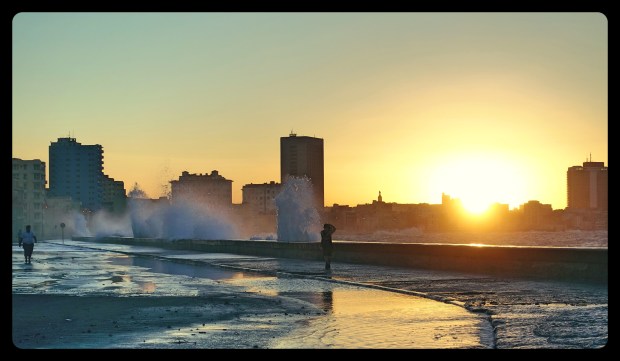
There’s absolutely nothing we can do from here for those in Florida and Cuba currently either experiencing what I image to be hollowing winds and lashing rain, deafening and terrifying at once. I can’t help but worry about those we’ve met who live far too close to the water’s edge. I can’t help but think of the waves currently crashing over the Malecón, which will likely grow and intensify as Irma follows Cuba’s coast. And, I hope against hope that not too much is washed away.

And, I can’t help but wonder what will remain tomorrow and the day after.

And, then comes Florida, likely to take on the full force or Irma’s terror.

As I sit or pace or try to work and take my mind off Irma’, the faces of those I love flash before my eyes, whether in Cuba or Florida.

And the word that comes to mind is simply, ‘¡cuidate!’

Be safe.


In the storm’s path

Watching hopelessly from afar as disaster strikes is never easy. When it hits places once called home or where we’ve left pieces of ourselves and our hearts, there’s a certain pain that accompanies the helplessness and sense of loss. It’s akin to grief really.

Harvey affected far too many people, many of whom I love and places I frequented with my beloved grandmother and great aunt as a child. I can’t shake the feeling that a house on Prairie Dr in Eagle Lake, Texas sat sadly inundated with water, thus washing away some of my fondest and happiest of memories with family. The house no longer belongs to us; those memories, however, persist. And, perhaps that’s more important. Still, I love that  house and hope it remains standing and dry.

Miraculously perhaps, all those I love in that part of the world, whilst affected, are not themselves lost. They remain safe. They can and are rebuilding, and that alone comforts me as I sit so very far from them.

Now, scarcely two weeks later, here we are again, watching as yet another monster storm tracks towards two places inhabited by family and friends alike, one of which has become a home I long for and fear for. Either Hurricane Irma will hit South Florida, where many of my very much loved and missed in-laws now reside. Or, she will inundate Cuba, that crazy, singular island inhabited by far too many friends and family I’d rather not see forced to endure yet further mayhem.

I can’t imagine the destruction accompanying a storm like Irma on a place I know intimately now, a place which persists on the darkest days here in Helsinki and carries me through the toughest of times. I cannot remove the images of pieces of the Malecón scattered across the roadway after a strong cold front brings ginormous waves for a day or two. Those waves now seem like mere ripples compared to the storm surge of a category 5 hurricane.

How much of that seawall will remain if a storm like Irma strikes? How many of those charming yet crumbling buildings along the Malecón or other parts of the Cuban coast will remain in her wake?

Like those in her potential path, we wait. Please, be merciful, Irma. You’re fucking with the lives of too many people I love.

Malecon_25 Jan 2017

A crazy gorgeous sunset show, featuring roadway-closing waves along the Malecón. 25 January 2017.

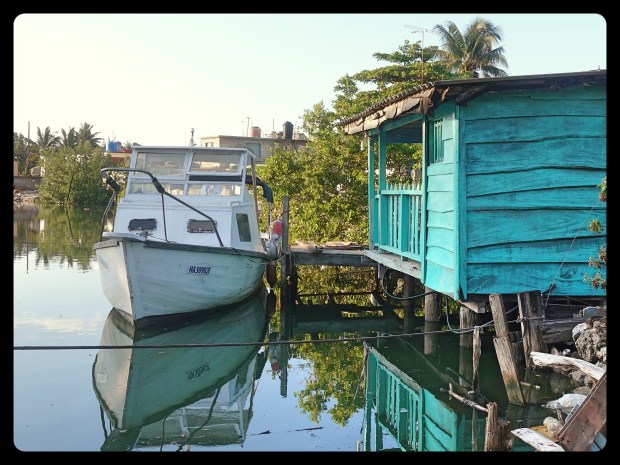
Santy Shack_Jan 2017

A shack next to one of the best restaurants (Restaurante Santy Pescador) we’ve been to in Cuba. Many of the shacks along this waterway seem precarious as Irma approaches. Havana, 28 January 2017


If the people lead…

The Leaderless Revolution is one of the many books that sits in my to buy / to read list of books. It sits there largely because several folks I respect immensely rather simultaneously and independently posted their reviews of it, and how it has them thinking of what we could accomplish if only unconstrained by structures which inhibit us.

Colour me intrigued.

Last night, also rather randomly, The Cuban queued up for our nightly dose of television a BBC Storyville documentary featuring none other than Carne Ross, the author of this intriguing book. I finally bought the book after about 15 minutes into this documentary. And, I plan to read it immediately upon its arrival.

Communities can not just offer but provide solutions. But we overlook such opportunities because these solutions can’t possibly be that easy or can’t possibly work because no one has ever tried them. Communities often remain unconsidered or an after-thought by those who make decisions, decisions which profoundly affect them. And, by far more often than not, those decisions are made without representatives of specific communities in the sodding room.

No wonder so many projects fail to reach their achievements or to produce the results others have intended or to meet the needs of those they should be helping. As someone who worked in development aid for a number of years, this was and remains all too obvious and tragic. Yet, precious little appears to change.

By contrast, a few indefatigable individuals I am honoured to know have extolled the virtues of anarchist activism for years. They don’t just sing its praises; they are anarchist activists in action.

Currently, through their efforts aimed at reducing opioid overdose deaths in their communities (in this case, Toronto), they are demonstrating just how incredible community-level activism alongside a little anarchism can effect change, hugely and positively impact local-level communities, and confront power structures we typically cower to or eventually relent to.

Briefly, as city-level structures (pardon the pun) drug their feet to implement any action as overdose deaths continued to not just occur but increase, these harm reduction policy activists sprung into action and opened a pop-up injection site in a community park. This action resulted from inaction and in part out of desperation. They were tired of seeing their friends and community members die. And, they knew definitively what to offer the community in order to prevent further deaths. By supervising injecting drug use, they can help prevent deadly overdoses immediately and call for medical assistance if necessary or needed. An added bonus is the on-the-spot outreach to those who may otherwise exist beyond the reach of health and social services. Services and the space are provided without judgement and without conditions placed on those seeking them, all within the community where it is most needed.

Within one week of opening up the pop-up site, they had reversed five likely fatal overdoses. They had also distributed overdose prevention kits to many, many, many others.

This may seem rather small-scale. But, imagine: within a single week, five of your friends died. And, you had the tools to help prevent those deaths but they were locked away by someone beyond your own community.

What would you do? Would you wait for public (e.g., city, state or national level governmental) action? Or would you do what you could to prevent any further deaths?

I’m not necessarily convinced that government is entirely bad. Indeed, I still believe in public institutions on various levels. But, clearly, we—all of us—face some serious obstacles given how power structures currently overwhelmingly favour those with power and money. Those who are already in the room. Given that so many decisions are made which impact those of us not in various rooms, something clearly needs to change. Perhaps we need different rooms with fewer ‘big men’ and ‘important women’ standing at the front.

Perhaps, if the people lead, the leaders will follow.


I will not be terrorised

The world at the moment seems awfully scary and intimidating and violent. That violence appears utterly random at moments and widespread, even amongst those of us who live in relatively safe zones (e.g., not in places like Yemen, Iraq, Afghanistan or Syria, for a start).

After last week in Charlottesville, after Thursday in Barcelona and after yesterday evening’s knifing closer to me in Turku, the only thought I have is, ‘I will not be terrorised’.

Am I afraid?

For humanity, yes, indeed, I am. But, I refuse to cower in fear that something ‘might’ happen. That the boogeyman de jour will leap out from behind some imagined barrier wielding a weapon of choice. I refuse to look at another individual, different from me, and think, ‘Aha! That is the boogeyman we’ve been warned about’, and continue to eye her/him suspiciously.

Years ago, I had a business trip to Israel, where I spent a lot of time at Hebrew University and travelling to and fro on various buses for meetings with colleagues and to attend special events. It was an incredible trip really, and introduced me to a part of the world that is unimaginably beautiful in its stark, barren, brutal reality. In many ways, I fell in love with the country.

But, whenever our group was together, armed security guards accompanied us, in itself rather shocking to me. By armed, I mean, bulletproof vests and semi-automatic weapons as well as Glock-9s at their sides. Never mind their ammo belts. Several trips required traversing routes twice as long as the direct route, simply to ‘avoid’ certain areas perceived as particularly ripe for attacks from Palestinians.

Because this trip coincided with an uptick in the Israeli-Palestinian conflict in the early 2000s, my boss at the time, an Israeli from Jerusalem, mentioned that there was chatter and concern that ‘something’ might happen. And, several times during that two-week trip, every single mobile phone my fellow passengers carried on various buses rang seemingly simultaneously. I learned quickly that when that happened, there had been some tragedy elsewhere. In fact, three suicide bombs exploded during that trip, two of which rather near to and soon after we’d be in various spots. [Several weeks after that trip, a bomb exploded in the cafeteria at Hebrew University, a place I’d had more than one lunch at during that trip.]

Was it scary? Yes. But, more so, it was sad. It was profoundly and deeply troubling to see the affect it had on those who live that reality every single day. Suspicion and fear weighed heavily, and the divisions between Israelis and Palestinians seemed to become more prominent. Talking with various vendors along the edge of the Arab market in the Old Town in Jerusalem or colleagues and friends from various parts of Israel, everyone wanted the same thing: peace. To live in a world free from the random acts of violence that plague us all. To allow children to be children, and to know a world in which they needn’t fear or cower depending upon their own identities. To live in a world free from those learned identities.

That trip was difficult, but it was also one of the most amazing trips of my life.

What gave me hope then and continues to guide me on the darkest of days now is the knowledge that not everyone is a maniac hell-bent on destruction. Not everyone is so consumed with hate that they seethe with rage at the mere mention or glimpse of their imaged enemy. Not everyone sees diversity as a scourge that should be forever eliminated.

Not everyone is a terrorist. Not every Arab or Muslim. Not every black man. Not every left-wing liberal or so-called antifa. Not every conservative or Republican. And, not every white boy with a Southern drawl.

Yes, at the moment, I am scared. More so because we seem to be less-inclined to learn from or engage with on another and prefer to categorise those who are different as ‘the other’ and, therefore, evil or our enemy.

But, rather than be terrorised, I’m going to continue to live my life as if that fear did not exist at all. I will not assume that every act of violence is a terrorist attack.

Months ago, after yet another horrid incident, I hoped that we could figure this shit out. I’m still hoping and believing that we can. We. All of us. But, if we are to do so, we must stop being terrorised.
scaredsalman

Is America great again?

The covers of this week’s Economist, New Yorker, and Time magazines all should give us pause.

The US was great. Despite it’s flaws and oddities and decisions with which I disagree. And, there are more Americans who are truly amazing individuals compared to the vile vermin who’d prefer we all be white and Christian.

But, the current occupant of 1600 Pennsylvania Avenue?

So, to those 6 in 10 Trump supporters who say they will never disapprove of him, I ask you: Are we great now?

Addendum: Der Spiegel‘s cover this week deserves a place in this post as well. Sigh….


This slideshow requires JavaScript.

On ‘I Am Not Your Negro’

I Am Not Your NegroI Am Not Your Negro by James Baldwin

My rating: 5 of 5 stars

I saw ‘I Am Not Your Negro’ during its only showing in Helsinki a few months ago at a film festival. I knew it would be a powerful documentary and commentary on race in America, both historically during the civil rights era and given contemporary events. I had no idea I’d still be so affected by some of those words and images today.

Given current happenings in the US, and specifically the events of this past weekend in Charlottesville, I keep returning to various scenes from the film and the eloquent anger and pain carried through Baldwin’s words, whether calmly spoken and delivered by himself decades ago or narrated by Samuel L Jackson. Medgar, Malcom and Martin were silenced, but Baldwin almost seems alive in the theatre or in the words printed in this book. I can only image how incredibly powerful his planned book would have been. In its absence, I’m grateful to at least have ‘I Am Not Your Negro’, along with all of his other works.

In a fevered state this afternoon, I came across this excerpt, and it seems so appropriate in this moment:

‘You never had to look at me.
I had to look at you.
I know more about you than you know about me.
Not everything that is faced can be changed;
but nothing can be changed until it is faced.’

Nothing can be changed until it is faced.

Nearly 50 years since Martin Luther King Jr was shot and killed, we appear to have regressed in our attempts in the US to face the brutal reality in the history of our nation. Until we face that reality—openly and honestly and completely—how many more Charlottesvilles will we witness?

View all my reviews

On Charlottesville…

What is there to say or write, really?

Like much of the country, my country, I’m rather stunned this morning, and yet not. I’m heartbroken, again, to see hatred and bigotry out-screaming and dulling the goodness and diversity I love about my country. I’m rather out of words.

Earlier this year, I was fortunate to catch ‘I Am Not Your Negro‘ in the theatre at its only showing in Finland. James Baldwin’s words are more than moving, and more relevant than anything written today, to my mind. Given the time between when they were spoken or written, their relevancy today seems almost prophetic, yet its indicative of what we haven’t achieved.

Indeed, given yesterday’s events, it seems we’ve regressed.

Those of who have nothing to lose must speak out. We must stand up to bigotry and hatred and injustices that take place every single day. And, we must listen.

It will be scary. It will make us uncomfortable. And, it will exhaust us unimaginably. But, if we are to move beyond this madness and mayhem, we must. 

‘We must take sides’

In the wake of the bombing of a mosque in Minnesota this weekend, a friend posted the following quote from Elie Wiesel:

We must take sides.

Neutrality helps the oppressor, never the victim. Silence encourages the tormentor, never the tormented. Sometimes we must interfere.

When human lives are endangered, when human dignity is in jeopardy, national borders and sensitivities become irrelevant. Wherever men and women are persecuted because of their race, religion, or political views, that place must – at that moment – become the centre of the universe.’ 

Elie Wiesel, The Night Trilogy: Night, Dawn, the Accident

Indeed.

(I’ll be moving a re-read of The Night Trilogy up the to-read queue.)


Kaep & NFL hypocrisy

Yesterday, I posted an image to my Facebook page which featured NFL players Michael Vick, someone else I don’t know (Rice?) and Colin Kaepernick. Two players were convicted of felonies, served time and then were granted multimillion-dollar contracts to return to the NFL. Colin Kaepernick, in case like me you have been living under a rock and don’t follow American football, kneeled during the national anthem at several NFL games last season to ‘protest police brutality and social injustice’. As a free agent this year, he remains unsigned by any team in the NFL. 

Before yesterday’s post disappeared into the virtual black hole, I didn’t get a chance to respond to a few comments. Several of these touched upon various issues in the blacklisting of Kaep and the utter hypocrisy of turning a blind eye or dismissing bad (and to my mind) worse behaviours vis-à-vis players like Michael Vick since ‘they did their time’. Because this entire story equally fascinates and infuriates me, I thought I’d move the conversation here.

First, yes, indeed, Michael Vick served time. And, he’s spun that tale of redemption. But, honestly, his words and deeds still make me sick. That he’s been rewarded obscenely so makes it all the worse. To me, his post-prison personae shows very little contrition or humility in the sense that he knows he did something bad. Rather, he laments getting caught, rather than committing the crime in the first place. He regrets his prison sentence rather than abusing and killing dogs.

Another comment suggested that the NLF lost money this past year due to the actions of Kaep. I don’t buy it (no pun intended). Evidently, even as an unsigned player, Kaep falls 39th on the list of 50 top-selling official player merchandise. Do a search on Kaep and a slew of articles pop up blaming him for the NFL’s falling attendance and popularity, but they all appear to be from similar sources and those who disagree ideologically with his message rather offering any real figures or data. Thus, despite his popularity with audiences, Kaep is a convenient scapegoat. It’s convenient as a headline and that’s about it.

Another point was made that Kaep and others who do peacefully voice an opinion / raise awareness as only they can given the platform and audiences at their disposal should just accept the consequences when they voice unpopular views and are ridiculed or ostracised. I don’t think anyone who has voiced an opinion, popular or not, ever assumed that they shouldn’t face ridicule or disagreement. But, this same rationale only goes so far. More often than not, it crosses a line between respectful disagreement and outright hatred and threats of violence. Rather ironic in this particular case given why Kaep kneeled in the first place.

What really bothers is that this rationale harkens back to the justifications for the absurd public shaming and death threats lobbed at the Dixie Chicks when they were told to just ‘shut up and sing’.

Death threats for voicing an opinion. Peaceably exercising their freedom of expression. 

Does Kaep or did the Dixie Chicks deserve that? Rather than hear them out, we appear awfully quick to dismiss their concerns and demonise them. Pointing out the hypocrisy, particularly in the case of Kaep, seemingly falls on deaf ears and a return to the logical of ‘shut up and play’. 

Yes, athletes are performing a job. Yes, they are ‘entertaining’ us (or fans of sport X). But, why oh why do we think they have no right to have a voice? Why are we so quick to shame and punish Kaep for exercising his right, but we allow others to commit insanely violent and disgusting acts and to continue playing whilst reaping unbelievable financial rewards as well?

It both surprises me and doesn’t that a tracking tool was developed to log crimes committed by various NFL players. In addition to drunk driving and drugs possessions charges, one incidence lists ‘head butting his wife’ and ‘throwing a shoe at an 18-month-old infant’.

That’s lovely role-modelling there.

In my post yesterday, someone else commented that they were in favour of not allowing anyone convicted of a crime from playing in the NFL again. I’m not sure how I feel about that, but I certainly would balk at supporting a team that allows rapists and those perpetrating domestic violence on their playing field or in their uniforms. I certainly wouldn’t honour a player convicted of using dogs as bait (e.g., Vick’s induction into Virginia Tech’s Sports Hall of Fame). 

Kaep wasn’t violent (unlike a heap of other players, convicted or otherwise), he didn’t commit a crime (freedom of speech was and still is legal, thankfully) and he serves as a positive role model in his community off the football field as well (rather quietly I would say).

Admittedly, I’m not a fan of American football. At all. It’s just never really been that interesting to me. If I were a fan, though, I’d be more supportive of a team that stood behind Kaep than I would be of teams who continue standing behind the likes of Vick and others in that tracking tool.

Shaun King wrote an incredible piece on his obsessive love of football and why he was now boycotting the NFL. For him, as a lifelong football fan, he won’t watch or follow the sport any longer as well given the inherent hypocrisy of Kaep.

For a sport which to me is so over-the-top patriotic, why oh why are we punishing individuals for trying to make our country and ourselves better?
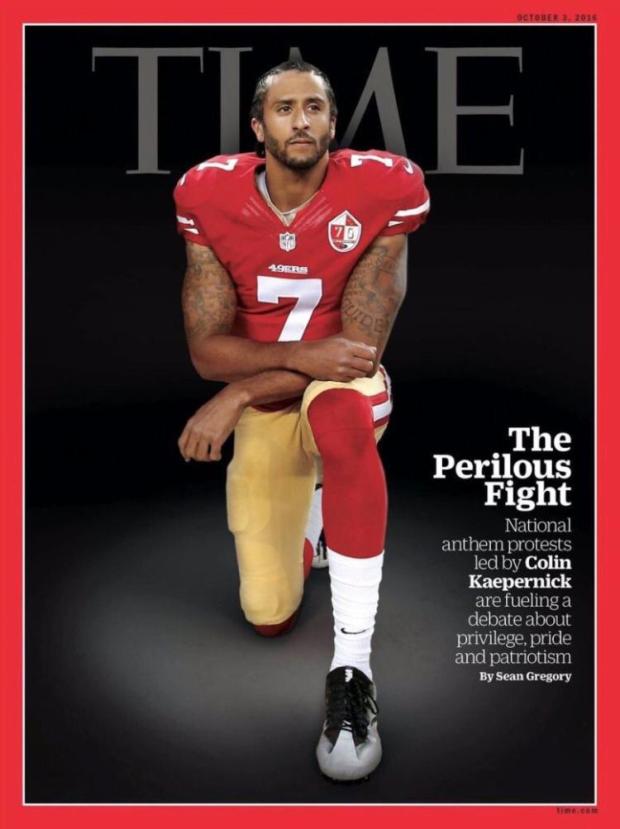

time-kap23s