On ‘I Am Not Your Negro’

I Am Not Your NegroI Am Not Your Negro by James Baldwin

My rating: 5 of 5 stars

I saw ‘I Am Not Your Negro’ during its only showing in Helsinki a few months ago at a film festival. I knew it would be a powerful documentary and commentary on race in America, both historically during the civil rights era and given contemporary events. I had no idea I’d still be so affected by some of those words and images today.

Given current happenings in the US, and specifically the events of this past weekend in Charlottesville, I keep returning to various scenes from the film and the eloquent anger and pain carried through Baldwin’s words, whether calmly spoken and delivered by himself decades ago or narrated by Samuel L Jackson. Medgar, Malcom and Martin were silenced, but Baldwin almost seems alive in the theatre or in the words printed in this book. I can only image how incredibly powerful his planned book would have been. In its absence, I’m grateful to at least have ‘I Am Not Your Negro’, along with all of his other works.

In a fevered state this afternoon, I came across this excerpt, and it seems so appropriate in this moment:

‘You never had to look at me.
I had to look at you.
I know more about you than you know about me.
Not everything that is faced can be changed;
but nothing can be changed until it is faced.’

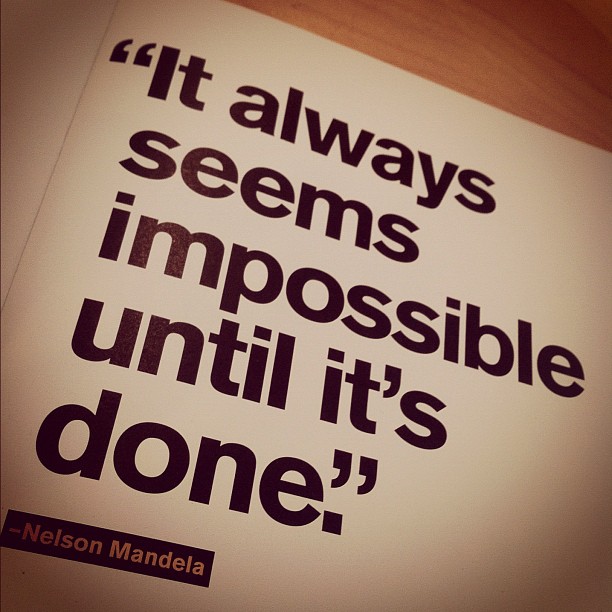
Nothing can be changed until it is faced.

Nearly 50 years since Martin Luther King Jr was shot and killed, we appear to have regressed in our attempts in the US to face the brutal reality in the history of our nation. Until we face that reality—openly and honestly and completely—how many more Charlottesvilles will we witness?

View all my reviews

On Charlottesville…

What is there to say or write, really?

Like much of the country, my country, I’m rather stunned this morning, and yet not. I’m heartbroken, again, to see hatred and bigotry out-screaming and dulling the goodness and diversity I love about my country. I’m rather out of words.

Earlier this year, I was fortunate to catch ‘I Am Not Your Negro‘ in the theatre at its only showing in Finland. James Baldwin’s words are more than moving, and more relevant than anything written today, to my mind. Given the time between when they were spoken or written, their relevancy today seems almost prophetic, yet its indicative of what we haven’t achieved.

Indeed, given yesterday’s events, it seems we’ve regressed.

Those of who have nothing to lose must speak out. We must stand up to bigotry and hatred and injustices that take place every single day. And, we must listen.

It will be scary. It will make us uncomfortable. And, it will exhaust us unimaginably. But, if we are to move beyond this madness and mayhem, we must. 

‘We must take sides’

In the wake of the bombing of a mosque in Minnesota this weekend, a friend posted the following quote from Elie Wiesel:

We must take sides.

Neutrality helps the oppressor, never the victim. Silence encourages the tormentor, never the tormented. Sometimes we must interfere.

When human lives are endangered, when human dignity is in jeopardy, national borders and sensitivities become irrelevant. Wherever men and women are persecuted because of their race, religion, or political views, that place must – at that moment – become the centre of the universe.’ 

Elie Wiesel, The Night Trilogy: Night, Dawn, the Accident

Indeed.

(I’ll be moving a re-read of The Night Trilogy up the to-read queue.)


Kaep & NFL hypocrisy

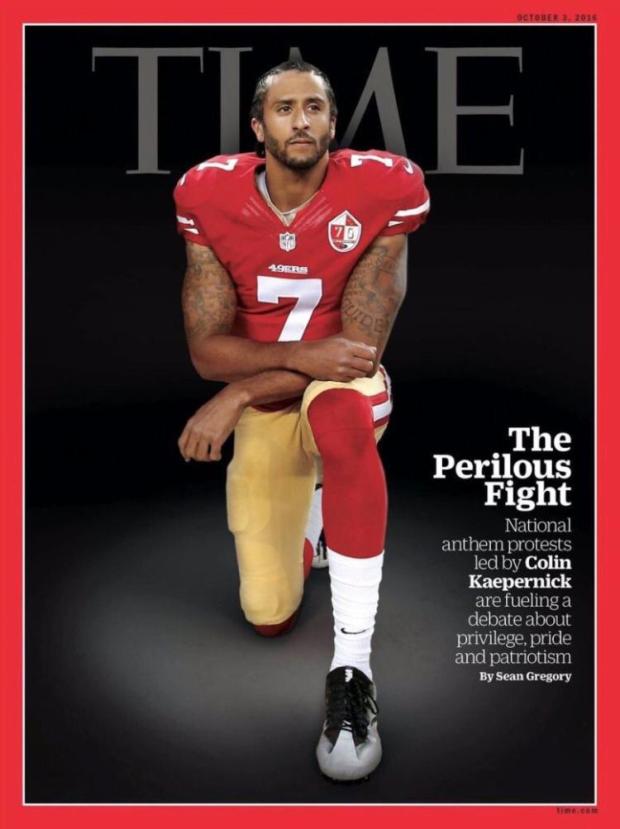
Yesterday, I posted an image to my Facebook page which featured NFL players Michael Vick, someone else I don’t know (Rice?) and Colin Kaepernick. Two players were convicted of felonies, served time and then were granted multimillion-dollar contracts to return to the NFL. Colin Kaepernick, in case like me you have been living under a rock and don’t follow American football, kneeled during the national anthem at several NFL games last season to ‘protest police brutality and social injustice’. As a free agent this year, he remains unsigned by any team in the NFL. 

Before yesterday’s post disappeared into the virtual black hole, I didn’t get a chance to respond to a few comments. Several of these touched upon various issues in the blacklisting of Kaep and the utter hypocrisy of turning a blind eye or dismissing bad (and to my mind) worse behaviours vis-à-vis players like Michael Vick since ‘they did their time’. Because this entire story equally fascinates and infuriates me, I thought I’d move the conversation here.

First, yes, indeed, Michael Vick served time. And, he’s spun that tale of redemption. But, honestly, his words and deeds still make me sick. That he’s been rewarded obscenely so makes it all the worse. To me, his post-prison personae shows very little contrition or humility in the sense that he knows he did something bad. Rather, he laments getting caught, rather than committing the crime in the first place. He regrets his prison sentence rather than abusing and killing dogs.

Another comment suggested that the NLF lost money this past year due to the actions of Kaep. I don’t buy it (no pun intended). Evidently, even as an unsigned player, Kaep falls 39th on the list of 50 top-selling official player merchandise. Do a search on Kaep and a slew of articles pop up blaming him for the NFL’s falling attendance and popularity, but they all appear to be from similar sources and those who disagree ideologically with his message rather offering any real figures or data. Thus, despite his popularity with audiences, Kaep is a convenient scapegoat. It’s convenient as a headline and that’s about it.

Another point was made that Kaep and others who do peacefully voice an opinion / raise awareness as only they can given the platform and audiences at their disposal should just accept the consequences when they voice unpopular views and are ridiculed or ostracised. I don’t think anyone who has voiced an opinion, popular or not, ever assumed that they shouldn’t face ridicule or disagreement. But, this same rationale only goes so far. More often than not, it crosses a line between respectful disagreement and outright hatred and threats of violence. Rather ironic in this particular case given why Kaep kneeled in the first place.

What really bothers is that this rationale harkens back to the justifications for the absurd public shaming and death threats lobbed at the Dixie Chicks when they were told to just ‘shut up and sing’.

Death threats for voicing an opinion. Peaceably exercising their freedom of expression. 

Does Kaep or did the Dixie Chicks deserve that? Rather than hear them out, we appear awfully quick to dismiss their concerns and demonise them. Pointing out the hypocrisy, particularly in the case of Kaep, seemingly falls on deaf ears and a return to the logical of ‘shut up and play’. 

Yes, athletes are performing a job. Yes, they are ‘entertaining’ us (or fans of sport X). But, why oh why do we think they have no right to have a voice? Why are we so quick to shame and punish Kaep for exercising his right, but we allow others to commit insanely violent and disgusting acts and to continue playing whilst reaping unbelievable financial rewards as well?

It both surprises me and doesn’t that a tracking tool was developed to log crimes committed by various NFL players. In addition to drunk driving and drugs possessions charges, one incidence lists ‘head butting his wife’ and ‘throwing a shoe at an 18-month-old infant’.

That’s lovely role-modelling there.

In my post yesterday, someone else commented that they were in favour of not allowing anyone convicted of a crime from playing in the NFL again. I’m not sure how I feel about that, but I certainly would balk at supporting a team that allows rapists and those perpetrating domestic violence on their playing field or in their uniforms. I certainly wouldn’t honour a player convicted of using dogs as bait (e.g., Vick’s induction into Virginia Tech’s Sports Hall of Fame). 

Kaep wasn’t violent (unlike a heap of other players, convicted or otherwise), he didn’t commit a crime (freedom of speech was and still is legal, thankfully) and he serves as a positive role model in his community off the football field as well (rather quietly I would say).

Admittedly, I’m not a fan of American football. At all. It’s just never really been that interesting to me. If I were a fan, though, I’d be more supportive of a team that stood behind Kaep than I would be of teams who continue standing behind the likes of Vick and others in that tracking tool.

Shaun King wrote an incredible piece on his obsessive love of football and why he was now boycotting the NFL. For him, as a lifelong football fan, he won’t watch or follow the sport any longer as well given the inherent hypocrisy of Kaep.

For a sport which to me is so over-the-top patriotic, why oh why are we punishing individuals for trying to make our country and ourselves better?

time-kap23s

Lady Liberty

I’m all out of words. So, I’ll borrow a few from the base of Lady Liberty.

The New Colossus

By Emma Lazarus, 1883

Not like the brazen giant of Greek fame,
With conquering limbs astride from land to land;
Here at our sea-washed, sunset gates shall stand
A mighty woman with a torch, whose flame
Is the imprisoned lightning, and her name
Mother of Exiles. From her beacon-hand
Glows world-wide welcome; her mild eyes command
The air-bridged harbor that twin cities frame.
“Keep, ancient lands, your storied pomp!” cries she
With silent lips. “Give me your tired, your poor,
Your huddled masses yearning to breathe free,
The wretched refuse of your teeming shore.
Send these, the homeless, tempest-tost to me,
I lift my lamp beside the golden door!”

bf6729029a2b7dc533c50d6c552d6dee--statue-of-liberty-political-cartoons

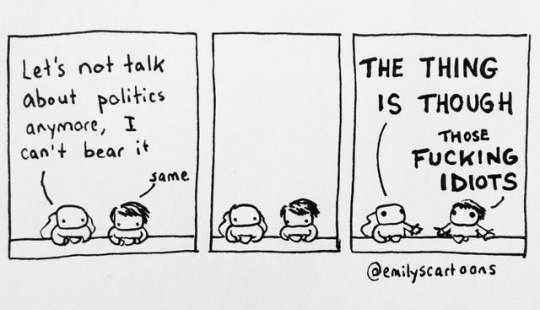
Let’s not talk about politics

A friend of mine just shared this particular comic with me, and it could not have been more appropriate.

politics

©Emily McGovern. Brilliant image capturing how I suspect many are feeling at this particular moment. For more, visit http://emilymcgovern.com/category/comics/.

Feel familiar?

So far today, I’ve read more about the President’s damn tweets, more on potential collusion between Russian hackers and various Trump campaign officials, the assault on access to healthcare that is the GOP/Trump plan to reverse Obamacare, the completely unstaffed Science Division of the White House as of yesterday,  and the rather bizarre request for voter registration information from each state based on misinformation non-existent evidence of ‘widespread’ voter fraud within the US voting system.

I’m exhausted and it’s not even 9.00 on Saturday. And, we’re not even six months into this administration’s first term?

There’s too much. Too much noise and nonsense news and misdirection. As disgusting and demeaning as our current President’s tweets are, the agendas being pushed through as we’re all distracted by his unbecoming behaviour are even more infuriating. For instance, one little tidbit buried in news headlines is a lovely provision in a spending bill currently in the House. This provision would eliminate funding to the IRS to enforce a law prohibiting churches and other non-profits which are tax exempt from endorsing specific candidates for public office. (The law is known as the Johnson Amendment and was signed into law by President Eisenhower.) I don’t mind if churches and other non-profits want to enter the political fray; many already have. I do mind if they want to continue to claim their tax-exempt status.

And, down the political news rabbit hole I go…

My husband and I try to step away from our computers and work and other nonsense each day. On our peripatetic bonding time-out each evening, we typically experience a moment eerily akin to that captured in the image above. Particularly that last panel.

We support evidence-based policies.

We support policies which uphold and respect the human rights and dignity of all rather than a select few.

We support funding for the arts and sciences because they typically assist, benefit and enlighten more than a few, if not today then in future.

And, more than that, we support respectful, open and fact-based discussions on how to move forward on any particular issue.

I don’t for a moment believe that all those with opposing views to my own are idiots. I just wish the discussions about various policies wouldn’t assume that all of us are idiots.

Forget the bloody tweets. Let’s get back to what’s happening with and on specific policies. Precisely because it is so damn infuriating and exhausting.

Loving

Flashback to June 2005.

Little did I know that a meet-up with a rather crazy lovely Cuban from an online forum of Moscow expats would become so meaningful and life-changing. Miles Davis’ Bitches Brew prompted a private message, and an invitation to chat about and swap music. (This was the third bit of music he and I virtually bonded over, the other two discussions consisted of gushing over Alison Kraus and Union Station and all things bluegrass, and, naturally, waxing silly and paying tribute to the Grateful Dead.) We didn’t keep track of the specific date when we met for the first time (at which point neither one of us was thinking anything other than ‘new friend with whom to geek out over music’). Nor did we really make note of our first ‘date’, which wasn’t intended as a date, but ended up sparking ‘something’.

But, thanks to Google, we can trace it back. How fitting that our first date / non-date fell on 12 June, a rather significant date for far more important reasons.

The decision in the landmark civil rights case Loving v. Virginia, the case that invalidated laws criminalising mixed-race marriages, fell on 12 June 1967. Prior to that case, mixed race couples in the US were rare. More significantly and perhaps why they were so rare, prior to Loving, mixed-race couples who defied laws (and cultural norms) and wed faced jail time and prison sentences along with being ostracised from their community and outrage from their families and friends.  The laws changed, but attitudes persisted. Mixed-race couples continued to face rather unwelcome words and glances, if not outright discrimination and recrimination, some of which persist today. Today’s reality is certainly better than the era of the 1950s and 1960s, but that uneasiness continues today, at a time when 17% of newly married couples in the US involve individuals from various ethnic backgrounds.

The New York Times paid tribute to the Lovings along with other mixed-race couples on the 50th anniversary of the Supreme Court’s decision. It serves as a stark reminder that even today it isn’t easy for couples claiming various backgrounds who fall in love with someone ‘different’ from them. Different from their community. Different in terms of how they look and what they ‘know’.

The Cuban and I are lucky, I suppose. We don’t look that different from one another despite coming from completely opposing worlds. Middle America / Texas hill country versus Havana, Cuba. At times, we both marvel that we have anything in common at all let alone that we even met. But, given how similar we look given our fair complexions and lighter coloured eyes, we are still not free from those long-held notions of who should marry whom. It’s exceedingly rare amongst our circles, thankfully. But, given our respective backgrounds, we have felt the assumptions others make about us. We have experienced stereotypes and some rather odd statements regarding our relationship and marriage, and its validity in the eyes of some. I can’t help but wonder what we’d experience if we weren’t living in Europe.

We may be living out our relationship 50 years from that landmark case. In some respects, we in the US are nowhere on truly becoming tolerant and, well, loving. For everyone. Even if we have come far from jailing mixed-race couples, there is still further to go.

Love is love. And it is a beautiful thing in whatever form it takes. Maybe we should spend a little more time loving and little less time deciding who may love whom.

just-us_malecon.jpg

Just the two of us being us on holiday. The Malecón, La Habana, Cuba. January 2017

What have we become?

I’ve long been a political junkie and intrigued by current events. Even as a child, I loved watching the news and programmes like MacNeil/Lehrer Report, News Hour and 60 Minutes (when Walter Cronkite, Andy Rooney, Diane Sawyer and Morley Safer graced the screen) were the highlights of my weeks and treats after finishing my homework and chores. NPR remains both a trusted friend and guilty pleasure, depending upon my to-do lists and the time of day I’m tuning in.

Most likely, even before I understood the divisions between political parties, I leaned left. As a lone liberal in a family of conservatives, I learned early to expect heated discussions when it came to things like public education and social services; health care; interventionist wars and the US’s place and role within the United Nations; women’s rights; LGBTQ rights; guns and gun regulations; and, everyone’s favourite, taxes. Little did I know our discussions of immigration would become so personal later in life. But, that’s a separate issue entirely.

I’ve always been and probably always will be left of centre—to some, far, far left of centre. But, that doesn’t mean I don’t understand the necessity of healthy opposition. Nor does it mean that I have no respect for certain historical members of the Grand Old Party—I greatly admire figures like Presidents Lincoln and Eisenhower, and more recently Senator Olivia Snowe and at one point Senator John McCain. But, finding any member of the GOP today with whom I can agree is increasingly difficult if not altogether impossible. Not just because of their policies. Because of their complicity. Because of their insistence on putting party over principle or integrity or country. Because of a basic lack of decency. Because of their silence in the face of absurdity.

What happened to the GOP? At what point did punching a journalist who asked a policy-related question that affects voters become ‘okay’? And, why did no other member of the GOP immediately and quite clearly condemn this act of violence?

Even as a leftist snowflake, I assure you, had a Democrat or Green or beloved leftist liberal slammed a reporter to the ground, punched him/her and then lied about it, I’d certainly never support said candidate. I’d demand those in leadership positions within that party immediately and unequivocally condemn such acts and force said individual to resign. A person who resorts to violence in the face of opposition has no business serving as an elected official nor does s/he belong in public service.

We need healthy discussions. We need healthy debate. Asking a candidate his/her position on a bill—any bill—that affects those they’re ‘representing’ is not beyond reasonable nor does it come close to being antagonistic or harassing. Yet, increasingly, conservative officials, elected and appointed, are doing exactly what the leader of the GOP has encouraged its members to do: attack or arrest journalists who ask questions they simply don’t like.

Greg Gianforte

By Adam Zyglis: Greg Gianforte. From The Buffalo News, published 26 May 2017.

This is not the Grand Old Party I admire and respect, nor is it the Grand Old Party we as a country need.

President Eisenhower, the last Republican President I truly admire (despite disagreeing with him on various issues), had this to say about leadership:

You do not lead by hitting people over the head – that’s assault, not leadership.

Indeed.

When the leaders of one party let alone the leader of our country dismiss such acts of violence, people listen and individuals act.

Whilst not necessarily directly related, events in Oregon last night are far more troubling. Two men lost their lives simply for standing up and defending fellow passengers enduring racists slurs from a man empowered to voice his hate-filled vile.

What happened to us? At what point did we decide that we can end disagreements with and through violence and that this was now an acceptable option? And, at what point will we wake up and demand better for ourselves and those who ‘represent’ us?

Struggling to make sense of it all

This year. This year brought with it hope and joy and goodness. It also brought unspeakable tragedy and despair, and what at times seems like an endless stream of senselessness. I find myself struggling with it all like never before. I suspect I am not alone.

Mercifully, none of these tragedies or despair are my own. Yet, as I attempt to absorb the news of each new tragedy, finding some glimmer of kindness amongst my fellow humans can seem like a futile quest. ‘What is wrong with us?!’, is a question far too often repeated, becoming equally and increasingly incredulous and louder with each passing week.

Most recently, like much of the world I have tried and failed to understand why we seem incapable of preventing the needless and horrid death of a young Syrian boy, whose only ‘crime’ was being born to a family living through what surely must be hell on Earth, and who tragically made a most desperate attempt to find peace and security in Europe.

But, it’s not just the images of Aylan Kurdi which haunt my consciousness; it’s how my fellow privileged folk in the peaceful and calm developed North react. Whilst messages of #RefugeesWelcome bring me a sense of awe and hope, the voices of hate and vitriol ring just as loud, if not louder and more persistent, drowning out those seeking and extending compassion and kindness.

This theme, which did not begin recently, seems to repeat itself over and over and over again. Each new injustice and each new tragedy, each new viral story of the idiocy and ugliness which pervades this world is accompanied by hatred so intense and profound that I find myself speechless. Who are these people? What has happened to them—to us—to inspire such intense feelings of hatred for another human based on seemingly insignificant traits or differences? Are we really that different from one another? Are our stories so vastly divergent that we share absolutely nothing in common with ‘the other’? What has happened to our humanity? And, can we find it once again? Or are we hopelessly lost?

It’s the worst sort of rabbit hole to find one’s self in; climbing up out of it can seem insurmountable.

We need a reset button. Collectively and individually. I include myself within this targeted mass re-calibration. Wars will end and new ones will begin. The outward traits of tomorrow’s refugees may differ from those of today, but they will all seek a life which is free from worry and fear for themselves and, mostly, for their loved ones, perhaps more so for the youngest and oldest in our midst. Will we ignore them, choosing instead to leave families who look different to simply exist in horrid conditions and ‘camps‘? Will we help them to find a different, less crisis-laden life amongst us?

Perhaps we simply need to re-focus our energy on those tiny bits of goodness each one of us can pass along to those in need. Re-train those individual strengths and talents we each possess to create a better, safer, more just world, which when combined may result in lasting change that benefits us all equitably. Re-image and discover that one common trait we share with those who seem so outwardly so entirely different from us.

We must do something. Otherwise, we are lost. And, ultimately, we all lose.

This week’s viral escapade featuring the worst sort of pigeon-holing, most troubling in that it was directed at a young boy with what appears to be a promising intellect, provides some hope. If we can collectively step up and police those who seek to profile based on antiquated and bigoted perceptions, perhaps we can create a better world.

So many stories remain untold, while each one is worth telling. Maybe that re-telling is our first step on the arduous path towards understanding and making sense of it all…


tumblr_m384udCUdN1rrm72eo1_1280

Yes, one person can make a difference

Several years ago in a discussion with a colleague after a typical day in the office, a brief snippet of our conversation has stayed with me and inspired much reflection. Discussing the many issues in the world around us which we’d like to see change, a world more socially and economically just and fair, I declared my own desire to make the world around me just a bit better. Whether that difference be at a community or national level wasn’t important; making a difference to the lived experiences of others was what drove me, even if it was on a seemingly small scale.

His response? ‘If you help just one person, you have succeeded, no? You have after all changed the world for the better for at least one person.’

So, so simple. And, so, so true.

Both before and since that after-work conversation and revelation, I’ve thought often about what one person can do to make the world a little better. A little brighter. I’m perhaps in equal measure hopelessly naïve and optimistic enough to believe that one person can and often does make a difference. But, it wasn’t until that conversation several years ago that I stopped worrying about how many people or how large the impact was (something which my day job placed priority on — the number of people reached rather than how much better life was for one person). Yet, one person’s world is still ‘a world’. And, perhaps by helping that one person, others’ lots would improvd as well.

However seemingly insignificant the gesture may be, a single act of kindness, a random bit of support extended to another can create good. From holding a door open to buying a meal for someone who is hungry to clothing a stranger to standing up and speaking for those who have no voice, no act is too small. No act is too insignificant. And, perhaps, those changes and improvements to an individual’s ife can mushroom out as ripples on the water—one person can help another can help another and so on until an entire community benefits.

Like I said, hopelessly optimistic. (It beats the alternative!)

But, what of the more significant, larger acts? Do they take a village or can they be accomplished through the actions of an individual on his/her own?

A single person has made an enormous difference with an amazing impact, as evidenced by Jadav Payeng.

Since 1979, this one man has been planting saplings and growing a forest in Brahmaputra, India. Growing a forest. These saplings have transformed a barren, eroding landscape into a lush, green habitat for various creatures, including elephants, tigers and vultures, which returned to the region in 2012 after a 40-year absence.

Talk about seeing the forest for the trees…

If a single man can create a forest, imagine the possibilities of the seemingly small and insignificant actions we each want to do and don’t for fear it will change nothing. Just as each seed may not on it’s own create a forest, each individual action may on its own seem unimportant and carry very little benefit. Yet, over time and collectively, imagine how much better the world could be? Imagine how much better it would be?

Sometimes, it’s quite alright to focus on that individual tree.