On World AIDS Day 2018

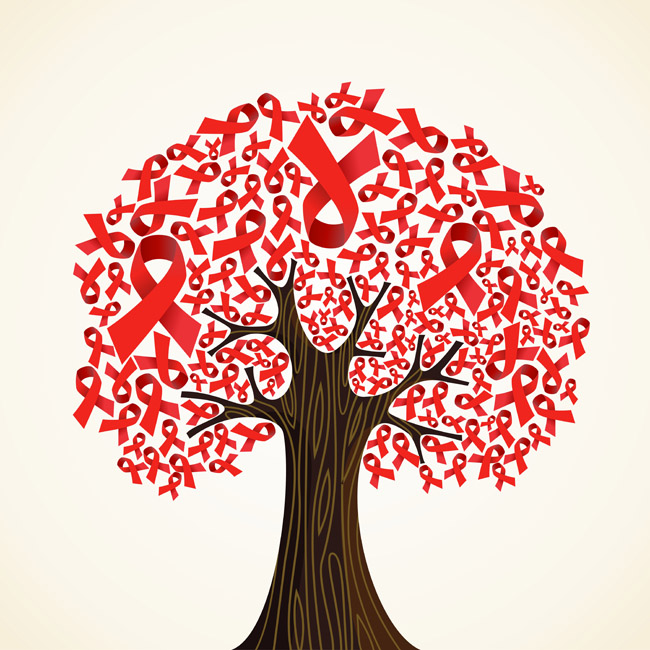
Red AIDS ribbons concept tree. Vector illustration layered for easy manipulation and custom colouring.

This World AIDS Day, as with many in the past, I am hopeful. More cautiously optimistic than equally hopeful, however. Thirty years ago, the first World AIDS Day passed, allowing us to collectively raise our voices to raise awareness of HIV. Globally and locally.

This morning, as I scrolled through my news feed, in addition to the traditional AIDS red ribbon tree of life I’ve posted for years on this day, another image gut-punched me, just as it did the first time I saw it and every time since.

The men in white represent the surviving members of the original San Francisco Gay Men’s Chorus. Eric Luse, 1993. 

This image of the San Francisco Gay Men’s Chorus reminds me why this day isn’t so much a simple celebration of how far we’ve come, but of how vigilant we must remain in our resolve to continue to respond to this most pernicious virus. But, more so, we must resist and overcome the various prejudices and judgements attached to HIV. Far, far too many have died senseless, needless and agonising deaths only because we refused to act to prevent further infections, because we isolated and demonised those living with HIV, and because we refused access to live-saving and life-preserving treatment for those who desperately needed it. 

Why? 

Fight AIDS, not people affected or living with HIV. Fight the damn virus and the cultural, social, political and economic institutions which continue to allow it to spread and allow people to die when, today, they don’t need to. Fight the injustices borne through stigma and fear that allow the virus to flourish.

Do not fight the individuals most affected and least wanted by society.

HIV doesn’t care where you live, what you look like, what you do for a living to simply survive. Nor does it care who or how you love.

Today, and every day, we must collectively remember what inaction and isolation do to those affected when society shuns them and deems them unworthy and undesirable. Every. Single. Day.

So, on this World AIDS Day, here’s to all those affected and living with HIV, and here’s to all those who continue working damn hard and often thanklessly to ensure no one is left behind and that we can all live in a world more just and more equitable. For all. 

And, here’s to those we failed. Your memory lives on and you will not be forgotten. 

On ‘The Fire Next Time’

The Fire Next TimeThe Fire Next Time by James Baldwin

My rating: 5 of 5 stars

This book, and just about anything else written by James Baldwin, remains relevant. It’s spooky and altogether tragic that pieces written in the 1960s reflect the current realities lived by black communities and individuals in the US today.

Eloquent. Honest. Brutally clear and well-reasoned throughout, The Fire Next Time, much like all of his works, should be required reading for us all. They also serve as a stark reminder of the as yet unfulfilled promises of the Civil Rights era.

We will never move beyond the divisions we face now if we do not honestly and openly sit down and listen to one another and attempt to understand what it means to grow up black in the US.

View all my reviews

[Religious] liberty?

I don’t mind religion. Nor do I hate the idea of belief systems. Religion, of any sort, simply doesn’t work for me, and really hasn’t since I was 5. I’ve explored them, studied several rather intensely, and honestly I just do not get it. No offence intended.

To be honest, I don’t even really take offence at anyone’s religiosity or the teachings of a particular religion precisely because it’s not mine. Some ideas and notions are incredibly offensive to me—condemning homosexuality or gender nonconformity, subjecting women to positions of inferiority and essentially removing them from the possibility of holding positions of power or subjecting them to standards based on their worth defined by men, etc. I find these notions more a matter of interpretation rather than simply a matter of religion per se. Individuals will always find ways to justify their propensity for shittiness and attempt to maintain their positions of power. To my mind, doing so through religious dogma remains particularly effective as a method rather than necessarily a matter of religion alone.

Keep the masses uninformed or unexposed to different ideas and, of course, they’ll follow along blindly. Teach them to not question authority by using scare tactics ranging from punishment in the here and now to an eternity of misery and damnation, and likely they won’t critically examine the shaky foundations upon which those beliefs are based.

But, that’s not my problem with religion. I do question beliefs. And, I do question authority. My own, and those specifically I’m told I must believe. It did not make sense to me at 5, and it still baffles me.

Whilst I don’t mind the religion of others, I do mind being forced to adhere to and follow the beliefs and ideology of ANY religion. It matters not a jot if that religion is Protestantism, Baptism, Catholicism, Satanism, Hinduism, Islam or ANY other dogma that professes to be ‘The Truth’. Not just one capital T, but two. Unless there is verifiable, testable, replicable evidence to back up a claim, I’m not interested. Call it blasphemy, and call me a heathen. You will not be the first.

Believe what you need to in order to cope / manage / understand  / make sense of this crazy world around you. But, creating laws based on any religion is not evidence-based nor does it allow for religious liberty for ALL religions. Anywhere.

So, if we’re going to venture down the rabbit hole of creating a task force to ensure Christians are not persecuted due to their religion, will we do the same for those Muslims who associate with Daesh or who follow Sharia law? How about Rastafarians? (I’m fine with that, although I suspect Jeff Sessions won’t be.) How about the polygamous practices and child marriage practices of some sects of Mormonism?

In the United States, the framers of the US Constitution sought to ensure that no religion stood above any other, and that no religion was a part of the State or government. They felt it so important that they made it the First Amendment:

Congress shall make no law respecting an establishment of religion, or prohibiting the free exercise thereof; or abridging the freedom of speech, or of the press; or the right of the people peaceably to assemble, and to petition the Government for a redress of grievances.

I’m looking specifically at Thomas Paine here, but they all had important points to make specifically in relation to this:

Religion

On ‘I Can’t Breathe’

I Can't Breathe: A Killing on Bay StreetI Can’t Breathe: A Killing on Bay Street by Matt Taibbi

My rating: 5 of 5 stars

I can’t imagine anyone watching the video of the last minutes of Eric Garner’s life and not being utterly horrified. Horrified by the excessive use of force and complete lack of concern for a man’s life.

I also cannot imagine how haunted Matt Taibbi must be from the research and passion he put into this book. But, I’m glad he took on those ghosts and took such care into getting the narrative right. He succeeded in so many ways.

By all accounts, Eric Garner shouldn’t be dead. At least not because of an illegal choke-hold. But, he is, leaving a giant hole in his family’s life as well as the community he called home. By all accounts, the man responsible for choking him to death — Daniel Pantaleo — should have been held to account. He was not. In a rather twisted alter-reality, Pantaleo is viewed by many as the victim.

This book isn’t just about that fateful arrest and its aftermath. It’s about a system — in New York as well as the United States in general — that forces us all to examine our own ideas of community, safety and policing, and the consequences of attempting to ‘feel safe’. It’s about what we’re willing to allow police to do to feel safe. And, it’s about what we will accept as ‘the way it is’.

As much as I respect anyone who chooses a career in law enforcement, I also fear how far the justice system itself has gone to protect its members. When entire communities recount story after story after story of ‘walking while black’, being pulled from cars and brutally beaten for asking a question, and then charged with crimes they did not and could not possibly commit, we must recognise that something is broken. And, it’s not the windows.

Taibbi packs so much food-for-thought within this book. It’s heartbreaking, even more so when you consider living within the realities he describes so painstakingly. We know Eric Garner’s name because of the clear evidence of brutality captured on a cell phone. The world saw that video and collectively gasped. We gasped again when a grand jury came back with no indictment.

Taibbi begins this book by describing another event in Staten Island. Ibrahim ‘Brian’ Annan, a young man stopped by police around the same time Garner was choked, was pulled from his car and beaten so violently by two police officers that one leg was broken in three places. He was charged with a total of seven felonies, all of which were eventually dropped, a process which took nearly a dozen court appearances and more than two years. The charges lobbed against Annan were so absurd and so obviously intended to simply force him to relent even the judge presiding over the cases found them silly. Annan’s beating was not captured on film. And, whilst disabled, he lived to tell the story. But, sadly, this is not uncommon in Staten Island, in particular, or in other inner cities in general (think Baltimore and Freddie Grey). It is sadly not new, either. Taibbi also tells the tale of Clementine Ross, a woman who has been waiting 50 years for closure on the shooting of her husband by a cop in Arkansas. His crime? Asking for a receipt.

Matt Taibbi focuses on a killing on Bay Street. But, given all of the names of all those who have died before and since Eric Garner, individuals primarily unarmed and shot by law enforcement officials, I’m surprised any of us can breathe.

View all my reviews

On ‘Notorious RBG’

Notorious RBG: The Life and Times of Ruth Bader GinsburgNotorious RBG: The Life and Times of Ruth Bader Ginsburg by Irin Carmon

My rating: 5 of 5 stars

Ruth Bader Ginsburg has always reminded me a bit of my grandmother. Quiet. Proper. Often wearing a stern look or serious expression accentuated by flawless hair and pearls. And, retorts at the ready which leave all present to hear them slack-jawed and cowering at their own ignorance. In my family, we often repeated a mantra, ‘Don’t cross Grandma’. I would imagine some variant exists for RBG amongst those nearest and dearest.

Notorious RBG is a must-read for any self-respecting feminist or equal rights activist (Is there really a difference between the two?) needing a beacon of hope and a dose of ‘get up and go’. And, RBG the woman is that beacon during very dark times. This woman. Unlike her, rather than seeing nine women justices on the highest bench in the land, I’d like to see nine RBGs at SCOTUS.

Oh, to dare to dream.

Detailing her life as a young newlywed law student, then graduate of Columbia Law (top in her class) unable to land a job, then law professor (needing to hide her second pregnancy)…, she understands not just in theoretical terms but from lived experience what perceived differences mean and how they affect us as individuals and groups. To her, it isn’t simply about disregarding those perceived differences and the ideal roles of men and women; it’s about those institutionalised categories and erasing the various barriers and injustices they unfairly impose upon us. Her weapon of choice, however, is the law and the US Constitution. And, this woman plays the long game.

As I was finishing this brilliant, inspiring book this morning, I wept. Not because of anything particularly troubling that appeared upon the page at that precise moment. But, because so many of us are simply too tired to continue fighting for and working towards what we believe is right and just. If this tiny woman could become one of the most inspiring memes of our times, we—who have benefited from her tireless efforts in classrooms, courtrooms and on the bench—can certainly work just a little bit harder to solidify and make permanent those giant gains she made for us.

RBG inspires for many reasons. And, we do her and all others who have blazed various trails a disservice by simply giving in to despair because it is too damn hard.

One of the appendices features a list of ‘How to be like RBG’. It reads:

  • Work for what you believe in
  • But pick your battles
  • Don’t burn your bridges
  • Don’t be afraid to take charge
  • Think about what you want, then do the work
  • But then enjoy what makes you happy
  • Bring along your crew
  • Have a sense of humour

I’ve got my to-do list sorted then.

RBG. However long she graces the Supreme Court and this world, it won’t be nearly long enough to satisfy me. I’ll still want more. But, her legacy. Long may it guide and inspire us all. And, may we all have red hot pens at the ready to sharpen and hone our words. Because words and how we wield them truly matter.

View all my reviews

On ‘Assata: An Autobiography’

Assata: An AutobiographyAssata: An Autobiography by Assata Shakur
My rating: 4 of 5 stars

This is a book that makes me uncomfortable, but for all of the right reasons. If we are ever to confront racism head-on, we need to listen to and attempt to understand the effects persistent and institutionalised racism have on those it targets.

Assata, the book (and the woman who wrote it), is raw and unfiltered in many ways. Her anger and frustration and rage at social norms and the systemic racism that imprisoned her again and again and again and the criminal justice system who offered her anything but justice justify that rage.

Her rage should make us all examine why her anger and words make us squirm. It should force us to examine our own biases, and begin to shift our thinking and our actions.

This book made me think. A lot. And, I’ll undoubtedly continue thinking about my own privilege, my own biases and my own prejudices because of her words. This book will also make me more inclined to call out injustice of any kind when confronted with it, whether directed at me or others, friends / family or strangers.

#blackhistorymonth

View all my reviews

Until then…

We are nearly off. And, I cannot tell you just how much we both desperately need a nice long, luxurious kip for about a week.

I’m not sure when I’ll post here again — it may be later this week or sometime next year. As we’ve prepared for our annual escape to the sun and the land in which we unplug and unwind, I’ve had a bit of time to also reflect upon this past year.

What. A. Year. I can’t say that I’ll really miss it.

Rather than look back, though, I’m looking forward. 2017 has proved more than a little challenging, and more than infuriatingly frustrating at times. But, it’s also been a whiplash-inducing mixed bag. My year has been stellar professionally (if not utterly exhausting) and personally rewarding. Yet, 2017 was horribly marred by politics and current events. Unfortunately, those politics inevitably bleed into my own life, partially given my political junkie tendencies, but also because of the reality in which I reside as an American expat (member of the diaspora?) married to a Cuban living in Europe.

I have no idea what 2018 will bring. But, I’m ready. All I really know is that I can continue to work on this corner — this tiny seemingly insignificant part of the world I inhabit. I can do my best to ensure that it is fair. That it is compassionate. That it is just. And, I can work towards increasing the ripples of that world ever-outward, hopefully extending that fairness, compassion and justice if not by my own deeds at least by my own example.

So, dear reader,until we, meet again in either a few days, weeks or two months’ time, here is my wish for you:

May your holiday season be filled with boundless joy and delight, and may the New Year bring you peace, prosperity and better days. 


2017-2018

On World AIDS Day 2017

1 December every year is World AIDS Day.

This year’s theme is ‘My health, my right‘. That is, one’s right to health represents a fundamental human right, and one’s right to health encompasses and extends to rights to sanitation and housing, nutritious food, healthy working and living conditions, education and access to justice. All of which are accessible free from stigma and discrimination, and free of violence.

I may no longer devote much of my working life to issues surrounding HIV. But, I still very much believe in continuing to focus on the response to HIV and ensuring that no one is left behind in our local, national, regional and global responses to HIV and various other related issues.

On this World AIDS Day, much like each and everyone before it, my thoughts are with all those living with HIV first and foremost. My thoughts are also with those who have died far, far too young and long before they needed to. Their faces remain at the forefront of my mind on many days, but particularly today.

I also extend my thanks and gratitude to all of those who tirelessly continue to devote their voices, time and indefatigable energy to making sure others are not left behind. All those who work on HIV-related issues ensure that people living with HIV continue to receive the attention they need, at times desperately so. From activists to policy makers to aid workers to healthcare professionals, those working on HIV also ensure that those affected by HIV are placed at the centre of discussions on HIV policy, funding and programming, and highlight the necessity of inextricably linking access to health as but one fundamental human right.

Health. Gender equality. Freedom from harm. The freedom to make decisions about one’s health and one’s own life. Respect and dignity. These are but a few of the words which come to mind on each World AIDS Day. And, they represent a world we can look forward to, hopefully sooner rather than later.

Here’s to all those living with, affected by and responding to HIV. You deserve so much more than one day each year. You are worth so much more than one day on a calendar. May we collectively never forget your worth.

AIDS ribbon tree

On ‘The Hunting Ground’

We missed this documentary from two years ago. I’m not sure how, but given where I was emotionally two years ago, that may not be a bad thing.

Last year, in the wake of the outrageous ‘sentence’ handed down to Brock Turner and other college athletes who sexually assaulted women at various universities, I read Jon Krakauer’s Missoulaan incredibly chilling account of the lengths one university football town would go to to protect it’s star athletes. Sadly, Missoula, Montana and the University of Montana are but one of far, far too many college campuses plagued by an epidemic of sexual predation and violence against mostly young women. By no means are young men spared either, however.

The Hunting Ground, a 2015 documentary by the makers of The Invisible War, painfully and carefully tracks the criss-crossing of the United States by two brave young rape survivors from the University of North Carolina. Their objective is clear yet anything but simple: to call to account university administrators for their woeful and shameful inattention and at times contempt for those who dare report the assaults they not only endured but survived. In these brave individuals’ own words, ‘the responses by the universities were often worse than the actual assaults [they] experienced’.

In the wake of #metoo and what seems like daily revelations regarding sexual harassment and assaults by the rich, powerful and (in)famous, those of us ordinary individuals who have faced similar experiences and the inevitable doubt which follows from those in positions to hand out justice remain not only unsurprised but angered and feeling let down once again.

Indeed, based on the well-documented and researched figures provided throughout The Hunting Ground, I honesty felt a bit sick at various moments. Yet again.  

From the proportion of college-aged women who are likely to face an assault (11.2%), to the numbers of expulsions resulting from cheating  compared to on-campus assaults (the former vastly outpace the latter, which are negligible at best and quite often zero) to the proportion of all assaults remaining unreported (80%), its all a stark reminder that we collectively have a long way to go vis-á-vis believing women and men who are violated in the worst possible way.

At the very least, we should be able to ensure that those brave enough to step forward feel supported more than those who commit such heinous acts.

The Hunting Ground reminds us that we have a long, long way to go. And, given current events, now seems like as good a time as any to continue on that journey towards justice.

~~~~~~~~~~~~~~~~~~~~~~~~~~~~

For more information on creating an environment in which sexual assault is not tolerated or accepted and providing supportive environments for survivors, visit It’s on Us.


On ‘Strength to Love’

Strength To LoveStrength To Love by Martin Luther King Jr.

My rating: 5 of 5 stars

‘Injustice anywhere is a threat to justice everywhere’.

This quote more than any other moves me, and serves as a reminder that tolerating injustices of any kind, whether directed at me or at others, represents an incredibly slippery slope.

Nearly 50 years after his assassination, Martin Luther King, Jr remains a voice of strength and love and compassion aimed at shattering the hatred that justifies racial injustice. Sadly, nearly 50 years later, much of his writings and reflections related to his faith in a loving and just god and the reality of being black in the 1950s and 1960s America ring true today. As a diverse nation, we’ve come some way from the dark days of the civil rights era; but, if the last year has provided me with any sort of measuring stick on where we as a nation now stand, we still have much further to go.

I do not share MLK’s faith. Despite being raised in a Southern Baptist family, their god and the stories in The Bible never really made sense to me. Their god was one to fear, whose wrath was fierce. And, much of the rhetoric I heard justified the supremacy of those like us — white, middle class, privileged. In Strength to Love, MLK uses his faith and scripture to justify justice. To justify love rather than hatred. To justify compassion and inclusion.

So much of this collection of sermons and reflections remain relevant in these times. In a chapter entitled, ‘The man who was a fool’, he states, ‘The means by which we live have outdistanced the ends for which we live.’ I couldn’t help but wonder what he would think of our world today, where technology has boomed. I wondered if he would be demonised as a ‘fake news pundit’ or a antifada anarchist. But, I also wondered how powerful these tools could be when coupled with his various messages and teachings, particularly amongst those who share his faith. And, particularly when addressing the various unarmed shootings of young black men by police officers.

He closes this chapter with these words: ‘What shall it profit a man, if he gain the whole world of externals—airplanes, electric lights, automobiles, and color television—and lose the internal—his own soul?’ I’m not sure where I lie on the existence of a soul, but whilst we in the United States possess so much stuff, I wonder if we haven’t lost which makes us truly rich beyond wealth. More than anything, I can only imagine how much more fortunate (and happier) we’d be if we would only view our fellow citizens as worthy rather than as ideological or racial enemies.

Strength to Love may represent a piece of our past and a long ago moment in our young nation’s history. But, to my mind, it serves as a powerful guide for what we still need to accomplish as individuals and as a nation.

View all my reviews