Struggling to make sense of it all

This year. This year brought with it hope and joy and goodness. It also brought unspeakable tragedy and despair, and what at times seems like an endless stream of senselessness. I find myself struggling with it all like never before. I suspect I am not alone.

Mercifully, none of these tragedies or despair are my own. Yet, as I attempt to absorb the news of each new tragedy, finding some glimmer of kindness amongst my fellow humans can seem like a futile quest. ‘What is wrong with us?!’, is a question far too often repeated, becoming equally and increasingly incredulous and louder with each passing week.

Most recently, like much of the world I have tried and failed to understand why we seem incapable of preventing the needless and horrid death of a young Syrian boy, whose only ‘crime’ was being born to a family living through what surely must be hell on Earth, and who tragically made a most desperate attempt to find peace and security in Europe.

But, it’s not just the images of Aylan Kurdi which haunt my consciousness; it’s how my fellow privileged folk in the peaceful and calm developed North react. Whilst messages of #RefugeesWelcome bring me a sense of awe and hope, the voices of hate and vitriol ring just as loud, if not louder and more persistent, drowning out those seeking and extending compassion and kindness.

This theme, which did not begin recently, seems to repeat itself over and over and over again. Each new injustice and each new tragedy, each new viral story of the idiocy and ugliness which pervades this world is accompanied by hatred so intense and profound that I find myself speechless. Who are these people? What has happened to them—to us—to inspire such intense feelings of hatred for another human based on seemingly insignificant traits or differences? Are we really that different from one another? Are our stories so vastly divergent that we share absolutely nothing in common with ‘the other’? What has happened to our humanity? And, can we find it once again? Or are we hopelessly lost?

It’s the worst sort of rabbit hole to find one’s self in; climbing up out of it can seem insurmountable.

We need a reset button. Collectively and individually. I include myself within this targeted mass re-calibration. Wars will end and new ones will begin. The outward traits of tomorrow’s refugees may differ from those of today, but they will all seek a life which is free from worry and fear for themselves and, mostly, for their loved ones, perhaps more so for the youngest and oldest in our midst. Will we ignore them, choosing instead to leave families who look different to simply exist in horrid conditions and ‘camps‘? Will we help them to find a different, less crisis-laden life amongst us?

Perhaps we simply need to re-focus our energy on those tiny bits of goodness each one of us can pass along to those in need. Re-train those individual strengths and talents we each possess to create a better, safer, more just world, which when combined may result in lasting change that benefits us all equitably. Re-image and discover that one common trait we share with those who seem so outwardly so entirely different from us.

We must do something. Otherwise, we are lost. And, ultimately, we all lose.

This week’s viral escapade featuring the worst sort of pigeon-holing, most troubling in that it was directed at a young boy with what appears to be a promising intellect, provides some hope. If we can collectively step up and police those who seek to profile based on antiquated and bigoted perceptions, perhaps we can create a better world.

So many stories remain untold, while each one is worth telling. Maybe that re-telling is our first step on the arduous path towards understanding and making sense of it all…
 

tumblr_m384udCUdN1rrm72eo1_1280

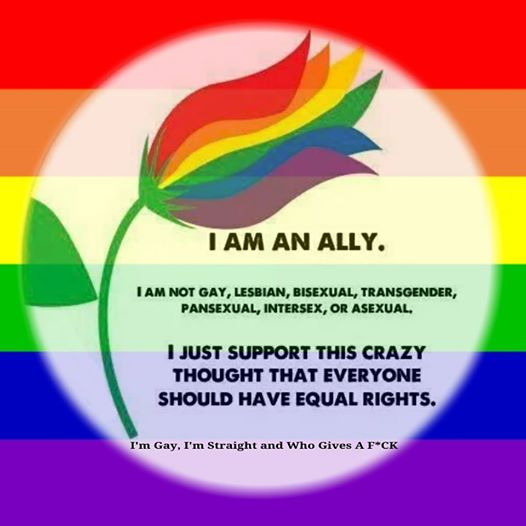
Proud to be an ally; not proud that it is necessary

It’s Pride Week in Helsinki. My husband and I will be there to march and show our support and allegiance with not just Finnish but all lesbian, gay, bisexual, transgender and intersex (LGBTI) individuals during a week we’d rather be celebrating marriage equality for all. Alas, Finland has yet to adopt a measure which would allow all couples regardless of their genders to marry legally.

Now, more than ever, it seems crucial that we do something, anything, to show our solidarity with all LGBTI communities.

We unequivocally support everyone’s right to love who they want and to show that love for one another openly and without fear of being persecuted. Love is love. It’s a thing of beauty in its many varied forms, shades and expressions. And, the world and all of us could benefit immensely from a bit more love and a lot less contention and hate.

But, as we in much of Western Europe and North America works towards marriage equality, LGBTI communities in places like Uganda, Jamaica and Russia among far too many others face situations much worse and far more dangerous. The reality in these contexts for individuals suspected let alone known to be gay, lesbian or transgender is akin to what I’d imagine is hell on earth. There is an element of extreme hatred towards LGBTI communities, where violence and criminal prosecution for simply existing are daily realities. And, yes, LGBTI individuals fear for their lives.

What does this have to do with me? Well, my fellow countrymen are complicit in creating these realities. It goes without saying that I do not support their actions nor their efforts and will do what I can to call them to account.

God Loves Uganda tells the story of how American evangelicals, primarily those affiliated with the International House of Prayer (a more sinister use of the acronym IHOP), work to ‘spread the good news’ to Ugandans (and others further afield). Unfortunately, rather than spreading messages of loving they neighbour, the growth of evangelicalism in Uganda seems to be fanning the flames of hatred and bigotry.

Essentially, interpretations of Biblical dogma legitamize and grant licence to allow hate, violence and in extreme cases death to individuals identified as LGBTI or their allies. During a two-conference lead by Americans in Kampala in 2009, my fellow countrymen provided justification and fodder which ultimately resulted in a law which would make homosexuality a criminal offence.

It’s sick. And, quite frankly, the worst sort of application of religion possible. In all honesty, I’m struggling to describe the film in a way that isn’t just as hate-filled as the rhetoric it captures.

Perhaps it is because it is Pride Week here that we feel compelled to act and even more motivated to voice our allegiance. As an American and as an American who grew up in a relatively conservative Christian household, I find myself particularly proud to be an ally. I am not, however, proud that it is necessary.

10246591_758289330888980_7285723713478773961_n


Phenomenal Women (Day 66: Proekt 365)

Day 66: Proekt 365 International Women's Day

Day 66: Proekt 365
International Women’s Day

The 8th of March is International Women’s Day. During my time in Russia, it was a time of year when all of the men and most women celebrated the ladies in their lives. Men showered women with flowers and raised their glasses to toast the fabulousness that is women. Women, much like every other day, celebrated and supported one another, but with just a bit more sense of sisterhood and infinitely more booze.

As a woman and as a feminist, I’d rather not just have one day when the work, worth, beauty and burdens faced by all women are given the spotlight. I’d rather we applaud ourselves and are celebrated every day. I’d rather we were equally rewarded, equally valued and equally represented in all aspects of life and in every corner. I’d rather we worked towards righting the injustices and eliminating the gender-specific barriers which make life more difficult for women every single day until they were a distant memory.

Still, the fact that I’m admittedly privileged is not lost on me—my husband is a feminist (and at times more so than I am!), I live in a society which places great value on the work of women domestically and beyond the home and I am afforded specific protections which prohibit discrimination against me based solely on my private parts. These are all great things, and for them I am grateful.

That isn’t the case for all women. Far, far too many women. And, not just those who live in lesser developed places, but also women who live in my own society. Whether it is allowing women and girls to attend school, work outside the home, drive, vote, voice their opinions, marry whom they love / wish, choose when and under what conditions to have children or when and with whom to have sex, every day should be an opportunity to make gender equity and justice a reality. For all women. Because all women are of value. All women are beautiful. And, all women should be celebrated. In all our diversity.

On this International Women’s Day, the words of the brilliant Maya Angelou come to mind. Whilst recognising and grieving for the difficulties and outright horrific conditions in which some women are forced to live, I am mindful today (and everyday) of just how amazing women are. Here’s to all of the truly phenomenal women in the world, particularly those who have enriched my life so, so much.

Phenomenal Woman

Pretty women wonder where my secret lies.

I’m not cute or built to suit a fashion model’s size
But when I start to tell them,
They think I’m telling lies.
I say,
It’s in the reach of my arms,
The span of my hips,
The stride of my step,
The curl of my lips.
I’m a woman
Phenomenally.
Phenomenal woman,
That’s me.
I walk into a room
Just as cool as you please,
And to a man,
The fellows stand or
Fall down on their knees.
Then they swarm around me,
A hive of honey bees.
I say,
It’s the fire in my eyes,
And the flash of my teeth,
The swing in my waist,
And the joy in my feet.
I’m a woman
Phenomenally.
Phenomenal woman,
That’s me.
Men themselves have wondered
What they see in me.
They try so much
But they can’t touch
My inner mystery.
When I try to show them,
They say they still can’t see.
I say,
It’s in the arch of my back,
The sun of my smile,
The ride of my breasts,
The grace of my style.
I’m a woman
Phenomenally.
Phenomenal woman,
That’s me.
Now you understand
Just why my head’s not bowed.
I don’t shout or jump about
Or have to talk real loud.
When you see me passing,
It ought to make you proud.
I say,
It’s in the click of my heels,
The bend of my hair,
the palm of my hand,
The need for my care.
’Cause I’m a woman
Phenomenally.
Phenomenal woman,
That’s me.

Maya Angelou, ‘Phenomenal Woman’ from And Still I Rise. Copyright © 1978 by Maya Angelou. Used by permission of Random House, Inc.

Day 38: Proekt 365 (Solidarity)

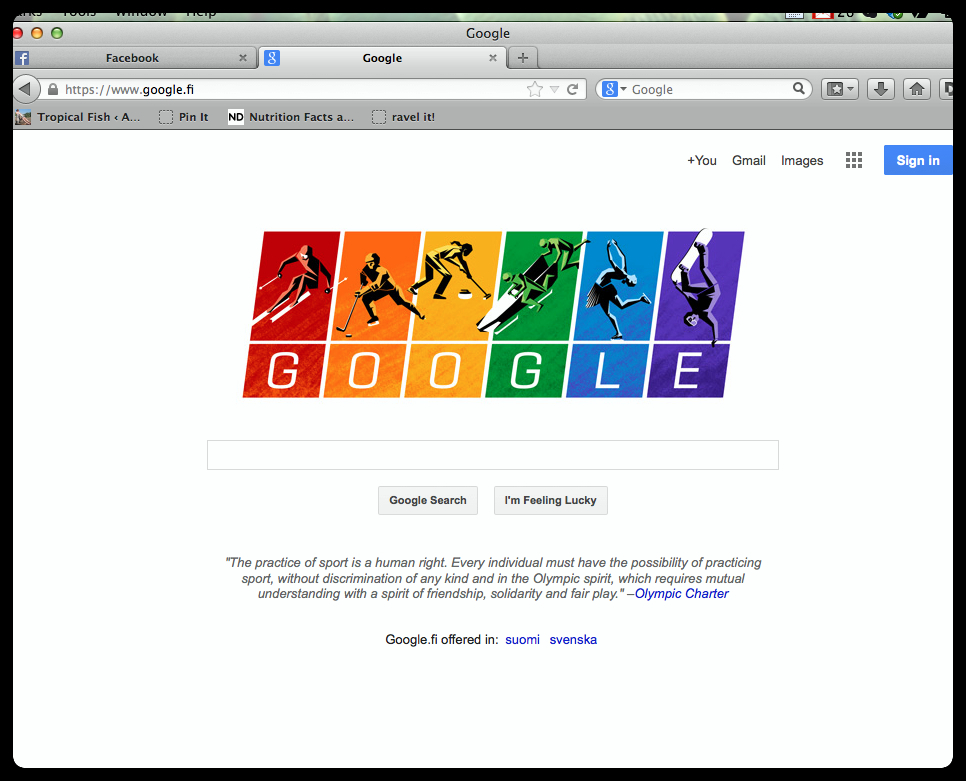
Day 38: Proekt 365 Well played, Google!

Day 38: Proekt 365
Well played, Google.

I’m tipping my hat to Google today. They deserve it. As do all those who stand up to oppression.

I’m sure that there will be loads of posts about this today. And, that isn’t a bad thing at all. If anything, more agencies should be voicing their concern and dismay at an incredibly bad policy with very real consequences.

In case you’ve been living under a rock, Russia enacted a law in June last year which essentially makes life incredibly difficult for its country’s LGBTI citizens and residents. (I’ve already written at length about my own thoughts on this elsewhere.) There has been loads of coverage about this insane law given that the Winter Olympics in Sochi are starting this week. Most of that coverage is focused on what it means for those who will be competing and spectating, with far less devoted to how it affects LGBTI community. There has been plenty of outrage voiced from various countries and ‘VIPs’, but not nearly enough and certainly nothing on an organised, large scale. And, far, far too little action, IMHO.

A few days ago, United Nations Secretary-General Ban Ki-moon called on participants to promote equality and non-discrimination during the games (I’d say, why not extend this to the host country, but…nevermind). And, today, the Google Doodle makes a statement loud and clear. I like these statements and I applaud them.

Yet, the (most expensive) Olympics are continuing. Violence against LGBTI in Russia goes on unchecked.

Borrowing from Google, I’ll end this post with the bit of the Olympic Charter we all need to be reminded of during these troubled games:

The practice of sport is a human right. Every individual must have the possibility of practicing sport, without discrimination of any kind and in the Olympic spirit, which requires mutual understanding with a spirit of friendship, solidarity and fair play.

In solidarity…

Where an ‘I love you’ text is a crime

A week ago, a man in Cameroon died. Roger Jean-Claude Mbede, who was only 34 years young, died of complications and lack of treatment for a hernia. As if this wasn’t tragic enough, Roger died needlessly and senselessly after having to live in hiding and knowing that his family wanted to remove the ‘curse’ which plagued him. Why?

Because he was gay.

Roger was jailed under Cameroon’s anti-gay legislation in 2011 for sending a text message to a man which read, ‘I’m very much in love with you’. He was sentenced to three years in prison, and later released on medical grounds. He lived in hiding upon release and some reports suggest he was barred from receiving medical treatment. Even his family said that it would be better to just let him die.

Because he was gay. Because he loved a man and declared that love.

There are far, far too many countries in which individuals who do not fit the ‘norm’ face criminal charges for simply declaring an emotion which should bring joy, happiness and hope. Depending upon how you classify both country and legislation, a total of 83 countries (84 if you count Russia) have laws which place strict limitations on the human rights freedoms to those citizens who are gay, lesbian, bi-sexual and transgender. That’s 84 too many. Imagine living in a place where you cannot declare your love for another human being. Where you cannot show your love for another human being. Where you are not free to love and show that love for whom you wish.

With all of the attention Russia and President Putin have been quite rightly getting given the upcoming Olympic games, perhaps we can also shine a spotlight on all those other countries in which LGBT men and women face prison, discrimination and stigma on a daily basis simply for being who they are. This includes Cameroon, Nigeria, Uganda and 35 other African nations (although the Ugandan law has not been signed by the president as of this morning). These are only the countries from one continent in which laws exist making it a crime to be gay. Let’s not forget the Americas, Asia, and, yes, Europe. As we in the developed North applaud the steady march towards marriage equality in the United States, the spread of laws which criminalise homosexuality continue and with them stigma, discrimination and hatred become more common and, in a way, legally sanctioned and institutionalised.

Despite Putin’s claims that the Sochi games will be welcoming to all athletes and free of discrimination in any form, what about the remainder of Russia outside the Olympic bubble? Actions, and in this particular case, legislation speak infinitely louder than words. So loud in fact that 27 Nobel laureates and Sir Ian McKellen (aka Gandalf) have penned a letter asking President Putin to reconsider the anti-gay propaganda law. Once the Olympic torch is extinguished, I’m dubious that anything will change, and suspect that things for Russia’s LGBT community may in fact become more grim.

But, what of those other countries in which the laws are even harsher? What of those countries who punish their LGBT citizens with decades long or even life prison sentences? What of those countries where being gay carries the death penalty? Where is the outrage? Where is the international support? Where are the protest letters from those 27 Nobel laureates and knighted actors?

In some parts of the world, undoubtedly we’ve come a long, long way towards making it safe and legal for all to love whom they love, openly and without fear (or, as it should be). But, as the senseless and tragic case of Roger Jean-Claude Mbede illustrates all too cruelly, we still have a very long way to go.

The Anti-Gay World (pinched from Buzzfeed)

The Anti-Gay World
(pinched from Buzzfeed)

What we are taught, part 2

Over breakfast one morning when I was maybe 14 or 15 years old, my grandfather advised me to ‘keep [my] knees together’. To this day, I have no idea what prompted this seemingly random statement.

As an awkward adolescent sitting at breakfast in a restaurant with her family, I was mortified. From the faces of everyone except my grandfather and the choked chortling coming from the wait staff, it’s one of my most vivid memories of my grandfather and one I’d rather not recall quite so easily. The message, however, was as clear then as it is now: my own actions as a girl or woman will be interpreted by others and either invite judgements of virtue or exploitation and I alone hold responsibility over whatever happens. In other words, what happens to me (sexually) is my ‘fault’.

Horseshit, I say, now as I did then. I am of course responsible for the choices I make and decisions I take. But, I am not an object.

Nearly 30 years later and armed with a firm understanding of feminism, sexual justice, and the notion that there is no justification for the subjugation or exploitation of anyone, it’s discouraging to hear what is passing as a project aimed at today’s youth in West Virginia.

Labelled Project Future Two-a-Days, the ‘social media and drug education’ programme launched in August is aimed at high school athletes and guiding them on ‘avoiding trouble on the internet‘. Basically, it teaches young athletes how not to tweet, text or post to social media any evidence which might incriminate them or lead to criminal charges against them.

That is, things happen when you add drugs, alcohol, smartphones and raging hormones. Don’t share it via social media and here’s how you can avoid getting caught.

Maybe, in all this training, we can insert a little bit of guidance on not sexually assaulting young girls? Maybe a little something about ‘consensual sex’ and its meaning? And, hey, whilst we’re at it, maybe we could talk about safer sex? Since the programme mentions drug education, maybe we can also add a little about responsible drinking and drugs behaviour as well?

But, no, the idea is to not get caught — not to not do it in the first place. That it is designed for young male athletes is rather shocking.

News this week has showcased yet another town’s lovely treatment of a pair of young girls who were raped (at a star football player’s home and by him and his friends), one girl being left for dead on her lawn in freezing temps. Despite both physical and digital evidence, despite eye witness accounts from the younger girl and several of the other boys there, and despite what appears to be confessions from the two boys who assaulted the girls, the charges were mysteriously dropped. Instead, the two girls — one 13 and another 14 — were blamed for what happened to them and much of the town stands firmly behind the boys who perpetrated rape whilst publicly shaming the girls.

‘They asked for it’. ‘They deserved it’. ‘Matt 1: Daisy 0’ read one viscious t-shirt — Matt being the star football player, Daisy being the girl left for dead. That t-shirt was worn by another girl.

How many times will this happen? How many times has it happened and gone unreported?

The Rape, Abuse & Incest National Network provides a depressing answer to that last question: out of every 100 rapes, 54 go unreported. Only three out of every 100 rapists will spend a single day in jail for the crime(s) they commit. Three. I think we can agree that that is appalling.

From RAINN (http://www.rainn.org/get-information/statistics/reporting-rates). Sources:  1.  Justice Department, National Crime Victimization Survey: 2006-2010; 2. FBI, Uniform Crime Reports: 2006-2010; 3. National Center for Policy Analysis, Crime and Punishment in America, 1999; 4. Department of Justice, Felony Defendents in Large Urban Counties: average of 2002-2006; 5. Department of Justice, Felony Defendents in Large Urban Counties: average of 2002-2006.

From RAINN (http://www.rainn.org/get-information/statistics/reporting-rates).
Sources:
1. Justice Department, National Crime Victimization Survey: 2006-2010; 2. FBI, Uniform Crime Reports: 2006-2010; 3. National Center for Policy Analysis, Crime and Punishment in America, 1999; 4. Department of Justice, Felony Defendents in Large Urban Counties: average of 2002-2006; 5. Department of Justice, Felony Defendents in Large Urban Counties: average of 2002-2006.

There is no justice figures like these. Whilst these are figures for all rapes regardless of age, given the reluctance of most kids to talk about sex let alone sexual violence and drugs and alcohol with their parents, it’s easy to imagine that most instances of rape in adolescents go unreported to anyone. But, by all means, let’s start programmes which teach young men how to get away with sexually assaulting young girls.

Gloria Steinem may have been speaking on a seemingly unrelated issue when she recently said that we need to ‘change the culture‘. But, that seems precisely what we need to do. Rather than teaching boys and young men how not to get caught and to not post videos or pictures of their friends raping young girls, we have the tools and responsibility to teach them how to respect young girls and how NOT to rape young girls. We should spend a little energy and time imparting upon them that girls and women are not simply sexual objects — young girls are equally important and valuable — intellectually, socially and culturally. Let’s provide young people with healthy notions of relationships of all types.

And, while we’re at it, let’s teach young girls (and young boys) that have been sexually assaulted that they won’t be blamed for the heinous acts perpetrated against them. They will not be shamed by their community simply because the popular, well-connected individual is the guilty party. It is not their fault when a violent crime is committed against them.

The only way we can change the culture of rape and the culture of objectification is to call it what it is and hold those accountable for turning a blind eye. And, we commit further crimes when we blame those against whom such crimes have been perpetrated.

Thirty years on from that mortifying breakfast and I am realising nothing has really changed. But, that doesn’t mean it can’t.

The Madness of Mandatory Minimums

The Scales of Justice

In a former life, I spent many a holiday and break from school hanging with the ‘long-haired hippie freaks’ who, like me, enjoyed a few hours spent grooving around various venues to the meandering and magical musical madness of the good old Grateful Dead. Oddly, not all of us at the shows were long-haired, and many, like me, were basically budding or full-fledged professionals.

Hippie freaks? Perhaps. Gainfully employed and fully engaged members of the broader society? Amongst my friends, yes.

I won’t say that we were a straight-laced crew. Far from it. But, we bought our tickets before showing up to the venues, paid our own way, and most preferred the comforts of the nearest hotel to the wilder times in various campgrounds where the festivities continued well into the wee hours. We enjoyed our time off, and ‘turned on and tuned out’ to the fullest possible extent. But, we did so responsibly (there was always a designated sober person to shepherd the flock).

It was during that incredibly fun-filled and enlightening time in the ’90s when I learned first-hand the absurdity of mandatory minimums, those most insane sentencing ‘guidelines’ which determine the minimum sentence for things such as possession of certain narcotics, or which determine that an individual gets three chances and then they are jailed for life regardless of the offense (three strikes). Sentences under mandatory minimums rarely fit the crime and often remove the uniqueness of an individual defendant and what lead them to appear in court.

A particularly gentle soul, as well as perhaps the unluckiest person I’ve ever known, was facing a mandatory life sentence without the possibility of parole for a third non-violent offence. He had been caught three times with relatively minor quantities of marijuana and LSD (not simultaneously), all under rather unfortunate sets of circumstances. He was 23 or 24 years old at the time, and one of the sweetest, kindest, gentlest people I have known before or since. It was heartbreaking. Prison would break him and eventually kill him, and, just about everyone who knew him understood that simple truth.

In the exceptional documentary, The House I Live In, the absurdity of mandatory minimums and the countless failures of the war on drugs are framed within the context of their effects on otherwise ordinary people, from the incarcerated, to those working within the criminal justice system to individual family members affected by drugs and unfair sentencing laws. The tragic consequences of policies which disproportionately affect the poor and minorities and a ‘war’ which has been waged on the American public are made all-too real. As I watched the Kevin Ott re-tell his own tragic story, I was reminded of my friend’s story from two decades ago:

Story after story after story in this fine, troubling film demonstrate how mandatory minimums are not helping to reduce drug-related crime or drug use itself. Rather, they are forcing judges to sentence those caught to prison terms that are ‘unfair and unjust’ and condemning individuals and families deal with the tragic consequences generation after generation. The cycle of drug-dealing, poverty and hopelessness continue , and specifically impact inner-city African American men disproportionately.

Two decades after an otherwise privileged young man awaited an unfair sentence for a non-violent crime which hurt no one (possession of an ounce of marijuana), the US Attorney General is finally talking sense:

‘While the entire U.S. [prison] population has increased by about a third since 1980, the federal population has grown at an astonishing rate — by almost 800%,’ Holder’s speech says. ‘It’s still growing, despite the fact that federal prisons are operating at nearly 40% above capacity. Even though this country comprises just 5% of the world’s population, we incarcerate almost a quarter of the world’s prisoners.’

It’s two decades too late for my friend. But, it’s never too late to make a sound policy change, particularly one which is based on a fair and just system and which doesn’t mete out punishments far exceeding the crimes, or which, by design, unevenly targets those who are simply attempting to survive the only way that they know how.

First-World Fortune

This week I have been reminded just how fortunate I am.

I have a loving, devoted, kind and principled husband, who also happens to be the one person on the planet with whom I could happily spend 24 / 7 / 365 and not become homicidal. Whatever issues in life we face, we face them together (and more often than not with some sort of ridiculous joke / quip attached to it which only makes sense to us). He places the same value on a just world and feels the same sorrow I do when we witness the various injustices which plague this planet of ours.

Perhaps it was his father’s visit this past week which brought home to me once again just how fortunate we are. In addition to have founding one another in this gigantic, crazy world, we have a solid roof over our heads, a full cupboard with more food than most people see in a year. We have our health and we have relatively healthy attitudes.

These are no small things. There are far, far too many in this world who don’t have a fraction of what we have and can only dream of having that fraction. There are also those who dare not dream for the dream is far too out of reach.

We have been thinking a lot about this simple truth: Whilst there are plenty of things we could (and at times do) b!tch about, we want for nothing really.

We live in a civilised, well-functioning country with all attendant social and health services making life relatively good. We have access to whatever health care services we need, and if we wanted, we could probably return to school for the further training of our over-educated brains. Our running water is clean and abundant and hot; the lights work, and our internet is fast. In winter, which is long, the heat is always on.

All too often, those of us who take these daily luxuries for granted, b!tch and moan about our First-World problems. We want a better-paying job, the latest and fastest technology (e.g., smarter smartphones or computers or whatever gadget du jour which may distract us from the world around us), or a bigger home with shiny, new conveniences.

We forget that the rest of the world would be happy to enjoy for a moment just a fraction of the multitudes of fortunes we b!tch about.

But, recognising and knowing that there are places where any running water is a treat (nevermind hot water or clean water), electricity is something which may or may not be available or will only work for portions of your day / week / month, etc. if at all, where food is scarce and your choice is between what’s there or nothing, where you may have access to great health care but vital medicines are scarce if available at all, and your complaints diminish.

Realising that we live in a place where violence is something we witness from afar makes all of our ‘troubles’ seem incredibly trivial and meaningless.

We are fortunate. Very.

Even though there may be moments when we forget this, we both resolved to remind ourselves often that we have infinitely more than many on this planet could ever hope to dream for, let alone actually hope to actually have. That we do so in a place which is peaceful and calm and free is simply priceless.

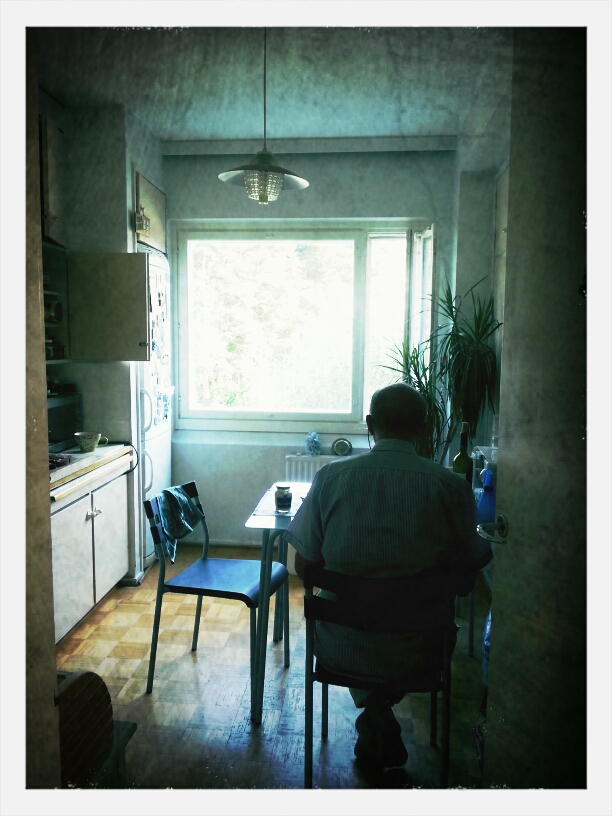
We spent much time this week looking out this window reflecting on our fortunes, which are many.

We spent much time this week looking out this window reflecting on our fortunes, which are many.

What We Are Taught

Perhaps the best quote ever on racism and how it is perpetuated comes from Denis Leary:

“Racism isn’t born, folks. It’s taught. I have a 2 yr old son. Know what he hates? Naps. End of list.” – Me, 1992. True now as it was then.

Certainly, none of us are conscious or cognizant of the moment we learned to distinguish ‘difference’ between us and whatever ‘other’ there is. But, taught we were. As an anthropologist, this makes sense to me. As an individual, it annoys the hell out of me.

The many, many, many reactions to the unfortunate death of Trayvon Martin as well as the outcome of the trial which attempted to exact justice for his killing have reinforced the notion that we have a serious racism issue which persists in the United States. It isn’t just that George Zimmerman walked free and a young, black man died entirely too young. It’s more that a) I’m not surprised that Trayvon was shot and killed; b) I’m not that surprised by the outcome of the trial; and c) I’m not surprised that so many utterly hateful comments, posts, analyses and rants have appeared since the jury reached its verdict.

Incredibly saddened, yes. Surprised, no. And, that just makes me angry.

And, then, there is Jane Elliott. A third-grade teacher from an all-white town in Iowa in 1968 struggling to process the assassination of Martin Luther King, Jr. also struggled with what she viewed as racially charged coverage of a national tragedy. In attempting to deal with her own grief and confusion over those events in 1968, she designed an experiment to teach her students the meaning of discrimination and bigotry.

What happened over the next two days surprised her and also provided a valuable lesson her students would carry with them throughout their lives.

As documented by Frontline in a special 14 years after her students were subjected to the blue-eyed/brown-eyed experiment, the lessons learned and the feelings each student felt when they were a part of the ‘inferior’ group have stayed with them into adulthood. That is, Mrs. Elliott was able to capture the feelings of helplessness those who are discriminated against feel on a daily basis. And, in turn, her students learned to empathise with that and learn to not discriminate in the process.

For anyone who hasn’t watched the programme, watch it. Now. Share it. And, repeat. The lessons from 1968 are still very much needed today.

What’s perhaps further important to note about that experiment is discussed in the full-length programme. Results of tests taken before, during and after the experiment document ever-so-eloquently just how profound an impact discrimination can have on individuals. Those who are part of the ‘privileged’ group perform better on tests whilst those who are discriminated against perform poorly.

Imagine waking up every single day of your life and knowing that you are looked down upon, expected to perform poorly or somehow viewed as ‘different’ (and most definitely not equal nor entitled to the same opportunities) by others around you. And, imagine having that view reinforced again and again and again throughout your life from the time you are born until you die.

The heartbreaking fact of life in the US today is that we do not imagine. If we did, things would be very different. Whether it be based on race, class, sex, religion, sexual orientation or whatever, we look at members of ‘the other’ differently and make assumptions about those individuals based on what we think we know about them and how we expect them to behave. In many aspects, this inventory of characteristics now includes political leaning. (I recognise my own prejudice here and I am trying to work on it.) And, largely, we support our own prejudices with whatever spurious evidence we can. Rather than ask ourselves the difficult questions, we continue to make assumptions we are comfortable with and life continues in much the same fashion. Discrimination and bigotry persist.

Perhaps the most eloquent and gut-wrenching reminder of just how far we have yet to go in removing discrimination and prejudice from our own society came from a piece posted to New York Magazine’s website by Questlove. It’s a powerful essay on just what it means to be a black man in America today. Even one who has ‘made it’ is not entirely accepted or exempted from the painful stigma of discrimination, and as you read his piece, you know that he understands this all too well. The entire piece is well worth a read, but he ends with this, talking with a friend after just hearing the verdict in the Zimmerman trial:

It hurts to hear it, and I say, “I’m not surprised, but who wants to be reminded?” What fat person wants to hear that they aren’t pleasing to the eye? Or what addict wants to hear they are a constant F-up? Who wants to be reminded that — shrug — that’s just the way it is?

I guess I’m struggling to get at least 1 percent of this feeling back, from all this protective numbness I’ve built around me, to keep me from feeling. Because, at the end of the day, I’m still human.

…Right?

Imagine what it takes for an individual to even ask if they are ‘human’.

We are all ‘humans’. Whatever outward characteristics we are pigeon-holed into, whatever consequences of our individual genetic make-up have created that uniqueness that is ‘me’, we are all humans. But, we are taught how to interpret those visible signals. And, yes, we are taught that there are less worthy humans.

Here’s hoping that we can all one day enjoy interpreting those signals as positive and worthy and equally valuable in their uniqueness. Or, at the very least, perhaps we can simply teach that to those around us and to future generations.

Maybe, then, we’ll all just hate naps.