If the people lead…

The Leaderless Revolution is one of the many books that sits in my to buy / to read list of books. It sits there largely because several folks I respect immensely rather simultaneously and independently posted their reviews of it, and how it has them thinking of what we could accomplish if only unconstrained by structures which inhibit us.

Colour me intrigued.

Last night, also rather randomly, The Cuban queued up for our nightly dose of television a BBC Storyville documentary featuring none other than Carne Ross, the author of this intriguing book. I finally bought the book after about 15 minutes into this documentary. And, I plan to read it immediately upon its arrival.

Communities can not just offer but provide solutions. But we overlook such opportunities because these solutions can’t possibly be that easy or can’t possibly work because no one has ever tried them. Communities often remain unconsidered or an after-thought by those who make decisions, decisions which profoundly affect them. And, by far more often than not, those decisions are made without representatives of specific communities in the sodding room.

No wonder so many projects fail to reach their achievements or to produce the results others have intended or to meet the needs of those they should be helping. As someone who worked in development aid for a number of years, this was and remains all too obvious and tragic. Yet, precious little appears to change.

By contrast, a few indefatigable individuals I am honoured to know have extolled the virtues of anarchist activism for years. They don’t just sing its praises; they are anarchist activists in action.

Currently, through their efforts aimed at reducing opioid overdose deaths in their communities (in this case, Toronto), they are demonstrating just how incredible community-level activism alongside a little anarchism can effect change, hugely and positively impact local-level communities, and confront power structures we typically cower to or eventually relent to.

Briefly, as city-level structures (pardon the pun) drug their feet to implement any action as overdose deaths continued to not just occur but increase, these harm reduction policy activists sprung into action and opened a pop-up injection site in a community park. This action resulted from inaction and in part out of desperation. They were tired of seeing their friends and community members die. And, they knew definitively what to offer the community in order to prevent further deaths. By supervising injecting drug use, they can help prevent deadly overdoses immediately and call for medical assistance if necessary or needed. An added bonus is the on-the-spot outreach to those who may otherwise exist beyond the reach of health and social services. Services and the space are provided without judgement and without conditions placed on those seeking them, all within the community where it is most needed.

Within one week of opening up the pop-up site, they had reversed five likely fatal overdoses. They had also distributed overdose prevention kits to many, many, many others.

This may seem rather small-scale. But, imagine: within a single week, five of your friends died. And, you had the tools to help prevent those deaths but they were locked away by someone beyond your own community.

What would you do? Would you wait for public (e.g., city, state or national level governmental) action? Or would you do what you could to prevent any further deaths?

I’m not necessarily convinced that government is entirely bad. Indeed, I still believe in public institutions on various levels. But, clearly, we—all of us—face some serious obstacles given how power structures currently overwhelmingly favour those with power and money. Those who are already in the room. Given that so many decisions are made which impact those of us not in various rooms, something clearly needs to change. Perhaps we need different rooms with fewer ‘big men’ and ‘important women’ standing at the front.

Perhaps, if the people lead, the leaders will follow.
 

‘We must take sides’

In the wake of the bombing of a mosque in Minnesota this weekend, a friend posted the following quote from Elie Wiesel:

We must take sides.

Neutrality helps the oppressor, never the victim. Silence encourages the tormentor, never the tormented. Sometimes we must interfere.

When human lives are endangered, when human dignity is in jeopardy, national borders and sensitivities become irrelevant. Wherever men and women are persecuted because of their race, religion, or political views, that place must – at that moment – become the centre of the universe.’ 

Elie Wiesel, The Night Trilogy: Night, Dawn, the Accident

Indeed.

(I’ll be moving a re-read of The Night Trilogy up the to-read queue.)


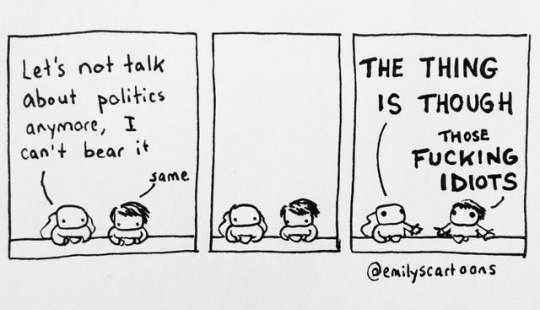
Let’s not talk about politics

A friend of mine just shared this particular comic with me, and it could not have been more appropriate.

politics

©Emily McGovern. Brilliant image capturing how I suspect many are feeling at this particular moment. For more, visit http://emilymcgovern.com/category/comics/.

Feel familiar?

So far today, I’ve read more about the President’s damn tweets, more on potential collusion between Russian hackers and various Trump campaign officials, the assault on access to healthcare that is the GOP/Trump plan to reverse Obamacare, the completely unstaffed Science Division of the White House as of yesterday,  and the rather bizarre request for voter registration information from each state based on misinformation non-existent evidence of ‘widespread’ voter fraud within the US voting system.

I’m exhausted and it’s not even 9.00 on Saturday. And, we’re not even six months into this administration’s first term?

There’s too much. Too much noise and nonsense news and misdirection. As disgusting and demeaning as our current President’s tweets are, the agendas being pushed through as we’re all distracted by his unbecoming behaviour are even more infuriating. For instance, one little tidbit buried in news headlines is a lovely provision in a spending bill currently in the House. This provision would eliminate funding to the IRS to enforce a law prohibiting churches and other non-profits which are tax exempt from endorsing specific candidates for public office. (The law is known as the Johnson Amendment and was signed into law by President Eisenhower.) I don’t mind if churches and other non-profits want to enter the political fray; many already have. I do mind if they want to continue to claim their tax-exempt status.

And, down the political news rabbit hole I go…

My husband and I try to step away from our computers and work and other nonsense each day. On our peripatetic bonding time-out each evening, we typically experience a moment eerily akin to that captured in the image above. Particularly that last panel.

We support evidence-based policies.

We support policies which uphold and respect the human rights and dignity of all rather than a select few.

We support funding for the arts and sciences because they typically assist, benefit and enlighten more than a few, if not today then in future.

And, more than that, we support respectful, open and fact-based discussions on how to move forward on any particular issue.

I don’t for a moment believe that all those with opposing views to my own are idiots. I just wish the discussions about various policies wouldn’t assume that all of us are idiots.

Forget the bloody tweets. Let’s get back to what’s happening with and on specific policies. Precisely because it is so damn infuriating and exhausting.

The Keys to Cuba

I must warn you. This will be a rambling rant of sorts. As with all things Cuba, it’s complicated. And, working through various issues requires a long roundabout detour replete with potholes the size of Texas and an old ’57 Chevy with a Mercedes-Benz engine. [If you’ve never ridden in an Almendrón, none of that will make sense. So bare with me.]

The day I’ve been dreading and awaiting equally has arrived: later today, President Trump will finally announce his policy plans for Cuba. I can’t say that I look forward to this announcement. Waiting, yes. But, certainly not with any sense of hope or excitement.

I don’t know what the ‘best’ policy is towards Cuba. But, I do know that closing off diplomatic relations and taking a hard-line approach hasn’t work and won’t do anything to change the way things are in Cuba today or tomorrow.

I have seen change, however.

My first trip to Cuba in 2008 was eye-opening for a multitude of reasons, primarily because I was finally able to begin assembling my husband’s life into some sort of concrete reality, one only possible after seeing those faraway places and meeting those faces populating his narrative. His life before we met became tangible rather than imagined, if you will. And, I learned so, so much about Cuba and my own country’s role in her history. It is a troubled history, filled with injustice and absurdity and hypocrisy.

I am not a Fidel apologist. Far from it. But, to understand Cuba is to understand the place of Fidel and his merry band of revolutionaries and what they offered all Cubans. Fidel—another complicated personality with a contradictory and odd record—granted many rights to all Cubans which Americans still hope to one day gain. Equitable education to all, resulting in one of the highest literacy rates in Latin America the world. Universal healthcare with an incredible track record for standard of care, resulting in incredibly low infant and maternal mortality rates given the country’s GDP and high life expectancies for both men and women. All of these statistics surpass those in the US by quite some measure. In addition, running water, electricity in every home, a home were granted as rights for all Cubans. These things may seem like idealistic socialist notions, largely because they are. But, prior to the Cuban Revolution that ousted US-backed Batista and installed Fidel, his brother Raúl (now El Presidente until 2018), Che and Camilo and their band of revolutionary heroes at the helm, all of these basic human needs were available only to the rich and powerful.

None of this means that life is perfect in Cuba. Far from it. The obvious human rights issues continue to trouble anyone who gives a toss about humans in general let alone Cubans in particular. But, this is where what we know abroad and what the current situation in Cuba become less clear.

Demonstrations, however insignificant and small, are increasingly visible. Several years ago during one of our visits, a friend went to an event put on by several actors in the underground art scene. A portion of that agenda was openly mocking of Fidel and the Cuban government. Local police raided the event, arresting and carting off those in attendance to the political prison, a place feared by all and in which unspeakable things do occur. Yet, those law enforcement officers most concerned with any voices of opposition at all were completely uninterested in why all these individuals had been hauled in. In fact, their reaction was, ‘Why are you all here? You shouldn’t be!’ Thus, everyone was let go. Anti-Fidel or Anti-Raúl graffiti now pepper walls with ever-increasing frequency in Havana. It’s shocking to see, even for an outsider, particularly alongside the prolific pro-revolution and socialist propaganda throughout Cuba. But, it’s also a sign that Cuba is relaxing its attitude towards dissent however incremental that change may be.

Obviously, Cuba has a long way to go before she will see anything like the sort of resistance-to-Trump marches taking place in the US these days. But, we’ve had several hundred years to get our shit together. Cubans are relatively new to this. And, tentative first steps are still initial steps, however impatient others may be to see ‘real’ change, whatever that means, in Cuba. It isn’t up to us from other lands to set the pace.

More than anything, here’s my take on Cuba: We—the US—need to back off. Lift sanctions. Lift the embargo and allow travel between our countries. Freely and openly. Why? Because it allows our two people to interact and exchange ideas, and learn from one another. We understand and become more compassionate once we talk, and we realise that fundamentally we are just people. What our governments do is one thing; but what we want for ourselves and those we love is fundamentally the same. A roof over a heads and a place to call home. Enough in our cupboard and bank account to sustain us and possibly afford a treat when appropriate. And, essentially, we want the ability to life our lives to the best of our abilities given various other variables.

The embargo hurts Cubans, average Cubans, far more than it hurts the government. Fidel is dead. I won’t say thankfully, but I can’t really shed a tear either. He wasn’t my leader. But, if we’re looking for a win against him, that battle was lost last November. He outlived the embargo and nine US presidential administrations. Raúl is stepping down next year. So, if the embargo remains in place until then, ultimately it will have done nothing to oust the individuals it was intended to usurp. Who wins? No one, other than two leaders we in the US wanted to replace. Who loses? Cubans. Mostly Cubans. The people I love desperately and who would give me their last cup of coffee if such a thing were conceivable. The people who have made me weep with their kindness and sense of equity which should shame anyone from elsewhere obsessed with the latest and shiniest and best model gadget de jour. The people who, despite language and cultural barriers, have welcomed me as a fellow member of their tribe simply because I married a Cuban and came to visit. The people who I love and only want to let live so that they may simply, finally live.

I felt immense hope in Cuba in 2014 when President Obama announced an opening up of diplomatic relations with Cuba. That hope exploded in 2015 with the announcement that President Obama would visit Cuba. Both of those announcements coincided with our visits to my second home, and I was immensely proud of my country and my adopted second home. President Obama’s visit proved to be an incredible moment for all Cubans, many of whom still spoke of it when we were there last Christmas.

November 2016, however, brought grief and uncertainty, first with the election of President Trump in the US and then with the death of Fidel.

Channeling my inner Moulder, I want to believe that things will be alright for Cuba, that enigmatic country I’ve come to love so, so much. But, today, we shall see. I hope for Cubans that reason and rationality prevail. The keys to Cuba’s future should be left to her people. We, as Americans, should allow those keys to turn and perhaps supply a little WD-40 to help loosen long-idle and unused openings. If I’ve learned anything from my 12 years with one particular Cuban, that which binds us is far greater than whatever differences we may possess.

¡Viva Cuba libre!

The Keys to Cuba_Dec 2016

I have no idea what the title of this piece is, but it was incredible. Hundreds of keys arranged in the shape of Cuba. Investigating it are Pedro the Philosopher and Martica the Marvellous. On display at Fábrica de Arte Cubano, December 2016.

When words are all we have

A fellow expat who lives in the Netherlands has a mighty blog. Whilst I don’t read it as often as I’d like, I find it incredibly refreshing and equally real.

She recently visited Poland, making that most gruesome of all journeys to Auschwitz-Birkenau. Rather than simply share the link to her latest entry, I’m posting it here. I hope this gives it more weight than a mere shared link will. Because it is truly something that should be read slowly and carefully. And, perhaps as many times as can be stomached.

On most days, I believe in our collective ability as a species to do good. To extend kindness to those in need. To rise above whatever challenges we face as individuals and as members of various groups and demonstrate that we are not monsters. But, history reminds us of how truly awful we can be. And, we mustn’t forget. We absolutely positively mustn’t allow ourselves to fall prey to fear and hate and difference and commit the most vile offences we can commit against one another ever again.

Thank you, Farrah, for bearing witness. I don’t know how you wrote this piece, but I’m glad you did. Words fail me, so I’ll simply borrow from you…

The following stats are taken directly from her piece and taken from the Auschwitz-Birkenau Memorial:

Note: The following facts are taken directly from The Auschwitz-Birkenau Memorial Guidebook that I purchased on site in Auschwitz and from the placards outside of the respective blocks. I have photographs of the plackards where I took this information. 

Auschwitz was the largest Nazi German concentration camp and death camp. In the years 1940-1945, the Nazis deported at least 1, 300,000 people to Auschwitz:

  • 1, 100,000 Jews
  • 140,000-150,000 Poles
  • 23,000 Roma (Gypsies)
  • 15,000 Soviet POWs
  • 25,000 prisoners from other ethnic groups

1,100,000 of these people died in Auschwitz, approximately 90% of the victims were Jews. The SS murdered the majority of them in the gas chambers.

Struggling to make sense of it all

This year. This year brought with it hope and joy and goodness. It also brought unspeakable tragedy and despair, and what at times seems like an endless stream of senselessness. I find myself struggling with it all like never before. I suspect I am not alone.

Mercifully, none of these tragedies or despair are my own. Yet, as I attempt to absorb the news of each new tragedy, finding some glimmer of kindness amongst my fellow humans can seem like a futile quest. ‘What is wrong with us?!’, is a question far too often repeated, becoming equally and increasingly incredulous and louder with each passing week.

Most recently, like much of the world I have tried and failed to understand why we seem incapable of preventing the needless and horrid death of a young Syrian boy, whose only ‘crime’ was being born to a family living through what surely must be hell on Earth, and who tragically made a most desperate attempt to find peace and security in Europe.

But, it’s not just the images of Aylan Kurdi which haunt my consciousness; it’s how my fellow privileged folk in the peaceful and calm developed North react. Whilst messages of #RefugeesWelcome bring me a sense of awe and hope, the voices of hate and vitriol ring just as loud, if not louder and more persistent, drowning out those seeking and extending compassion and kindness.

This theme, which did not begin recently, seems to repeat itself over and over and over again. Each new injustice and each new tragedy, each new viral story of the idiocy and ugliness which pervades this world is accompanied by hatred so intense and profound that I find myself speechless. Who are these people? What has happened to them—to us—to inspire such intense feelings of hatred for another human based on seemingly insignificant traits or differences? Are we really that different from one another? Are our stories so vastly divergent that we share absolutely nothing in common with ‘the other’? What has happened to our humanity? And, can we find it once again? Or are we hopelessly lost?

It’s the worst sort of rabbit hole to find one’s self in; climbing up out of it can seem insurmountable.

We need a reset button. Collectively and individually. I include myself within this targeted mass re-calibration. Wars will end and new ones will begin. The outward traits of tomorrow’s refugees may differ from those of today, but they will all seek a life which is free from worry and fear for themselves and, mostly, for their loved ones, perhaps more so for the youngest and oldest in our midst. Will we ignore them, choosing instead to leave families who look different to simply exist in horrid conditions and ‘camps‘? Will we help them to find a different, less crisis-laden life amongst us?

Perhaps we simply need to re-focus our energy on those tiny bits of goodness each one of us can pass along to those in need. Re-train those individual strengths and talents we each possess to create a better, safer, more just world, which when combined may result in lasting change that benefits us all equitably. Re-image and discover that one common trait we share with those who seem so outwardly so entirely different from us.

We must do something. Otherwise, we are lost. And, ultimately, we all lose.

This week’s viral escapade featuring the worst sort of pigeon-holing, most troubling in that it was directed at a young boy with what appears to be a promising intellect, provides some hope. If we can collectively step up and police those who seek to profile based on antiquated and bigoted perceptions, perhaps we can create a better world.

So many stories remain untold, while each one is worth telling. Maybe that re-telling is our first step on the arduous path towards understanding and making sense of it all…


tumblr_m384udCUdN1rrm72eo1_1280

Proud to be an ally; not proud that it is necessary

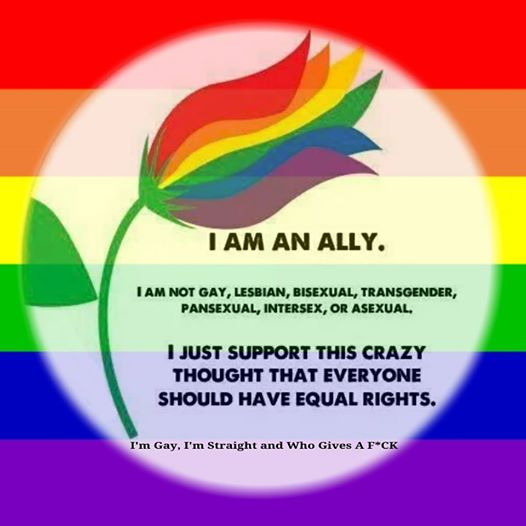
It’s Pride Week in Helsinki. My husband and I will be there to march and show our support and allegiance with not just Finnish but all lesbian, gay, bisexual, transgender and intersex (LGBTI) individuals during a week we’d rather be celebrating marriage equality for all. Alas, Finland has yet to adopt a measure which would allow all couples regardless of their genders to marry legally.

Now, more than ever, it seems crucial that we do something, anything, to show our solidarity with all LGBTI communities.

We unequivocally support everyone’s right to love who they want and to show that love for one another openly and without fear of being persecuted. Love is love. It’s a thing of beauty in its many varied forms, shades and expressions. And, the world and all of us could benefit immensely from a bit more love and a lot less contention and hate.

But, as we in much of Western Europe and North America works towards marriage equality, LGBTI communities in places like Uganda, Jamaica and Russia among far too many others face situations much worse and far more dangerous. The reality in these contexts for individuals suspected let alone known to be gay, lesbian or transgender is akin to what I’d imagine is hell on earth. There is an element of extreme hatred towards LGBTI communities, where violence and criminal prosecution for simply existing are daily realities. And, yes, LGBTI individuals fear for their lives.

What does this have to do with me? Well, my fellow countrymen are complicit in creating these realities. It goes without saying that I do not support their actions nor their efforts and will do what I can to call them to account.

God Loves Uganda tells the story of how American evangelicals, primarily those affiliated with the International House of Prayer (a more sinister use of the acronym IHOP), work to ‘spread the good news’ to Ugandans (and others further afield). Unfortunately, rather than spreading messages of loving they neighbour, the growth of evangelicalism in Uganda seems to be fanning the flames of hatred and bigotry.

Essentially, interpretations of Biblical dogma legitamize and grant licence to allow hate, violence and in extreme cases death to individuals identified as LGBTI or their allies. During a two-conference lead by Americans in Kampala in 2009, my fellow countrymen provided justification and fodder which ultimately resulted in a law which would make homosexuality a criminal offence.

It’s sick. And, quite frankly, the worst sort of application of religion possible. In all honesty, I’m struggling to describe the film in a way that isn’t just as hate-filled as the rhetoric it captures.

Perhaps it is because it is Pride Week here that we feel compelled to act and even more motivated to voice our allegiance. As an American and as an American who grew up in a relatively conservative Christian household, I find myself particularly proud to be an ally. I am not, however, proud that it is necessary.

10246591_758289330888980_7285723713478773961_n


Day 38: Proekt 365 (Solidarity)

Day 38: Proekt 365 Well played, Google!

Day 38: Proekt 365
Well played, Google.

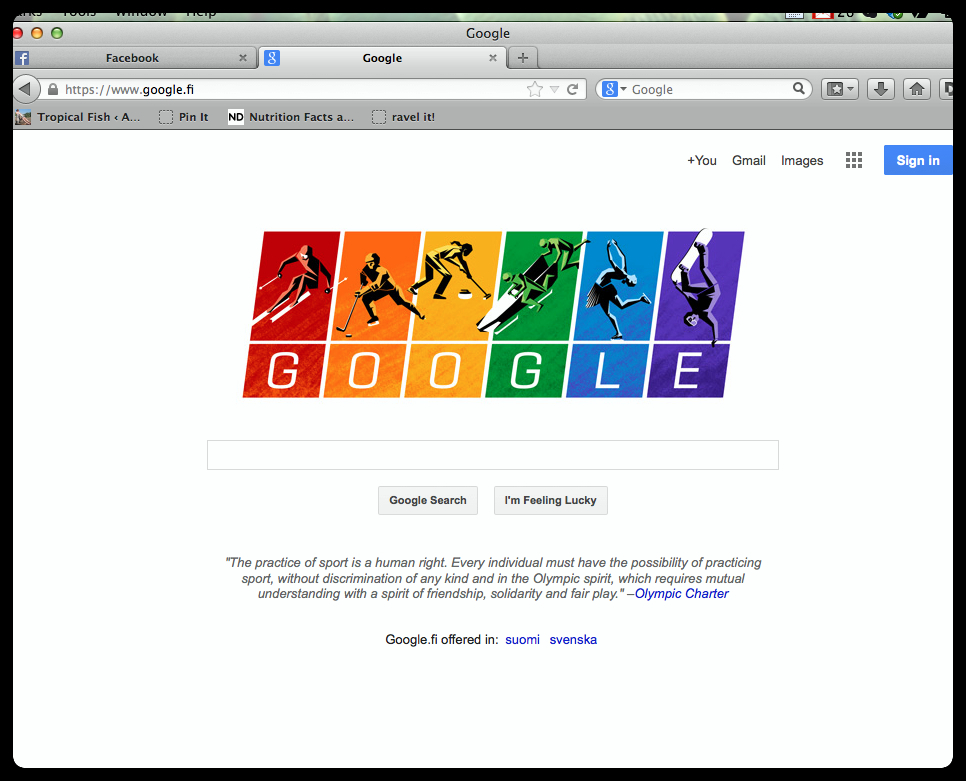
I’m tipping my hat to Google today. They deserve it. As do all those who stand up to oppression.

I’m sure that there will be loads of posts about this today. And, that isn’t a bad thing at all. If anything, more agencies should be voicing their concern and dismay at an incredibly bad policy with very real consequences.

In case you’ve been living under a rock, Russia enacted a law in June last year which essentially makes life incredibly difficult for its country’s LGBTI citizens and residents. (I’ve already written at length about my own thoughts on this elsewhere.) There has been loads of coverage about this insane law given that the Winter Olympics in Sochi are starting this week. Most of that coverage is focused on what it means for those who will be competing and spectating, with far less devoted to how it affects LGBTI community. There has been plenty of outrage voiced from various countries and ‘VIPs’, but not nearly enough and certainly nothing on an organised, large scale. And, far, far too little action, IMHO.

A few days ago, United Nations Secretary-General Ban Ki-moon called on participants to promote equality and non-discrimination during the games (I’d say, why not extend this to the host country, but…nevermind). And, today, the Google Doodle makes a statement loud and clear. I like these statements and I applaud them.

Yet, the (most expensive) Olympics are continuing. Violence against LGBTI in Russia goes on unchecked.

Borrowing from Google, I’ll end this post with the bit of the Olympic Charter we all need to be reminded of during these troubled games:

The practice of sport is a human right. Every individual must have the possibility of practicing sport, without discrimination of any kind and in the Olympic spirit, which requires mutual understanding with a spirit of friendship, solidarity and fair play.

In solidarity…

Where an ‘I love you’ text is a crime

A week ago, a man in Cameroon died. Roger Jean-Claude Mbede, who was only 34 years young, died of complications and lack of treatment for a hernia. As if this wasn’t tragic enough, Roger died needlessly and senselessly after having to live in hiding and knowing that his family wanted to remove the ‘curse’ which plagued him. Why?

Because he was gay.

Roger was jailed under Cameroon’s anti-gay legislation in 2011 for sending a text message to a man which read, ‘I’m very much in love with you’. He was sentenced to three years in prison, and later released on medical grounds. He lived in hiding upon release and some reports suggest he was barred from receiving medical treatment. Even his family said that it would be better to just let him die.

Because he was gay. Because he loved a man and declared that love.

There are far, far too many countries in which individuals who do not fit the ‘norm’ face criminal charges for simply declaring an emotion which should bring joy, happiness and hope. Depending upon how you classify both country and legislation, a total of 83 countries (84 if you count Russia) have laws which place strict limitations on the human rights freedoms to those citizens who are gay, lesbian, bi-sexual and transgender. That’s 84 too many. Imagine living in a place where you cannot declare your love for another human being. Where you cannot show your love for another human being. Where you are not free to love and show that love for whom you wish.

With all of the attention Russia and President Putin have been quite rightly getting given the upcoming Olympic games, perhaps we can also shine a spotlight on all those other countries in which LGBT men and women face prison, discrimination and stigma on a daily basis simply for being who they are. This includes Cameroon, Nigeria, Uganda and 35 other African nations (although the Ugandan law has not been signed by the president as of this morning). These are only the countries from one continent in which laws exist making it a crime to be gay. Let’s not forget the Americas, Asia, and, yes, Europe. As we in the developed North applaud the steady march towards marriage equality in the United States, the spread of laws which criminalise homosexuality continue and with them stigma, discrimination and hatred become more common and, in a way, legally sanctioned and institutionalised.

Despite Putin’s claims that the Sochi games will be welcoming to all athletes and free of discrimination in any form, what about the remainder of Russia outside the Olympic bubble? Actions, and in this particular case, legislation speak infinitely louder than words. So loud in fact that 27 Nobel laureates and Sir Ian McKellen (aka Gandalf) have penned a letter asking President Putin to reconsider the anti-gay propaganda law. Once the Olympic torch is extinguished, I’m dubious that anything will change, and suspect that things for Russia’s LGBT community may in fact become more grim.

But, what of those other countries in which the laws are even harsher? What of those countries who punish their LGBT citizens with decades long or even life prison sentences? What of those countries where being gay carries the death penalty? Where is the outrage? Where is the international support? Where are the protest letters from those 27 Nobel laureates and knighted actors?

In some parts of the world, undoubtedly we’ve come a long, long way towards making it safe and legal for all to love whom they love, openly and without fear (or, as it should be). But, as the senseless and tragic case of Roger Jean-Claude Mbede illustrates all too cruelly, we still have a very long way to go.

The Anti-Gay World (pinched from Buzzfeed)

The Anti-Gay World
(pinched from Buzzfeed)

The Madness of Mandatory Minimums

The Scales of Justice

In a former life, I spent many a holiday and break from school hanging with the ‘long-haired hippie freaks’ who, like me, enjoyed a few hours spent grooving around various venues to the meandering and magical musical madness of the good old Grateful Dead. Oddly, not all of us at the shows were long-haired, and many, like me, were basically budding or full-fledged professionals.

Hippie freaks? Perhaps. Gainfully employed and fully engaged members of the broader society? Amongst my friends, yes.

I won’t say that we were a straight-laced crew. Far from it. But, we bought our tickets before showing up to the venues, paid our own way, and most preferred the comforts of the nearest hotel to the wilder times in various campgrounds where the festivities continued well into the wee hours. We enjoyed our time off, and ‘turned on and tuned out’ to the fullest possible extent. But, we did so responsibly (there was always a designated sober person to shepherd the flock).

It was during that incredibly fun-filled and enlightening time in the ’90s when I learned first-hand the absurdity of mandatory minimums, those most insane sentencing ‘guidelines’ which determine the minimum sentence for things such as possession of certain narcotics, or which determine that an individual gets three chances and then they are jailed for life regardless of the offense (three strikes). Sentences under mandatory minimums rarely fit the crime and often remove the uniqueness of an individual defendant and what lead them to appear in court.

A particularly gentle soul, as well as perhaps the unluckiest person I’ve ever known, was facing a mandatory life sentence without the possibility of parole for a third non-violent offence. He had been caught three times with relatively minor quantities of marijuana and LSD (not simultaneously), all under rather unfortunate sets of circumstances. He was 23 or 24 years old at the time, and one of the sweetest, kindest, gentlest people I have known before or since. It was heartbreaking. Prison would break him and eventually kill him, and, just about everyone who knew him understood that simple truth.

In the exceptional documentary, The House I Live In, the absurdity of mandatory minimums and the countless failures of the war on drugs are framed within the context of their effects on otherwise ordinary people, from the incarcerated, to those working within the criminal justice system to individual family members affected by drugs and unfair sentencing laws. The tragic consequences of policies which disproportionately affect the poor and minorities and a ‘war’ which has been waged on the American public are made all-too real. As I watched the Kevin Ott re-tell his own tragic story, I was reminded of my friend’s story from two decades ago:

Story after story after story in this fine, troubling film demonstrate how mandatory minimums are not helping to reduce drug-related crime or drug use itself. Rather, they are forcing judges to sentence those caught to prison terms that are ‘unfair and unjust’ and condemning individuals and families deal with the tragic consequences generation after generation. The cycle of drug-dealing, poverty and hopelessness continue , and specifically impact inner-city African American men disproportionately.

Two decades after an otherwise privileged young man awaited an unfair sentence for a non-violent crime which hurt no one (possession of an ounce of marijuana), the US Attorney General is finally talking sense:

‘While the entire U.S. [prison] population has increased by about a third since 1980, the federal population has grown at an astonishing rate — by almost 800%,’ Holder’s speech says. ‘It’s still growing, despite the fact that federal prisons are operating at nearly 40% above capacity. Even though this country comprises just 5% of the world’s population, we incarcerate almost a quarter of the world’s prisoners.’

It’s two decades too late for my friend. But, it’s never too late to make a sound policy change, particularly one which is based on a fair and just system and which doesn’t mete out punishments far exceeding the crimes, or which, by design, unevenly targets those who are simply attempting to survive the only way that they know how.