I will not be terrorised

From a weekend in Paris in October 2010.

Findings words today seems impossible, if not entirely futile. Attempting to understand the insanity of yesterday’s events is proving less possible.

As my husband and I learned what was happening last night after a carefree evening in good company, we wondered if this was the new world order. Was this the new normal, where daily we go about our business knowing that another terror attack is likely, yet remain clueless as to where, by whom and against whom such attacks would occur? The scale of events in Beirut and Paris doesn’t pale in comparison to 9/11, yet the unpredictability rekindles the terrifying realities we all experienced that day. The seeming randomness once again leaves us wondering, ‘is our safe, peaceful life about to transform forever’?

But, that’s the point, no? To leave us so terrified that we fight through our support of another war in the guise of retaliation and justice against ‘people’ from no country at all, or huddle behind closed doors and barricaded borders fearing encounters with a nameless, faceless but ideologically foreign ‘enemy’.

As much as I do not understand what drives anyone to such lengths to commit acts of terrorism, I also do not and cannot support an equally oppressive and violent reaction to it.

I will no be terrorised. I will not refrain from travel or random encounters with strangers. I will not refrain from sympathising or empathising with those different from me. I will not live in fear of the unknown nor look at strangers as enemies, real or imagined.

At a time when it seems hate and darkness creep ever further across the social and cultural landscapes when we most need to practice compassion and understanding, Dr King’s words from Strength to Love run repeatedly through my mind:

Returning hate for hate multiplies hate, adding deeper darkness to a night already devoid of stars. Darkness cannot drive out darkness; only light can do that. Hate cannot drive out hate; only love can do that. Hate multiplies hate, violence multiplies violence, and toughness multiplies toughness in a descending spiral of destruction. So when Jesus says “Love your enemies,” he is setting forth a profound and ultimately inescapable admonition. Have we not come to such an impasse in the modern world that we must love our enemies–or else? The chain reaction of evil–hate begetting hate, wars producing wars–must be broken, or we shall be plunged into the dark abyss of annihilation.

I will not be terrorised. I will not hate. And, I will not lose hope that we may all find a peaceful way through the darkness.


Struggling to make sense of it all

This year. This year brought with it hope and joy and goodness. It also brought unspeakable tragedy and despair, and what at times seems like an endless stream of senselessness. I find myself struggling with it all like never before. I suspect I am not alone.

Mercifully, none of these tragedies or despair are my own. Yet, as I attempt to absorb the news of each new tragedy, finding some glimmer of kindness amongst my fellow humans can seem like a futile quest. ‘What is wrong with us?!’, is a question far too often repeated, becoming equally and increasingly incredulous and louder with each passing week.

Most recently, like much of the world I have tried and failed to understand why we seem incapable of preventing the needless and horrid death of a young Syrian boy, whose only ‘crime’ was being born to a family living through what surely must be hell on Earth, and who tragically made a most desperate attempt to find peace and security in Europe.

But, it’s not just the images of Aylan Kurdi which haunt my consciousness; it’s how my fellow privileged folk in the peaceful and calm developed North react. Whilst messages of #RefugeesWelcome bring me a sense of awe and hope, the voices of hate and vitriol ring just as loud, if not louder and more persistent, drowning out those seeking and extending compassion and kindness.

This theme, which did not begin recently, seems to repeat itself over and over and over again. Each new injustice and each new tragedy, each new viral story of the idiocy and ugliness which pervades this world is accompanied by hatred so intense and profound that I find myself speechless. Who are these people? What has happened to them—to us—to inspire such intense feelings of hatred for another human based on seemingly insignificant traits or differences? Are we really that different from one another? Are our stories so vastly divergent that we share absolutely nothing in common with ‘the other’? What has happened to our humanity? And, can we find it once again? Or are we hopelessly lost?

It’s the worst sort of rabbit hole to find one’s self in; climbing up out of it can seem insurmountable.

We need a reset button. Collectively and individually. I include myself within this targeted mass re-calibration. Wars will end and new ones will begin. The outward traits of tomorrow’s refugees may differ from those of today, but they will all seek a life which is free from worry and fear for themselves and, mostly, for their loved ones, perhaps more so for the youngest and oldest in our midst. Will we ignore them, choosing instead to leave families who look different to simply exist in horrid conditions and ‘camps‘? Will we help them to find a different, less crisis-laden life amongst us?

Perhaps we simply need to re-focus our energy on those tiny bits of goodness each one of us can pass along to those in need. Re-train those individual strengths and talents we each possess to create a better, safer, more just world, which when combined may result in lasting change that benefits us all equitably. Re-image and discover that one common trait we share with those who seem so outwardly so entirely different from us.

We must do something. Otherwise, we are lost. And, ultimately, we all lose.

This week’s viral escapade featuring the worst sort of pigeon-holing, most troubling in that it was directed at a young boy with what appears to be a promising intellect, provides some hope. If we can collectively step up and police those who seek to profile based on antiquated and bigoted perceptions, perhaps we can create a better world.

So many stories remain untold, while each one is worth telling. Maybe that re-telling is our first step on the arduous path towards understanding and making sense of it all…


tumblr_m384udCUdN1rrm72eo1_1280

Neither here nor there

As an anthropologist, I’m intellectually familiar with and fully comprehend the concept of reverse culture shock. As a person experiencing it, I just want to crawl into bed with the covers over my head and hide from the world for a while until it subsides or we return to Cuba.

My first real experience feeling bewildered by coming home hit me full on when returning from my first trip to Moscow in 1998. After a mere 9 weeks, landing at JFK was one of the most surreal experiences of my life up to that point. E V E R Y T H I N G felt unfamiliar and odd. Whilst my body was firmly planted in New York and eventually back amongst my things and in my flat in Connecticut, my mind persistently resisted leaving behind my surroundings and new-found friends in Moscow. Any time a question was asked, my response came in Russian (unsurprising perhaps since I hadn’t heard English for the last 3 weeks of that particular trip). Everything which at one time had been automatic in my US-based life became awkward and … difficult.

The unfamiliarity and disconnect subsided, replaced not necessarily by normalcy but passive acceptance that I was cognitively straddling two worlds. When I moved to Moscow the following year for what I assumed was a brief 6-month to 1-year teaching gig, I experienced culture shock upon my return to Russia, largely because I was on my own rather than sheltered and taken care of by a host family; the shock was somehow less pronounced. I continued to straddle my Moscow-based and other life in the US, but the divergence and cognitive dissonance between those worlds seemed less traumatic and … well… shocking.

Fast forward 17 a few years and insert two different worlds and that oddly and unsettling familiar feeling of reverse culture shock has returned. Whilst two different countries feature as home (Finland rather than the US) and home away from home (Cuba vs Moscow), the experience and feelings differ very little.

We returned from our epic journey to the land of rum, cigars, 1950s cars and chanchullo 3 weeks ago today and I’m still experiencing the worst sort of disconnect from life and missing Cuba and, more importantly, Cubans desperately. Finland, which is a relatively comfortable and easy place to live and has become home to us, feels wrong. It is too quiet. There are too many products and options and things from which to choose. And, it’s too clean and organised. Weird, right? (First World Problems, anyone?)

We knew before we left for the airport that our return to ‘civilisation’ and the ‘real world’ would be a slap in the face. How could it not be when we had such an amazing 6 weeks in Fidel’s Cuba? But from the moment we landed in Amsterdam and the experience of navigating Schiphol, once a favourite place for me, to returning to our flat and our life here, I cannot shake that sense that something is misplaced and off about my situation. Or more precisely where I am situated. My surroundings, including my beloved workspace, are somehow not quite right. I wake up each morning utterly confused, having dreamt about various goings on in Helsinki, but all situated and populated by those familiar faces from Cuba we left behind. In some cases, the actual stage is Cuba, but the events and people are all from our life in Finland. It’s maddening really.

This past weekend, the sense of longing for Cuba was so strong that after writing about chicharritas in the morning, I went on a quest to find green plantains and black beans so that we could at least eat Cuban food again, even if it wasn’t prepared by our favourite home cooks.

Perhaps it’s that the weather simply sucks this time of year in Helsinki, particularly this year. Perhaps we’re just missing our friends and family ‘over there’. That’s natural. Perhaps we simply haven’t ever really connected to Finland in the way that we should to properly ‘return’ to it. I know my toes will never prefer being stuffed into boots for 6 months to freely wiggling in the seaside air and burying themselves in the white sand beaches of Cayo Blanco.

For now and until this maddening mental state passes, I shall endeavour to be patient and ride out the reverse culture shock. I have great friends here, I love my students and teaching, I’m surrounded by brilliant colleagues and Finland possesses so many conveniences and a vast array of fresh produce that we truly missed when we were in Cuba. And, we have the internet once again. More importantly, my Cuban is here.

Eventually, my head will catch up with the rest of my body and realise that we are here in Finland. But, my heart remains in Cuba. For now…

This slideshow requires JavaScript.


Fevered pitch

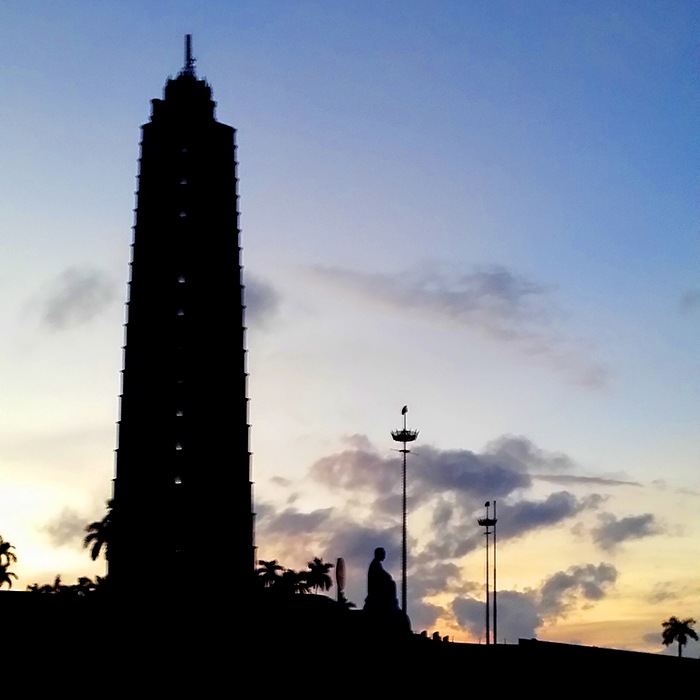
A view of a monument to Cuban hero and poet José Martí and Revolution Square at dusk. Havana, Cuba, January 2015

All things change. Just as football (the European / Latin American variety) usurps baseball as the collective national preferred sport amongst Cubans, at one point in the not-so-distant future the Castro brothers’ reign over Cuba will come to an end. What will follow is truly anyone’s guess, and largely depends on who takes over as much as US policy at the time. But, you can feel the impending shift and anticipation just about everywhere in today’s Cuba.

Our most recent trip to that most enigmatic island nation coincided with a seismic shift in the relationship between my country and my husband’s — about damn time, too. Alongside the shifting relations and perhaps more widely heralded in Cuba, this news accompanied the release of the notorious Cuban Five. Yet, that most enduring figure of communism in Cuba, so hated by most American presidents over the past 50 years—known affectionately (or not) as Fidel or El Comandante to Cubans—has remained silent.

No editorials. No public appearances. No statements released. At all.

For a guy known to give passionate speeches lasting more than three or four hours in full military fatigues at the height of the sweltering, balmy, sauna-like summer sun and heat of Cuba, this defies belief.

His silence has inevitably lead to widespread speculation and a vast array of rumours about his death, some stemming out of hope, some simply voicing questions regarding how he can possibly remain silent for so long about something so hugely important for his country, let alone the Cuban Five’s release, something he personally promised to accomplish.

But, whispers of Fidel’s (imminent) death predated the biggest news story of late last year. He has not been seen in public for more than a year, something somewhat unprecedented for a man who featured prominently almost daily in the news and public eye at one time. A year ago during that rare pubic appearance, he looked frail and rather, well, old.

Alongside this bit of trivia on the Fidel Watch Parade and perhaps a bit more alarming comes the revelation that his once prolific musings published in Cuba’s most-read newspaper have also been lacking. His last article published in Granma, the official newspaper of the Cuban Revolution, appearing in print on 13 October 2014, predating the biggest news regarding US-Cuban relations perhaps since the Bay of Pigs.

Any sane, logically thinking person would raise a few eyebrows given these observations, let alone ask a few questions regarding where Fidel is at the moment.

My first experience understanding the absurdity of Cuban state news came when announcements ran across the bottom of the TV screen that Maradona (the infamous Hand of God Argentine football player) received a letter from his friend Fidel, in which Fidel declared that he is ‘indeed still alive’. A letter? Really? To a football player with somewhat questionable ethics? M’okay. (Let’s ignore for the moment that this was typed and most likely signed with an auto-pen, and, more importantly, made no mention at all of recent events.) It wasn’t just that news of receipt of this letter was a headline, top-of-the-news programme item. That the tagline referred to dispelling the rumours of Fidel’s death left all of us witnessing it in bewildered hysterics. (By all of us, I mean my husband and his family, with whom we were visiting when the news broke.)

To further fuel speculation and the ever-expanding rumour mill, the next day, another top news story declared that Fidel’s nephew said, ‘Fidel is alive and healthy’. This particular item doesn’t appear to have made international press. Little wonder why.

Rather than quiet the whispers, talk became much louder and more frequent as news of Fidel’s letter to Maradona spread and his nephew’s statement left most laughing (and questioning) harder still.

Things do change and Fidel’s lengthy absence from Cuba’s public eye indicate something. Just what remains to be seen. The last time such speculation reached this fevered of a pitch, Fidel stepped down as president and his younger brother Raúl took on the role, another event which seemed exceptionally unlikely just weeks before it actually happened.

Since our last visit to Cuba ending in early 2010, things have changed considerably in some ways. Private traders and small businesses have sprung up everywhere. [This statement requires a very large asterisk, and deserves a post all on its own. The Cuban government published a very, very lengthy list of what types of businesses private, self-employed individuals are allowed to engage in. Almost no profession that requires advanced training (think doctors, engineers, computer programmers and the like), made this list.] Much restoration to Habana Vieja has transformed sections of the oldest parts of the city, a mammoth task funded largely by foreign development aid budgets. But, there is still much work to be done.

For all the good the Castro brothers and the 26th of July Movement accomplished in equalising opportunities for education and access to healthcare for all, the currently poor living conditions and low wages amongst just about everyone in the country leave much to be desired. Yes, goods and services are largely cheap. Yes, every citizen theoretically is given ‘access’ to basic living goods vis-à-vis the ration cards which everyone receives in Cuba and which includes things like coffee, sugar, bread, cooking oil, etc., but doesn’t provide enough to live on.

Wages, however, remain exceptionally abysmal (~US$15-25 / month). If goods and services were even slightly more expensive, no one except those earning supplemental income from the wide array of ‘grey’ or semi-black market-like activities would be able to afford them. Buildings are still crumbling whilst their inhabitants watch from within, and roads are so scarred by potholes that they often resemble obstacle courses rather than routes from Point A to Point B and may require extensive refurbishment to suspension systems if taken on at speeds to high. Trash is seldom picked up from bins in the poorest neighbourhoods, left to overflow onto the surrounding streets and picked up only partially after strewn about and becoming too unwieldy.  One friend lamented this reality in his own neighbourhood, explaining that the trash is only removed after it becomes so plentiful that it takes a backhoe to pick up and then destroys any bit of grass that hasn’t already been spoiled.

So, what comes next?

Raúl, in his most recent re-election to a five-year term as President, declared that he would step aside in 2018. That is soon. Exceptionally soon when you think about the decades-long rule the Castro brothers have enjoyed. Difficult times likely lie ahead for Cuba and her people. It breaks my heart in all honesty — she and her people have endured so much already. I’d like the transition to be as benign as humanly possible. Yet, I (and my husband especially) fear the path will prove bumpier than ever.

As to Fidel, based on discussions with friends and family in Cuba, some think that he may have already died and no one knows quite how to announce it. More probable and highly plausible is a scenario which has rendered Fidel completely incapacitated in a persistent vegetative state hooked up to life support with no one willing to pull the plug. Consensus suggests that such a cognitive state made it possible for the thawing of relationships between our two countries, and those at the highest political levels in Cuba felt it was better to create a healthy relationship with its largest and nearest foe before news of Fidel’s demise is announced, whether it be his death or something near-death.

Like all good conspiracies, this makes sense. But, Fidel has defied odds on multiple occasions before. Personally, I’m not holding my breath, just as I’m sure others are reluctant to do. Who knows what’s up with or where Fidel is. One thing is for sure though — someone will replace Fidel and Raúl in three years’ time.

Until then, let the rumours continue.

Proud to be an ally; not proud that it is necessary

It’s Pride Week in Helsinki. My husband and I will be there to march and show our support and allegiance with not just Finnish but all lesbian, gay, bisexual, transgender and intersex (LGBTI) individuals during a week we’d rather be celebrating marriage equality for all. Alas, Finland has yet to adopt a measure which would allow all couples regardless of their genders to marry legally.

Now, more than ever, it seems crucial that we do something, anything, to show our solidarity with all LGBTI communities.

We unequivocally support everyone’s right to love who they want and to show that love for one another openly and without fear of being persecuted. Love is love. It’s a thing of beauty in its many varied forms, shades and expressions. And, the world and all of us could benefit immensely from a bit more love and a lot less contention and hate.

But, as we in much of Western Europe and North America works towards marriage equality, LGBTI communities in places like Uganda, Jamaica and Russia among far too many others face situations much worse and far more dangerous. The reality in these contexts for individuals suspected let alone known to be gay, lesbian or transgender is akin to what I’d imagine is hell on earth. There is an element of extreme hatred towards LGBTI communities, where violence and criminal prosecution for simply existing are daily realities. And, yes, LGBTI individuals fear for their lives.

What does this have to do with me? Well, my fellow countrymen are complicit in creating these realities. It goes without saying that I do not support their actions nor their efforts and will do what I can to call them to account.

God Loves Uganda tells the story of how American evangelicals, primarily those affiliated with the International House of Prayer (a more sinister use of the acronym IHOP), work to ‘spread the good news’ to Ugandans (and others further afield). Unfortunately, rather than spreading messages of loving they neighbour, the growth of evangelicalism in Uganda seems to be fanning the flames of hatred and bigotry.

Essentially, interpretations of Biblical dogma legitamize and grant licence to allow hate, violence and in extreme cases death to individuals identified as LGBTI or their allies. During a two-conference lead by Americans in Kampala in 2009, my fellow countrymen provided justification and fodder which ultimately resulted in a law which would make homosexuality a criminal offence.

It’s sick. And, quite frankly, the worst sort of application of religion possible. In all honesty, I’m struggling to describe the film in a way that isn’t just as hate-filled as the rhetoric it captures.

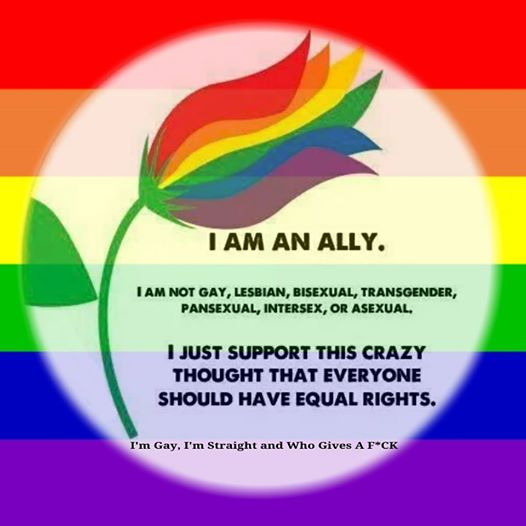
Perhaps it is because it is Pride Week here that we feel compelled to act and even more motivated to voice our allegiance. As an American and as an American who grew up in a relatively conservative Christian household, I find myself particularly proud to be an ally. I am not, however, proud that it is necessary.

10246591_758289330888980_7285723713478773961_n


Day 38: Proekt 365 (Solidarity)

Day 38: Proekt 365 Well played, Google!

Day 38: Proekt 365
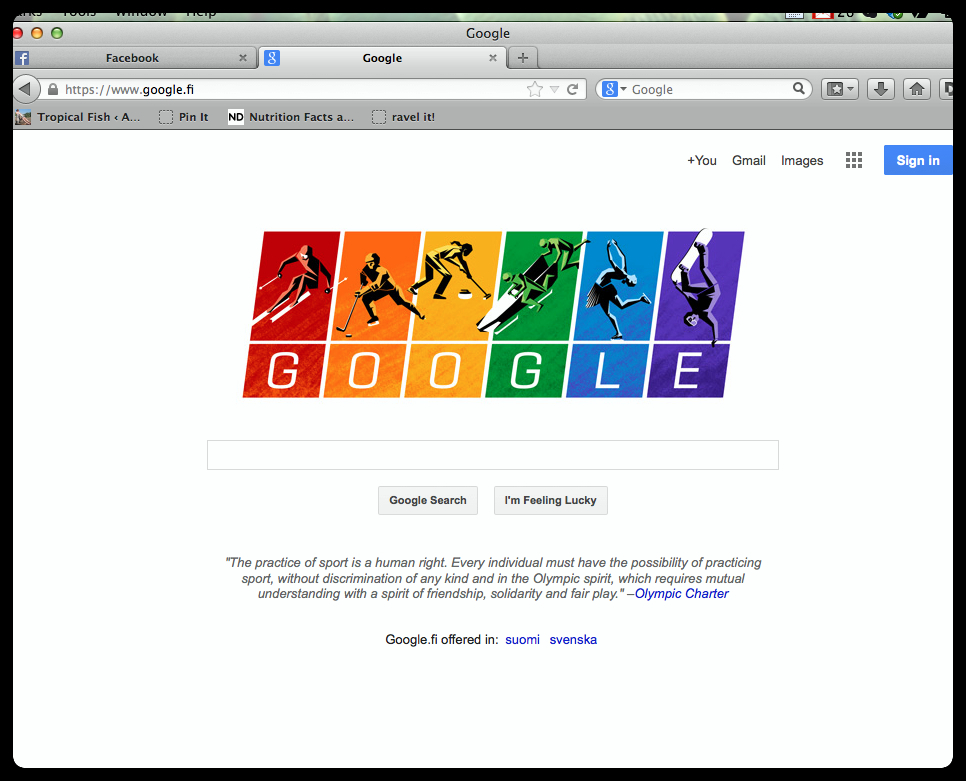
Well played, Google.

I’m tipping my hat to Google today. They deserve it. As do all those who stand up to oppression.

I’m sure that there will be loads of posts about this today. And, that isn’t a bad thing at all. If anything, more agencies should be voicing their concern and dismay at an incredibly bad policy with very real consequences.

In case you’ve been living under a rock, Russia enacted a law in June last year which essentially makes life incredibly difficult for its country’s LGBTI citizens and residents. (I’ve already written at length about my own thoughts on this elsewhere.) There has been loads of coverage about this insane law given that the Winter Olympics in Sochi are starting this week. Most of that coverage is focused on what it means for those who will be competing and spectating, with far less devoted to how it affects LGBTI community. There has been plenty of outrage voiced from various countries and ‘VIPs’, but not nearly enough and certainly nothing on an organised, large scale. And, far, far too little action, IMHO.

A few days ago, United Nations Secretary-General Ban Ki-moon called on participants to promote equality and non-discrimination during the games (I’d say, why not extend this to the host country, but…nevermind). And, today, the Google Doodle makes a statement loud and clear. I like these statements and I applaud them.

Yet, the (most expensive) Olympics are continuing. Violence against LGBTI in Russia goes on unchecked.

Borrowing from Google, I’ll end this post with the bit of the Olympic Charter we all need to be reminded of during these troubled games:

The practice of sport is a human right. Every individual must have the possibility of practicing sport, without discrimination of any kind and in the Olympic spirit, which requires mutual understanding with a spirit of friendship, solidarity and fair play.

In solidarity…

Where an ‘I love you’ text is a crime

A week ago, a man in Cameroon died. Roger Jean-Claude Mbede, who was only 34 years young, died of complications and lack of treatment for a hernia. As if this wasn’t tragic enough, Roger died needlessly and senselessly after having to live in hiding and knowing that his family wanted to remove the ‘curse’ which plagued him. Why?

Because he was gay.

Roger was jailed under Cameroon’s anti-gay legislation in 2011 for sending a text message to a man which read, ‘I’m very much in love with you’. He was sentenced to three years in prison, and later released on medical grounds. He lived in hiding upon release and some reports suggest he was barred from receiving medical treatment. Even his family said that it would be better to just let him die.

Because he was gay. Because he loved a man and declared that love.

There are far, far too many countries in which individuals who do not fit the ‘norm’ face criminal charges for simply declaring an emotion which should bring joy, happiness and hope. Depending upon how you classify both country and legislation, a total of 83 countries (84 if you count Russia) have laws which place strict limitations on the human rights freedoms to those citizens who are gay, lesbian, bi-sexual and transgender. That’s 84 too many. Imagine living in a place where you cannot declare your love for another human being. Where you cannot show your love for another human being. Where you are not free to love and show that love for whom you wish.

With all of the attention Russia and President Putin have been quite rightly getting given the upcoming Olympic games, perhaps we can also shine a spotlight on all those other countries in which LGBT men and women face prison, discrimination and stigma on a daily basis simply for being who they are. This includes Cameroon, Nigeria, Uganda and 35 other African nations (although the Ugandan law has not been signed by the president as of this morning). These are only the countries from one continent in which laws exist making it a crime to be gay. Let’s not forget the Americas, Asia, and, yes, Europe. As we in the developed North applaud the steady march towards marriage equality in the United States, the spread of laws which criminalise homosexuality continue and with them stigma, discrimination and hatred become more common and, in a way, legally sanctioned and institutionalised.

Despite Putin’s claims that the Sochi games will be welcoming to all athletes and free of discrimination in any form, what about the remainder of Russia outside the Olympic bubble? Actions, and in this particular case, legislation speak infinitely louder than words. So loud in fact that 27 Nobel laureates and Sir Ian McKellen (aka Gandalf) have penned a letter asking President Putin to reconsider the anti-gay propaganda law. Once the Olympic torch is extinguished, I’m dubious that anything will change, and suspect that things for Russia’s LGBT community may in fact become more grim.

But, what of those other countries in which the laws are even harsher? What of those countries who punish their LGBT citizens with decades long or even life prison sentences? What of those countries where being gay carries the death penalty? Where is the outrage? Where is the international support? Where are the protest letters from those 27 Nobel laureates and knighted actors?

In some parts of the world, undoubtedly we’ve come a long, long way towards making it safe and legal for all to love whom they love, openly and without fear (or, as it should be). But, as the senseless and tragic case of Roger Jean-Claude Mbede illustrates all too cruelly, we still have a very long way to go.

The Anti-Gay World (pinched from Buzzfeed)

The Anti-Gay World
(pinched from Buzzfeed)

Come on, Texas. Really?

I’ve written before about my connection to that most unique state, Texas. Today’s post sadly isn’t one which fills me with state pride.

Since seeing the tragic news a few days ago about Marlise Munoz, a 33-year-old brain dead woman who is forcibly being kept alive to serve, quite bluntly, as an incubator, has me speechless. Ms Munoz by all accounts is unable to live without full life support and will not recover. Her husband and parents want to take her off of life support and have wished to do so since learning that there is no brain stem activity. She herself had previously said that she did not want to be kept alive in a vegetative state. So, why is she now on life support against the wishes of her family and her own living will?

She was 14-weeks pregnant when she collapsed.

In Texas, life-sustaining treatment can not be withdrawn or withheld from a pregnant woman regardless of how far along she is in her pregnancy. As of 2012, similar strict laws surrounding end-of-life care for pregnant women existed in 12 states in the US, according to a 2012 study by the Centre for Women Policy Studies. (These states are Alabama, Idaho, Indiana, Kansas, Kentucky, Michigan, Missouri, South Carolina, Texas, Utah, Washington, and Wisconsin.) Thus, even if an advance directive exists stipulating that a woman does not wish to remain on life support if she is considered brain dead, the state has the right to keep her on life-sustaining support if she is pregnant. Her wishes for a dignified death are unimportant and she is essentially rendered an incubator. This is precisely what has happened to Ms Munoz.

Had she been further along in her pregnancy, I might find this more understandable. But, she was still in her first trimester when she was classified as ‘legally’ dead. She suffered from a lack of oxygen for an extended period of time, which most likely also affected the foetus. But, nevermind that.

What really gets me is the medical bills. Since it is the hospital’s decision to keep Ms Munoz on life support , you would think that the costs would fall on the administration. No. The bills will ultimately go to her family. With an average cost of US$4004 per day, already the bill is quite steep (~US$170 000 already at least). And, that’s just for the intensive care unit bill. But, this does not necessarily include the costs of the ambulance, emergency room and other various services and service providers, specialists, etc. undoubtedly used since she first collapsed on 26 November. All of these add to that already hefty bill and in the absence of a national healthcare system. For what?

My understanding is that, currently, the hospital is waiting until the foetus has developed further to determine if they will keep Ms Munoz on life support further and what additional actions they will take. Should tests reveal that the foetus is brain dead, what next? Who will be responsible for providing long-term care to that foetus/infant? The family? Or the hospital? Or the state of Texas?

Without delving into the pro-life / pro-choice debate, this case in particular fills me with sadness for the family of Ms Munoz, but also for Ms Munoz herself. Her dignity as a human and as a woman specifically has been diminished so greatly. She expressed her wishes to not be put on life support should she lose brain function. Her wishes have been ignored completely all for the sake of a foetus which may or may not survive to birth, and may or may not itself be brain dead.

In the words of her father, she is a ‘host’ at this point, not a woman or a mother. In cases like this, it’s hard to see that women are valued within society as anything but incubators when the rights of a foetus are placed so clearly above those of the mother. And, if we can fight so fiercely for the well-being of a foetus before it enters the world, why do we not then provide that same level of care and concern for the child it becomes?

Clearly, medical technology has advanced at an amazing rate, so much so that the ethics of our options have not completely sunk in and we have yet to philosophically ponder let alone come up with solutions / answers which work for all of us given our varied beliefs and moral compasses. Yet, I would hope that we would at the very least put the dignity of an individual, especially when spelled out when one is capable of still making such decisions, above all else.

For now, my thoughts are with the Munoz family. Suffering such a loss is bad enough. Having to relive it each and every day in such a viscous, callous and myopic way is unthinkable. May they be able to finally and definitively grieve sooner rather than later.

What we are taught, part 2

Over breakfast one morning when I was maybe 14 or 15 years old, my grandfather advised me to ‘keep [my] knees together’. To this day, I have no idea what prompted this seemingly random statement.

As an awkward adolescent sitting at breakfast in a restaurant with her family, I was mortified. From the faces of everyone except my grandfather and the choked chortling coming from the wait staff, it’s one of my most vivid memories of my grandfather and one I’d rather not recall quite so easily. The message, however, was as clear then as it is now: my own actions as a girl or woman will be interpreted by others and either invite judgements of virtue or exploitation and I alone hold responsibility over whatever happens. In other words, what happens to me (sexually) is my ‘fault’.

Horseshit, I say, now as I did then. I am of course responsible for the choices I make and decisions I take. But, I am not an object.

Nearly 30 years later and armed with a firm understanding of feminism, sexual justice, and the notion that there is no justification for the subjugation or exploitation of anyone, it’s discouraging to hear what is passing as a project aimed at today’s youth in West Virginia.

Labelled Project Future Two-a-Days, the ‘social media and drug education’ programme launched in August is aimed at high school athletes and guiding them on ‘avoiding trouble on the internet‘. Basically, it teaches young athletes how not to tweet, text or post to social media any evidence which might incriminate them or lead to criminal charges against them.

That is, things happen when you add drugs, alcohol, smartphones and raging hormones. Don’t share it via social media and here’s how you can avoid getting caught.

Maybe, in all this training, we can insert a little bit of guidance on not sexually assaulting young girls? Maybe a little something about ‘consensual sex’ and its meaning? And, hey, whilst we’re at it, maybe we could talk about safer sex? Since the programme mentions drug education, maybe we can also add a little about responsible drinking and drugs behaviour as well?

But, no, the idea is to not get caught — not to not do it in the first place. That it is designed for young male athletes is rather shocking.

News this week has showcased yet another town’s lovely treatment of a pair of young girls who were raped (at a star football player’s home and by him and his friends), one girl being left for dead on her lawn in freezing temps. Despite both physical and digital evidence, despite eye witness accounts from the younger girl and several of the other boys there, and despite what appears to be confessions from the two boys who assaulted the girls, the charges were mysteriously dropped. Instead, the two girls — one 13 and another 14 — were blamed for what happened to them and much of the town stands firmly behind the boys who perpetrated rape whilst publicly shaming the girls.

‘They asked for it’. ‘They deserved it’. ‘Matt 1: Daisy 0’ read one viscious t-shirt — Matt being the star football player, Daisy being the girl left for dead. That t-shirt was worn by another girl.

How many times will this happen? How many times has it happened and gone unreported?

The Rape, Abuse & Incest National Network provides a depressing answer to that last question: out of every 100 rapes, 54 go unreported. Only three out of every 100 rapists will spend a single day in jail for the crime(s) they commit. Three. I think we can agree that that is appalling.

From RAINN (http://www.rainn.org/get-information/statistics/reporting-rates). Sources:  1.  Justice Department, National Crime Victimization Survey: 2006-2010; 2. FBI, Uniform Crime Reports: 2006-2010; 3. National Center for Policy Analysis, Crime and Punishment in America, 1999; 4. Department of Justice, Felony Defendents in Large Urban Counties: average of 2002-2006; 5. Department of Justice, Felony Defendents in Large Urban Counties: average of 2002-2006.

From RAINN (http://www.rainn.org/get-information/statistics/reporting-rates).
Sources:
1. Justice Department, National Crime Victimization Survey: 2006-2010; 2. FBI, Uniform Crime Reports: 2006-2010; 3. National Center for Policy Analysis, Crime and Punishment in America, 1999; 4. Department of Justice, Felony Defendents in Large Urban Counties: average of 2002-2006; 5. Department of Justice, Felony Defendents in Large Urban Counties: average of 2002-2006.

There is no justice figures like these. Whilst these are figures for all rapes regardless of age, given the reluctance of most kids to talk about sex let alone sexual violence and drugs and alcohol with their parents, it’s easy to imagine that most instances of rape in adolescents go unreported to anyone. But, by all means, let’s start programmes which teach young men how to get away with sexually assaulting young girls.

Gloria Steinem may have been speaking on a seemingly unrelated issue when she recently said that we need to ‘change the culture‘. But, that seems precisely what we need to do. Rather than teaching boys and young men how not to get caught and to not post videos or pictures of their friends raping young girls, we have the tools and responsibility to teach them how to respect young girls and how NOT to rape young girls. We should spend a little energy and time imparting upon them that girls and women are not simply sexual objects — young girls are equally important and valuable — intellectually, socially and culturally. Let’s provide young people with healthy notions of relationships of all types.

And, while we’re at it, let’s teach young girls (and young boys) that have been sexually assaulted that they won’t be blamed for the heinous acts perpetrated against them. They will not be shamed by their community simply because the popular, well-connected individual is the guilty party. It is not their fault when a violent crime is committed against them.

The only way we can change the culture of rape and the culture of objectification is to call it what it is and hold those accountable for turning a blind eye. And, we commit further crimes when we blame those against whom such crimes have been perpetrated.

Thirty years on from that mortifying breakfast and I am realising nothing has really changed. But, that doesn’t mean it can’t.

On civility

Merriam-Webster defines civility as:

polite, reasonable, and respectful behavior.

The interwebs are filled with anything but civility today.

For most of the rest of the world, watching the discourse coming from not just Washington DC but the United States in general most likely lies somewhere between reviews of the worst theatre production ever and an unthinkable reality show capturing a mass of petulant, pouting, spoiled brats hurling food, mud, insults and anything else at one another (check out the comments in the link). What’s worse is that those actors this very large schoolyard bully fest don’t have the slightest inkling what they are actually fighting about anymore, other than that the other side is just ‘wrong’ and ‘immoral’ and they are not.

There is scarcely little in the way of public displays of civility between waring factions in the US anymore between politicians between friends and even between family members at times. What happened?

I’m not a member of any political party in the US or elsewhere. I can see merit in many positions (although I confess that I do find most of what the Tea Party spews to be utterly incomprehensible and unconscionable). But, I don’t 100% agree with any party on every single issue. Who does? I’ll certainly entertain policy outlines and listen to agendas which attempt to solve a problem or provide a solution to an issue which faces us all and which keeps human rights and dignity at the forefront. I’m open to debating issues as long as it doesn’t become personal and attacks are not launched at a party or class or group of individuals categorised as ‘the other’ or those ‘who are to blame’.

We are all humans. We are all guilty of some sin or another just as we all have good within us. And, frankly, we should all share a portion of the blame for the situation in which we now find ourselves. No one is infallible. No one is above reproach.

But, increasingly and especially at the moment, having any sort of discussion is like sitting several centimetres from a tinderbox doused with a litre of petrol and a burning match dangling ever so closely to where the tinder is just beginning to smoke. Sparks are flying ever so closely and we all seem in danger of erupting fully and violently (I include myself in this — I am under no illusions to those who might think otherwise). It’s a little frightening to me. As much as I love to discuss policy and politics, there are many moments when I’d rather not since I know the inevitable flame wars will ensue.

Again, what happened?

If we cannot create a safe space in which to voice our concerns as well as our ideas and solutions, we’ll never find common ground and we cannot hope to find a happy medium. If we ever hope to regain that greatness and promise of a brighter future for our children and grandchildren, if we are ever to begin to address the most pressing issues of our day, we must regain that sense of collective good. To do that, we must keep discussions civil and even-handed, and we must remain open to alternatives.

I’ll do my best. Will you?

800px-Constitution_We_the_People