I love running

I love running. I do. I’m slow, and I have yet to go very far. But, I love running. And, I suspect it loves me. It’s at least good for me.

Last summer after years of stifling the little black dog that barks and growls and nips at my heels and mind from time to time, I made a series of slight adjustments in my behaviour and routines. I’d sunk so low that breathing hurt. Changes were necessary and long overdue.

One of those changes involved recommitting to running regularly. Whilst various forms of exercise obviously carry benefits to one’s mental and physical health, running has always helped me empty my head, meditate on whatever shit floats around up there. Somewhere during those runs, I let go of the garbage that wears me down, both real and imagined. As August turned into September, and September gave way to October and November, regardless of how busy I was or how much I felt unmotivated to lace up and hit the trails, I did. And, it helped. The fog that had clouded my everyday existence slowly dissipated and lifted entirely, and I felt infinitely better as the weeks and months passed.

Running wasn’t so much simply physically beneficial; it was a mental health necessity.

After injuring myself in January whilst running the Malecón in Havana, I was forced to take four painful months off. My ankle healed by late March / early April, but then the flu season hit and, then, I fell and hurt my knees, running to catch a bus of all things. Fast forward to May — four months after my initial injury — and I’m finally getting back into my routine. A few days shy of four weeks back into my running rituals and again the fog is lifting.

This. This is why I run. And, this is why I love running.

I don’t really care how fast I get through a particular route — each run feels like a battle won and conquered at this point. I don’t have any long-term ambitions other than to continue running three or four times a week for as long as my legs will hold up, and hopefully taking part in the Helsinki Midnight Run come September. I won’t win races, but I will stay in the ultimate race — that crazy race called life. Undoubtedly, depression and my little black dog will come barking again from time to time. Whatever I can do to tame him quickly and without too damage to myself or those who love me most, I’ll do. And, I firmly believe that as long as I continue to add miles to my running logs, those visits from the canine beast that haunts me will become fewer and further apart.

I read a story several years ago about an incredibly young 92-year-old woman finishing a marathon. Harriette Thompson, that same woman, just surpassed another milestone by becoming the oldest woman at 94 to complete a half marathon. I won’t break any records, other than those I set for myself. But, I will keep running. For me.

This slideshow requires JavaScript.

The Devil’s Brew

Ask me what I’d rather give up—coffee or breathing—and I’d have to think about it. I suppose it’s a good thing that breathing occurs unconsciously because coffee is always on my mind.

This time of year, my coffee vehicle of choice becomes cold brew, that luscious, dark nectar that provides the quickest of caffeine jolts. With the long-awaited arrival of spring / summer in Helsinki, my precious elixir of life has been sitting and steeping for two days now, all ready to slowly filter (twice) and then sip and savour and enjoy. I’ve been waiting for this process for what seems like years.

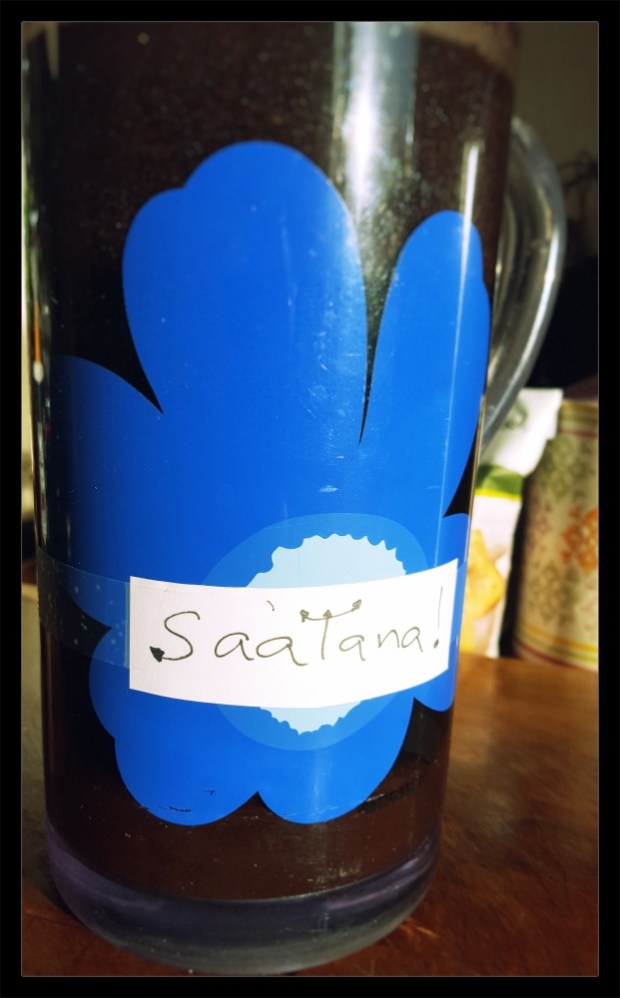
Alas, something was slightly amiss when I opened the fridge this morning and reached for the pitcher of black loveliness.

Saatana coffee

To me, cold brew is the elixir of life; to The Cuban, cold brew is ‘The Devil’s brew’. (NB: Saatana in Finnish is Satan.)

My husband, The Joker.

He understands and accepts my love affair with coffee, just as much as he accepts my obsession with office supplies, books, yarn and Roger Federer. But, cold brew evidently is where he draws the line.

To Cubans, coffee is delivered in tiny little cups that resemble those itty bitty china tea sets for children’s make-believe tea parties. Those cups, which are so cute, simply don’t provide more than a sip or a gulp. In other words, it’s a coffee fairytale. The first time someone handed me a ‘cup’ of coffee in Cuba, I thought they were joking. ‘Where’s the rest of it?’, I asked The Cuban. He quickly explained that Cubans drink tiny cups throughout the day rather than opting for my giant bowl with a handle vessel. [NB: I now know to ask for a double every single time I ask for coffee in Cuba. It’s just easier and less disappointing that way.] Shortly thereafter, The Cuban developed the ‘Vanessa drinks coffee this way…’ explanation. I’m fairly certain our friends and family all think I’m certifiable or so wired that my heart will leap out of my chest at any moment. But, I will have my proper dosage of caffeine.

cafe cubano wink

Two cups from a friend’s flat in Havana. Each cup featured a different face. As cute as they are, they’re fall too small for this girl’s coffee.

Despite the Cuban climate being insanely hot and humid especially when compared to Finland, cafe cubano is always served hot and just off the stove, typically with sugar. To my mind, cold brew is perfect for those sultry, sticky days and nights. I am so wrong, it would appear. My husband’s reaction upon introduction to cold brew went something like this:

‘Cold brew?! What is this evilness you are making? You’re ruining the coffee! Have I taught you nothing?!’… as if this girl ever needed lessons on making or drinking coffee.

So, this morning’s little message, one of a million tiny quickly scribbled notes scattered across our 12 years together, once again made me laugh silently and smile adoringly. To my darling husband, cold brew is indeed ‘The Devil’.

He may have embraced a more reasonable measuring cup by which to drink his own coffee. You know, a proper cup of coffee (still far too small for me, but progress is progress). And, I may have accepted the joke that is a Cuban thimble of coffee. But, just as I’ve had to draw the line at a respectable size for that all-important cup of coffee in the morning, The Cuban evidently drew his own line at cold brew.

Something tells me my summer caffeine jolt will now and forever be known as ‘The Devil’s Brew’.

La vida en Cuba no es facil

[NB: We’re still recovering from the transition back to reality and life in Finland. So, uploading and posting various missives and random musings from our most recent misadventures in Cuba is taking more time than I’d like. I began writing the following missive around Christmas day, which is sort of celebrated in Cuba, albeit with a healthy dose of kitsch and relatively little reference to the birth of Christ or obscene gift-giving commonplace in the US and other countries. I’ve revised and reworked this missive based on our experiences during the weeks that followed. Enjoy, and thanks for reading!] 

Our trips here are nothing if not idyllic. Primarily we use them as an escape to sunshine and warmth, generated both by the sun itself as well as from the Cubans we know and meet during each visit. Yet, as idyllic it is for us, we cannot ignore the facts of daily life in Cuba lived by everyone we know and love.

When President Obama announced a year ago that the relationship between the United States and Cuba would open up and improve, he used the phraseno es facil, which delighted and humoured Cubans in equal measure. A phrase I now understand and hear dozens of times a day, it captures (perhaps historically) life in Cuba. Quite simply, it translates to ‘it is not easy’.

Indeed.

The Cuban and I are fully cognisant that, as temporary visitors, we arrive in Cuba possessing both an end date and the precious documents we need to leave (e.g., passport, exit visa, ticket, residence permits elsewhere, etc.). These documents are perhaps more meaningful and precious to The Cuban. But, undoubtedly, this makes any inconvenience we experience a bit more palatable and somehow less annoying.

As idyllic as Cuba proves to us, it is not an easy place to live. To the casual tourist staying in one of the posh five-star hotels on offer, many of the difficulties faced by the average Cuban every single day remain deeply hidden. As I write this 11 days into our seven-week stay, this is what we’ve experienced in our family’s flat in Alamar, a rather poor, working-class neighbourhood to the east of Havana: power cuts = 2 (one each at night and during the day, lasting less than an hour each time); number of days without water = 4+, albeit not consecutively. (As our time in Cuba progressed, the number of days our relatives survived without water in the flat increased rather alarmingly. It almost seemed more normal to be without water than to have it.)

This last dose of reality is rather difficult to grasp given our experiences in Finland, and a royal pain in the ass. Quite literally. But, it’s evidently become a regular occurrence for our relatives over the past year.

Like most of the rest of the world, the effects of climate change are hitting Cuba. This past year, temperatures soared, reaching highs of 38C in Havana, mercury readings previously never experienced in the capital city and more common for the eastern end of the island. With 100% humidity and precious little relief from the summer sun and heat, newsmen and women warned habaneros to drink plenty of water and stay out of the afternoon sun. Simultaneously, the rainy season brought drought conditions and precious little relief. Not exactly a great combination for a country with somewhat limited resources as it is. Even during our visit this year, it’s been hot and humid, much warmer than previous years.

Since the warmest months in Cuba, however, our cousins in Alamar have experienced water cuts at least once a week. Some days, the water is off for a few hours before returning, which we’ve experienced. On others, it remains off the entire day only returning the next morning. We’ve also experienced this. And, unlike those who live here permanently, we fled to another friend’s flat. It isn’t their entire neighbourhood; just their building. But, living elsewhere, where water flows consistently and cleanly, you forget what it’s like to go without. (Yes, we were missing Finland for a change.)

Most if not all Cubans are accustomed to water cuts, and well-prepared for them. Sadly, they are not rare, and nothing new. It’s more akin to life as it’s always been in Cuba. My father-in-law’s house in Altahabana, another suburb of Havana, features a rather sophisticated system to work around such realities. A motorised tank sits on top of his roof, which is kept constantly full and ready to take over when the city / neighbourhood water supply is cut. His sister’s house in Artemisa, a farming community about 90 miles to the west of Havana, also features such a system. Back in Alamar, our cousins have a large plastic barrel on one balcony just off the kitchen which they replenish after such water cuts. They also collect more water in various empty bottles ‘just in case’. Buckets help move water from the barrel to the bathroom or kitchen or wherever. A sufficient supply for flushing toilets and washing hands and for a splash bath is kept at the ready when needed for the two permanent occupants of the flat. But, that supply probably wouldn’t last more than a day given the 6 people currently living here.

As you can imagine, when the water is on, all of the laundry is done, everyone showers (and rapidly in case the water is cut once you’re all soaped up), and a frenzy of cleaning of all sorts ensues. Not just in our flat, but in all of the flats in that particular building. You can almost hear the collective sigh of relief when a tap is tested for water first thing in the morning and the water flows freely.

At another friend’s flat, one which is in a better neighbourhood, water cuts happen as well. For example, The Cuban relayed a rather frustrating time when he lived in that same building before leaving Cuba. At one point, they went days without water. At the time, he lived on the top floor of the building. He would lug buckets and buckets of water up the stairs after walking down to a water spigot near the building. Given the heat and humidity of December we experienced this year, I cannot imagine that chore in the heat of the Cuban summer.

Aside from these cuts, however, there are many other daily nuisances for us which Cubans power through. All of the households we’ve been to thus far feature a large cooking pot on the stove covered in calcium deposits. Despite the varied interiors of these homes, each of these pots looks exactly the same. And, each morning and night, the pot is filled with tap water and then boiled to remove all impurities. (We tend to buy bottled water, but the habit amongst our friends and family run deep.) Depending upon the household, the boiled water may or may not be filtered or further purified with iodine tablets — that, as far as I can tell, depends on the wishes of the occupants. I find myself missing Helsinki tap water a little more each day.

Another facet of Cuban life we know well and tourists never see is the reality of showers in Cuban’s homes. Faucets outside the various hotels that cater to us foreigners rarely feature more than a single on/off tap. There’s no need for a hot or cold water tap—there is only one temperature for all water. But, those who can afford it invest in a hot water heater for use in the shower. I’ve only seen two types thus far, with the simpler one costing about CUC100 (~€100). Yet, this contraption always instills a very real fear of electrocution in me. Indeed, most times when flipping the on-switch, I feel a slight jolt. Among those without the resources to buy a simple hot water heater (and there are many), cold showers reign supreme.

As we forego our standard extended stay at a resort on the beach and choose to live amongst and as Cubans, that phrase — no es facil — rings true. Difficult, absolutely. And, beautifully complicated, exhausting and exasperating for those who live it every day.

This slideshow requires JavaScript.

A different pace

NB: In the coming days and weeks, I’ll be uploading and posting various missives and random musings from our most recent misadventures in Cuba. Two previous posts [here and here] made to this little blog in late December and early January were both posted from Cuba. The following was written sometime during our first week in Havana, so sometime around 17 December 2015. Enjoy, and thanks for reading! 

Life in Cuba slows way, way down for me. Despite being in the capitol city, the day-to-day pace is completely different. I don’t mind this at all.

I’ve noticed on previous trips here that each day comes with its own particular goal. Monday, our first full day in Cuba during this year’s escape to the sun, focused on moving from one relative’s house to another’s. Mind, we hadn’t unpacked (we rarely do in Cuba), and we weren’t going particularly far (perhaps a 30-minute car ride from point A to point B). But, still, the process can be tedious and patience is necessary. Yesterday, we started off with two objectives — convert € to CUC (Cuban Universal Currency, one of two currencies accepted in Cuba) and move kitties from one relative’s house to another’s flat. Again, neither objective may appear particularly tedious or difficult. However, given cat carriers are not readily available and you can’t simply hop on a bus, logistics become important. Due to a set of circumstances which are not necessarily important or entirely clear to me, kitty transport day is now the objective for today.

Yesterday, we successfully exchanged money and did some grocery shopping. That’s a day well-spent and productive, even considered rather successful despite not finding everything on our shopping list. [NB: We did get the kitties moved eventually on this particular day, although we arrived home a bit later than I thought we would and it was anything but a smooth process.]

It’s a bit of a shock to go from a to-do list two- or three-pages long to a list that consists of two items. Still, that is where we are. Think small. Think realistically.

Shortly before we left Helsinki, a friend posted an article about the disease of being ‘busy‘. It resonated with me, primarily because I am a self-described workaholic. Anyone who knows me well knows when I work, I work and do little else. I enjoy my work, especially over the last several years, and strive to do my best at all times. However, during various moments in the past, I’ve pushed myself to extreme limits, at times working at an inhumane pace. During the view times in my life when I’ve been unemployed, I’ve lamented that I’d rather be busy than bored. Being idle often leaves me so bloody bored and depressed I’m hunting for things to do to fill the time. As a consequence, when given the opportunity and particularly now that I have a job I absolutely love, I often dive into work head-first and scarcely look up. I’m not sure if that’s a disease or just my personality. But, it does carry consequences from time to time.

In Cuba, though, life slows down for me. Way, way down. And, I regain that ability to enjoy the simple pleasures and beauty of simplicity. Life here is at once simpler and yet more complicated. As I struggle to improve my Spanish and what I now call ‘Cubañol’ and focus on understanding a bit more about how things work in this country in flux, time and the significance we attach to it in Finland become less important. That idleness I despise elsewhere is welcome in Cuba, and the seeming simplicity of life’s goals each day provide an odd and unexpected reprieve.

Daily life isn’t necessarily easier in Cuba, particularly not for Cubans, nor is it free of the stress or busy-ness for those not on holiday. It’s simply different.

For instance, finding coffee for our day-to-day consumption requires multiple trips to supermarkets and shops. This isn’t to say that coffee isn’t available in Cuba—it is; we are just picky and want something beyond cafe del Comandante, the ration coffee given to all Cubans that is more chicory than actual coffee and tastes bloody awful. Attachments such as these come at a price, paid primarily through inconvenience and rewarded through persistence. This year, we exhausted all of the supermarkets near our cousin’s flat in Alamar and opted for a trip to a shop in Old Havana to get our brew. In another example, our cousin needed to pay for various utilities or housing fees at the bank. This would normally consist of one trip to the local bank’s branch office. However, several trips were required since the bank’s internal network wasn’t functioning or accessible for several days. Without access to that internal network, there was no way to access her specific records. So, one simple task became more complicated for her. One trip turns into three.

This is life in Cuba. Busy-ness is trumped by persistence or patience. Perhaps the larger lesson Cuba provides me is to Keep it Simple. Persistence and patience are normally rewarded, even if in small seemingly insignificant ways. And, simplicity reigns. It’s a welcome pace, and one I’ll relish whilst I can.


This slideshow requires JavaScript.

Home again

NB: In the coming days and weeks, I’ll be uploading and posting various missives and random musings from our most recent misadventures in Cuba. The two previous posts made to this little blog in late December and early January were both posted from Cuba, a first for me and exceptionally thrilling in a very odd way. The following was my first piece of writing after we arrived in Havana. I believe I wrote it on 15 December 2015. Enjoy, and thanks for reading! 

I am home.

The two-day trip from Helsinki to Havana provided more than ample time to anticipate and ponder what this fourth journey to that fabulously foreign and familiar island would bring. Excitement. Joy. Trepidation. Fear. Anxiety. Uncontainable happiness. All of these varied emotions swirled uncontrollably, and seemed to intensify as we drew nearer to José Martí International Airport. Somewhere over the Atlantic and mid-way through the nine-hour flight, I was overwhelmed with a sense of returning home.

Writing this on my second morning in Havana, I am bursting with relief and contentment. The pace and rhythm of Cuban life has changed very little in the past 11 months here. Yet, the slight shift in the atmosphere is palpable. There is ‘something’ different. The medians along roadsides seem less untidy. The streets seem less pothole-infested. I feel less like I’m looking through a sepia lens. It’s still the Havana I know and adore. But, it’s different in ways I can’t quite grasp just yet.

Our first example of this shifting reality in today’s Cuba greeted us at the airport. Immigration and passport control in the past have proved daunting. Not because of any issues related to nationality; simply, the process itself fills us with dread and can be a little intimidating. (Previously, each passport control booth was enclosed in this rather odd wooden box, with doors on both sides allowing you in and then out. Two agents would greet you (unsmilingly) as they checked your documents, took a picture of you and then welcomed you into Cuba. On our second trip here in 2009, I went through passport control first per The Cuban’s instructions, only to be immediately approached once on the other side of passport control booth door. We had evidently been flagged for a full search of all of our belongings coming in, a process which took several hours and was quite thorough, and left my husband miffed and feeling less than welcomed to his own home.) This year, it took all of two minutes for both of us to navigate passport control, and the wooden boxes have been replaced by open-air counters looking much more inviting and much less Soviet for lack of a better comparison.

By the time we reached baggage claim, we’d been off the plane for maybe 10 minutes total. In our sleep-deprived jet-lagged states, we looked at one another as if to say, ‘Did we get on the right plane? Are we actually in the right airport?’

The Cuba we know and love to poke fun at then mocked and welcomed us at once. On our first trip here together in 2008, the ceiling in baggage claim was half-exposed, about half of the lights worked throughout the hall, and it was utter chaos trying to get our luggage. My bag didn’t make the connecting flight in Madrid evidently, although it did show up the next day. But, I clearly remember that trip and arrival as chaos. The ‘bags’ fellow passengers were pulling from the carousel included huge plasma tvs and boxes big enough to fit small families.

Baggage claim today is much more polished. Aside from watching two airport officials point in opposite directions when asked upon which carousel our luggage would arrive, baggage claim now appears well-organised and maintained. That is, until luggage begins arriving. The process took ages. One bag would arrive, followed by a lengthy pause. Then another, followed by another lengthy pause. And, so on. We most likely only waited a total of 30 to 40 minutes for our bags. But, that surreal post-flight fog made it seem like infinitely longer, and most of our fellow travellers looked just as perplexed as we felt. Alas, this is Cuba and all you can really do is smile, shake your head, and wait. Nothing happens when now how you expect it to.

Once we had our luggage in hand, off we went through the green channel at customs to find a taxi home. And, home we are.

Having finally slept and as we begin begin to feel a little less airport-weary and more in-tune with the world around us, we’ll begin to really see what’s what in Cuba today. At the moment, though, there is a sense that something is afoot. Last night, we learned that President Obama hopes to travel to Cuba in his last year in office.* That is huge news, and perhaps a stronger indication than all previous announcements that times and relationships between my two homes are indeed changing.

It’s about bloody time.

*NB: The news in Cuba we heard was a bit different. We were told that he announced a definitive visit, although no date was given other than sometime in 2016. The news alone created quite a buzz for several days, perhaps for obvious reasons.

This slideshow requires JavaScript.
 

WiFi ‘cafes’ in Havana

20151230_175159__720pWhen we plan our trips to Cuba, one of the things we both look forward to and dread in equal measure is the inability to instantly and consistently access Google, Reddit and various other groovy interweb sites. From anywhere else in the world (mostly) and thanks to 3G, we’re typically always connected in one way or another. We may miss our wicked fast home network in Helsinki. But, in Cuba, such luxuries (or banalities) are virtually non-existent (pun intended). Our stopover this year in Amsterdam featured great WiFi access both at Schiphol and in the funkiest hotel ever, CitizenM. Yet, no more than two minutes after sitting in our seats on KLM’s Airbus 330 to Havana, we found ourselves already missing Google and 24 / 7 / 365 connections. (Some random song is now stuck in both of our heads and we are desperate to know the words to the song. Ah…the internet.)

Cuba allows us to reset a bit. She also affords us that most needed opportunity to fully escape the rest of the world and recover from a year of hard work in particular. During our first trip here in 2008, I vividly recall visiting the ‘internet cafe’ at our hotel and feeling completely overwhelmed watching emails flood the screen for several minutes as the inbox’s new message counter climbed into the triple digits. That was the last time I hopped online in Cuba.

After suffering through a decade and a half of cold, dark and snowy winters, we’ve said for years that as soon as the internet arrives in Cuba, we’ll gladly work from here for three months in winter and live the remainder of the year in Finland. This may become reality sooner than we’d imagined.

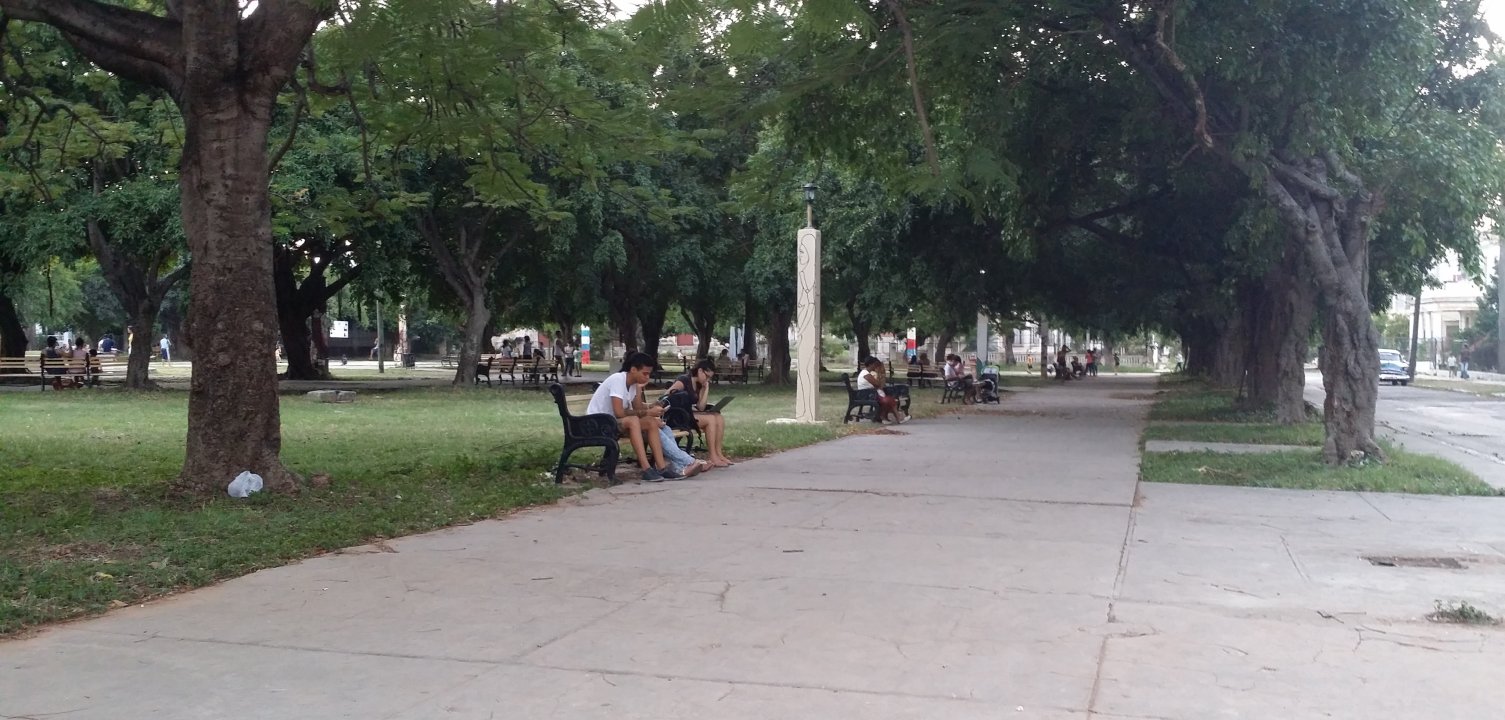
Shortly after our arrival this year, we learned that WiFi hotspots now exist in various parks throughout Havana. This is huge news. As whacky as sitting in a park to access decent connection speeds may sound, it beats no internet at all. Somehow, this also seems not quite as whacky given the Cuban context.

By way of comparison, The Cuban, called to duty shortly after we arrived, needed to send a bit of work to his colleagues in the United States during out first week on holiday. Using a dial-up connection that harkens back to our early days in Russia, he had to send his file (a whopping 1 MB in size) in five parts. It wasn’t until the next day that he learned all five parts landed in the proper inbox on the other side of the connection, and everything had worked out alright. But, had that option not succeeded, we would have made our way to the nearest WiFi hotspot in Havana.

How is this possible? How does it work? And, what does it mean for the country and, most importantly, her citizens?

Roughly five months ago, the country’s only telecommunications provider, state-owned ETECSA, opened up several WiFi hotspots across Havana, which now exist in other cities as well. (During a brief visit to the city of Artemisa, a farming hub to the west of Havana, we discovered this small hamlet also boasts its own WiFi park, something I certainly never imagined possible!) These WiFi (or, as Cubans refer to them, ‘WeeFee’) hotspots are situated in outdoor parks or squares, surrounded by a series of Chinese-made routers and well-lit areas to allow for 24-hour use. Individuals create an account at an ETECSA office, receive a user ID and password to login, and add money to their account. To create an account, they fork over CUC2.00, and then pay an hourly rate to login and use the service, which is another CUC2.00 / hour. As far as we know, how much bandwidth you use is unimportant; it’s all about how much time you spend there.

(For all of you thinking that this is an easy process, please note that ETECSA is perhaps more loathed than Comcast. The process of setting up an account might appear easy. But, it’s not. At all. Our last run-in with ETECSA was at a Cuban internet cafe in 2009, during which we never actually successfully opened a single page in the 30-minutes of online time for which we paid. This year, we borrowed an account from a relative rather than revisit ETECSA. Never mind the headache this would cause as ‘foreigners’.)

Enterprising Cubans have naturally learned how to make accessing the internet at a WiFi park into a business opportunity of their own. If you don’t have your own account, no problem. You simply find someone at one of these WiFi hotspots who will allow you to connect through their connection / device for CUC3.00 / hour. We’ve seen one enterprising young soul provide the connection as well as electricity to fellow surfers. Undoubtedly, the use of an electrical current costs additional moolah. But, at least you don’t have to worry about running out of battery power!

Before stumbling upon one ourselves, friends and family described scores of Cubans congregating in a WiFi park with various connectible gadgets. Laptops, tablets, smart phones, etc. abound. Families crowd around various devices facetiming or skyping with their families and friends abroad. Individuals also set up ‘desks’ and effectively work in the parks. They may not be granted much privacy for intimate conversations, but this seems to bother Cubans very little if at all.

We finally came across a WiFi park rather surprisingly just outside one of our friend’s flats. When we first visited her during this year’s adventure, the park across from her building was lit up like we’d never seen, featuring sparkling new park benches and lovely new artwork throughout, tell-tale signs that something was afoot. Honestly, it was the best looking park I’d seen in Cuba. Rumours circulated that this particular park, situated in Vedado, was slated to become a WiFi hotspot. Yet, no news or announcements were forthcoming. One afternoon, we left her place to sort out a few other details for our trip, only to return a few hours later to find loads of folks on devices of all sorts happily accessing and using the internet. To understand just how significant this was, our friend danced around for the next 30 minutes gleefully singing the WiFi access song. (Really, she was just delighted to access the internet across from her house as well as from one room in her flat.) And, all who visited her flat that evening were equally enthralled with the prospect of accessing the internet from the comfort of her flat.

Over the next several days, we watched the park fill up at all hours with people accessing the WiFi hotspot, cars parking all around the park to use the internet, and various groups congregating along the sidewalk, in the grass, on the curb, and just about anywhere else they could. My favourite character featured a young woman sat on a bench with an umbrella to shade herself as she worked on her laptop.

The internet has come to Cuba. As with most things, the format may be uniquely odd and sensationally Cuban. These are not bad things at all, although they remain far from perfect or ideal. What this means for Cubans remains to be seen. For us, it means we’re a little less likely to fully disconnect whilst here. We’re not sure if that’s good or bad. But, it is certainly a great thing for Cubans. Happy surfing, Cuba, and, welcome to the interwebs!

(Addendum: Whilst attempting to post this, we had a connection time-out and had to relogin after failing to upload a photo of a 200 kb in size.)

Spatial Memory

Note: This is one of multiple pieces I’ve written during our trip to Cuba this year. This is not the first in the series, but it’s one which seems most appropriate and perhaps the most meaningful for me. Thanks to recent changes, which I’ll update y’all on later, the internet has finally (sort of) come to Cuba! Happy New Year from both of us, and I hope you enjoy this particular musing. 

Many places in Cuba conjure up specific memories and moments from our trips here. Mostly, each of these spaces remind me of meeting various people for the first or most recent time, or stolen moments in which these amazing individuals accepted me into their fold in one way or another. I’m hard-pressed to pick a favourite space, since each person and place signifies a significant relationship both to The Cuban and now to me. But, one place in particular makes me weep with longing once we return to Finland.

This particular flat belongs to Miriam, The Cuban’s best friend and sister from another mister. The two of them are so stinking lovely together it’s a sight to behold. They’ve watched their now adult offspring grow up, but well remember the tiny children they once were. In this building. Once neighbours and now best friends, they are family despite distance and years.

Miriam’s flat is an oasis of peace and solitude, as well as a meeting point and at times akin to party central when the full crew descend. On our first trip here, I met Miriam for the first time in a bus station, and then again at the beach one weekend. I immediately loved her. We then later came to visit her over a few evenings with several other of Pablo’s friends before returning to Finland. Laughter, love, warmth and kindness, and music. I may still struggle to keep up with the rapid-fire flow of Cubañol conversation and kidding, but more than anything, it’s clear that Miriam and all who surround her carry more laughter, love, warmth and kindness than most people experience in a lifetime. Perhaps this is why her space in Vedado persists in my memory when we are far, far away.

The room in which I now sit is simple. Polished granite floors in a speckled off-white, dark grey and black pattern. Despite a crack running across the middle of the floor, they shine like no floors we’ve seen in Cuba. Plants line three of the room’s four walls, several of which are my absolute favourite species and would never thrive in Finland. A huge hammock spans the width of the room just to one side of the clothesline and it takes all of my limited willpower to not immediately stretch out and stay there all day long. The room is rather cavernous with it’s four-metre-high ceilings, yet it is anything but cold. This is a room meant for conversing and sharing. Living and loving.

With the windows open throughout the flat, a breeze carries our conversations out, as well as allows others’ bantering to drift in and intermingle with ours.

I love this space. Much as I love most of our friends’ and family’s spaces here, as well as to the people inhabiting them. Each expresses perfectly the individual personalities of those we love. And, to a certain degree, we carry these spatial memories with us when we return to our own. As much as we bring with us on these trips, we inevitably leave with tiny pieces of these homes. Perhaps, it’s simply that we take little pieces of each of these people with us.

Regardless, this. This space. It persists in my memory, and I don’t mind at all.

This slideshow requires JavaScript.

Crazy Cat Ladies en Cuba

It’s no secret, I love cats. Plop me down anywhere on the planet, and within minutes, I’ll find a cat to hang with. Thankfully, my husband now shares this feline fondness. And, as we discovered on our holiday, so does our family in Cuba. We are, collectively, the Crazy Cat Ladies.

My affection for cats began when I was 7 or 8 years old with the first cat we brought home. This particular cat was not meant to simply be cute and cuddly companionship; she was intended to be entirely functional. At the time, we lived in the countryside on the outskirts of St. Louis on a 500-acre farm. Field mice thrived both indoors and out. Winters were no joke when I was a child, and as winter set in, the mice migrated indoors obviously and wisely seeking warmth. One night, I was awoken to the screams of my mother: one clever little rodent sat on top of her dresser in front of her alarm clock’s LED display casting a ginormous monster mouse shadow on the opposite wall, which happened to be the first thing my mum saw when she woke up. Her reaction was a blood-curdling scream and to find a cat as soon as possible. I was thrilled, of course.

The next evening, we welcomed a lovely little calico kitten into our fold. Because Dollie Parton was my idol at the time, I named our new pet Dollie. Dollie the Cat quickly adapted to her new home and new role as mouser extraordinaire. And, thankfully, no further monster mouse shadows were cast.

Since then, at least one cat has lived in each of my homes. To me, a home without a cat is like a room without books: What’s the point?

Not all cats are equal, but I’ve been fortunate enough to be owned by own some incredible feline personalities over the years. Che Fufu stands apart. Spending six weeks away from her during our holiday was tortuous at times. Team Che Fufu, the small army of friends who agreed to care for her in our absence, took their task seriously and we thank them for easing our fears and concerns whilst away. But, a more pressing problem remained: What to do with all of that excess attention reserved for the furry feline ones amongst us when in Cuba?

Since our first trip to Cuba together we’ve sought out the ‘neighbourhood’ felines. On that first trip, we befriended Cheetah Fu, a particularly handsome, cheeky fellow living at the resort we called home for a few weeks in Varadero. Each day as we left the dining hall, we’d take him a few bits of sliced cold cuts or whatever we could find that was easy to sneak out and feed to him. We’d meet him at the same spot each day, and he in turn would meow sweetly, allow us to pet and admire him for a bit before turning tail and skulking off to do something thoroughly unimportant but to which our presence was entirely unnecessary. Cheetah Fu did not feature on this journey. But, cats were literally everywhere we went in Cuba. As were our kind of people — those who worship love cats as much as we do.

Our first feline encounter occurred within minutes (literally) of stepping off the plane. Several months before our arrival, five (FIVE!) kittens were born at my father-in-law’s house, and have since taken up residence outside the kitchen. Each day at mealtimes, they perch on the other side of the window from the stove and wait (im)patiently whilst our cousin Isa prepares their tea. When it comes to feeding the, an almighty cacophony ensues which can be heard from everywhere within the house. The remainder of the day, they lounge in the sun, chase various lizards and insects in the garden, play with one another and generally don’t bother with us mere humans. But, they thoroughly belong to the house and the (human) occupants belong to them.

At the resort in Varadero, various cats stalked the dining hall awaiting guests those like us who took pity and brought bits of dinner to them. Spotting the Crazy Cat Ladies was far too simple — find the fools carrying paper napkins bulging with greasy contents and follow them. A cat was sure to be on their heals, albeit a wild, skittish cat. Villa Tortuga also served as home to a friendly little guy, at once vocal and affectionate. This guy, who also sported a fetching pink, tiger-striped and sequin-trimmed collar, desperately needed help one evening. Rather than climbing a tree and getting stuck, he found himself atop a trellis and couldn’t navigate back down. The Cuban and I spent a solid 30 minutes gently coaxing and encouraging him down through a network of vines and branches. Once safely on ground, his purrs and kitty nips of affection warmed our hearts immensely. Obviously relieved and starving, we fed him, and reassured him as best we could. Of course, when he was done with us, he was done. No amount of calling or cold cuts could entice his return for another bit of a bonding. Typical bloody cat.

Then, we met Mama Cat (yes, that is her name), a lovely black and white creature who recently encamped at Tia Minita’s house in Artemisa. She is insanely lovely, and more dog-like than cat. The only picture we have of her is from afar despite are many, many attempts. Each time we tried to get a picture of her, she would run over for a bit of kitty bonding and even with a macro lens, no pictures were possible. We first found her as we wandered in the garden at Minita’s, discovering her nestled in a little kitty nest she created amongst the shrubs. Hearing us, she leapt up and immediately began weaving in between our legs and rubbing up against them with the happiest, loudest of kitty purrs. Like I said, rather uncat-like is Mama Cat. [We learned this week that she gave birth to two kittens, both white, whilst another black kitten (who we also met when we were there) joined their little family, curling up with Mama Cat and her babies.]

We met various other random kitties along our journey (as well as a few non-feline creatures). What we loved most was our concern and affection for the furry beasts who inhabit each of these homes extended beyond the two of us. Our family in Cuba also notices and takes great pains at caring for the felines in their midst. Feeding scraps to the cats at various restaurants and cafes. Leaving leftovers out for the neighbourhood cats, friendly or not.  We were not alone or odd in these behaviours. That comforted us somehow, and simultaneously normalised our own craziness about cats.

We’ve often fantasised about our ideal ‘retirement’ plan of opening up a B&B somewhere along the coast in Cuba and filling the garden and house with as many cats (and plants) as possible. Originally, I wondered if we could find those cats. Now, I’m fairly confident the cats will find us. As will the Crazy Cat Ladies.


This slideshow requires JavaScript.

Neither here nor there

As an anthropologist, I’m intellectually familiar with and fully comprehend the concept of reverse culture shock. As a person experiencing it, I just want to crawl into bed with the covers over my head and hide from the world for a while until it subsides or we return to Cuba.

My first real experience feeling bewildered by coming home hit me full on when returning from my first trip to Moscow in 1998. After a mere 9 weeks, landing at JFK was one of the most surreal experiences of my life up to that point. E V E R Y T H I N G felt unfamiliar and odd. Whilst my body was firmly planted in New York and eventually back amongst my things and in my flat in Connecticut, my mind persistently resisted leaving behind my surroundings and new-found friends in Moscow. Any time a question was asked, my response came in Russian (unsurprising perhaps since I hadn’t heard English for the last 3 weeks of that particular trip). Everything which at one time had been automatic in my US-based life became awkward and … difficult.

The unfamiliarity and disconnect subsided, replaced not necessarily by normalcy but passive acceptance that I was cognitively straddling two worlds. When I moved to Moscow the following year for what I assumed was a brief 6-month to 1-year teaching gig, I experienced culture shock upon my return to Russia, largely because I was on my own rather than sheltered and taken care of by a host family; the shock was somehow less pronounced. I continued to straddle my Moscow-based and other life in the US, but the divergence and cognitive dissonance between those worlds seemed less traumatic and … well… shocking.

Fast forward 17 a few years and insert two different worlds and that oddly and unsettling familiar feeling of reverse culture shock has returned. Whilst two different countries feature as home (Finland rather than the US) and home away from home (Cuba vs Moscow), the experience and feelings differ very little.

We returned from our epic journey to the land of rum, cigars, 1950s cars and chanchullo 3 weeks ago today and I’m still experiencing the worst sort of disconnect from life and missing Cuba and, more importantly, Cubans desperately. Finland, which is a relatively comfortable and easy place to live and has become home to us, feels wrong. It is too quiet. There are too many products and options and things from which to choose. And, it’s too clean and organised. Weird, right? (First World Problems, anyone?)

We knew before we left for the airport that our return to ‘civilisation’ and the ‘real world’ would be a slap in the face. How could it not be when we had such an amazing 6 weeks in Fidel’s Cuba? But from the moment we landed in Amsterdam and the experience of navigating Schiphol, once a favourite place for me, to returning to our flat and our life here, I cannot shake that sense that something is misplaced and off about my situation. Or more precisely where I am situated. My surroundings, including my beloved workspace, are somehow not quite right. I wake up each morning utterly confused, having dreamt about various goings on in Helsinki, but all situated and populated by those familiar faces from Cuba we left behind. In some cases, the actual stage is Cuba, but the events and people are all from our life in Finland. It’s maddening really.

This past weekend, the sense of longing for Cuba was so strong that after writing about chicharritas in the morning, I went on a quest to find green plantains and black beans so that we could at least eat Cuban food again, even if it wasn’t prepared by our favourite home cooks.

Perhaps it’s that the weather simply sucks this time of year in Helsinki, particularly this year. Perhaps we’re just missing our friends and family ‘over there’. That’s natural. Perhaps we simply haven’t ever really connected to Finland in the way that we should to properly ‘return’ to it. I know my toes will never prefer being stuffed into boots for 6 months to freely wiggling in the seaside air and burying themselves in the white sand beaches of Cayo Blanco.

For now and until this maddening mental state passes, I shall endeavour to be patient and ride out the reverse culture shock. I have great friends here, I love my students and teaching, I’m surrounded by brilliant colleagues and Finland possesses so many conveniences and a vast array of fresh produce that we truly missed when we were in Cuba. And, we have the internet once again. More importantly, my Cuban is here.

Eventually, my head will catch up with the rest of my body and realise that we are here in Finland. But, my heart remains in Cuba. For now…

This slideshow requires JavaScript.


Chicharritas a la Frida

If, like me, you crave all things fried, allow me to introduce you to the divine deliciousness that are chicharritas.

Frida, the third generation from my favourite cooks in Cuba and, fortunate for me, one amongst my tribe through marriage, introduced me to these little delights on our most recent journey to that enigmatic island. What are chicharritas, you ask? The most divine junk food on the planet, if you ask me.

Chicharritas are very green plantain chips. They are also nothing like tostones, another sinful treat from Cuba, common throughout most of Latin America which also relies on green plantains. Think potato chip, but with infinitely more flavour and lighter than air.

So, after my first taste of these lovely little bits of goodness, I decided to record the process. Whilst Frida cooked, I took notes (and pics and videos). And, I ate and ate and ate. Chicharritas are like any other chip — there is no having just one; you must eat many!

Here’s the process:

Start with very green plantains

Start with very green plantains

Take your green plantains and peel them. The smaller or larger varieties may be used; if you can’t find plantains, you can use very green bananas, but the flavour will vary quite a bit. Soak the peeled plantains in water, which you can season with lime juice and/or salt.

Peel plantains and place in a water bath to prevent browning. (Note: Cooking is made more interesting when accompanied by mojitos. Thanks, Alain!)

Peel plantains and place in a water bath to prevent browning. (Note: Cooking is made more interesting when accompanied by mojitos. Thanks, Alain!)

Heat a half-filled small saucepan of oil. The pan doesn’t need to be too deep, but should be deep enough to allow a bunch of chips to fry at once. Because Frida was using the smaller variety plantains, you’ll most likely slice about 10 cm of plantain at a time. Use any oil you like except olive oil. I’d recommend peanut or any oil with a high smoking temperature. Frida used canola oil. So, if you’re aiming for authenticity, use that. You’ll want the oil to be very hot. Not smoking, but heated to a very high temperature.

Take one plantain from the water bath, and pat it dry. Using a mandolin, slice the plantains very thinly directly into the oil. Here’s where Frida’s skills really shine. Personally, I’ve never been comfortable using a mandolin, but she has inspired me to improve my technique (and overcome my fear). If you are using the larger plantains, only slice about 5-10 cm of the plantain at once.


Note: if you don’t have a mandolin and are using a knife, the individual pieces are likely to stick to one another. Thus, perhaps like me, be inspired and aim to perfect Frida’s masterful technique. There’s no time like the present.

Fry the slices until they are golden. Stir them a bit as they fry to keep them from sticking to one another. You’ll need to keep careful watch over your chips. Be careful not to let them go too long — in the ultimate cooking sacrifice, we watched an entire pan go from lovely and golden to black very quickly. Beware!

Once fried to a crispy, golden colour, drain on a paper towel

Once fried to a crispy, golden colour, drain on a paper towel

Once golden and lovely, remove from the pan, drain them on a bit of paper, and serve whilst hot. You’ll want to let them cool for at least a minute before devouring them. But, they’re best eaten warm. If you like, you can season them with a little extra sea salt. If you happen to be cooking them for your dining companions, be sure to set a few aside for yourself. There won’t be any left for you otherwise!

Devour. Seriously, if anyone is capable of eating just one or two, I'd like to meet them.

Devour. Seriously, if anyone is capable of eating just one or two, I’d like to meet them.

¡Buen provecho!