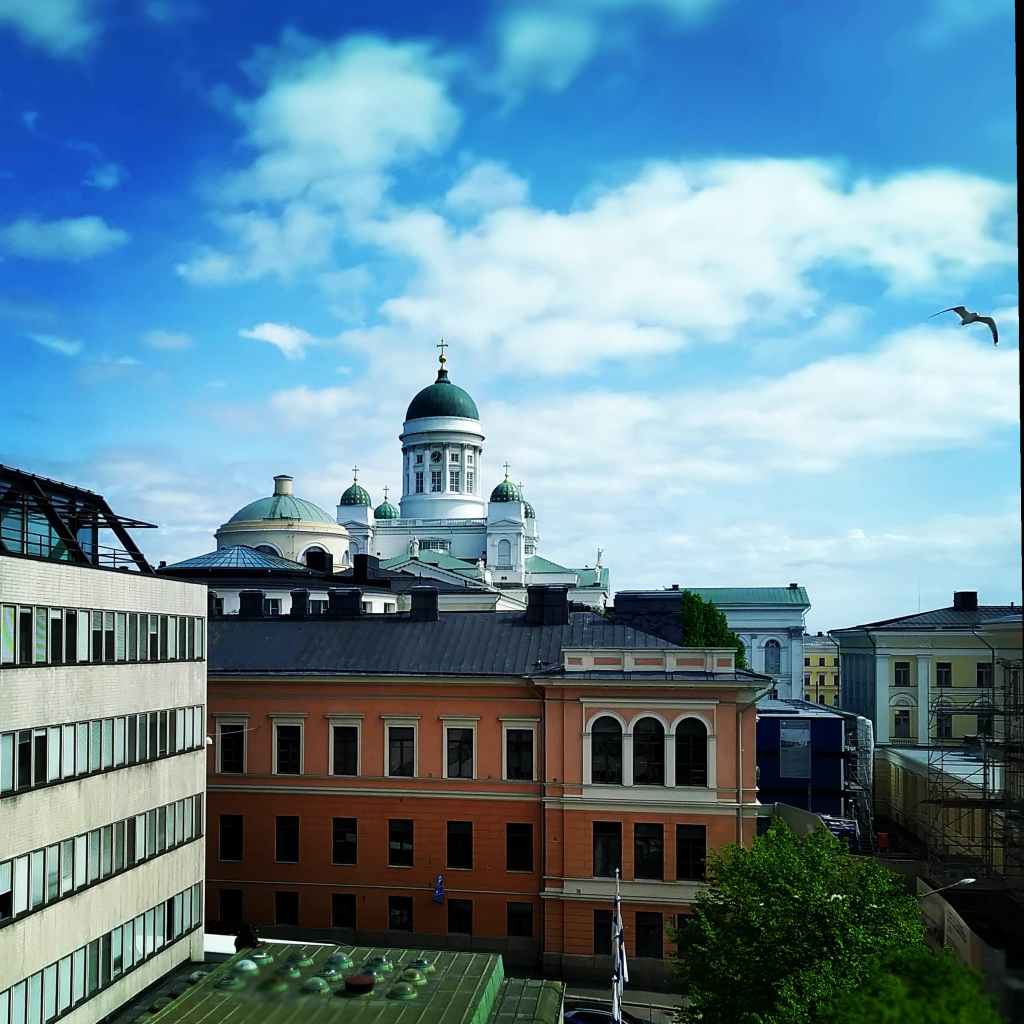
Birds of a feather

Recently, on an evening stroll, I looked down on the path my husband and I traversed to find a single solitary feather, one with polk-a-dots of all things. It honestly took my breath away, stopping me in my tracks. It’s one of the few feathers I’ve ever felt compelled to pick up and bring home.
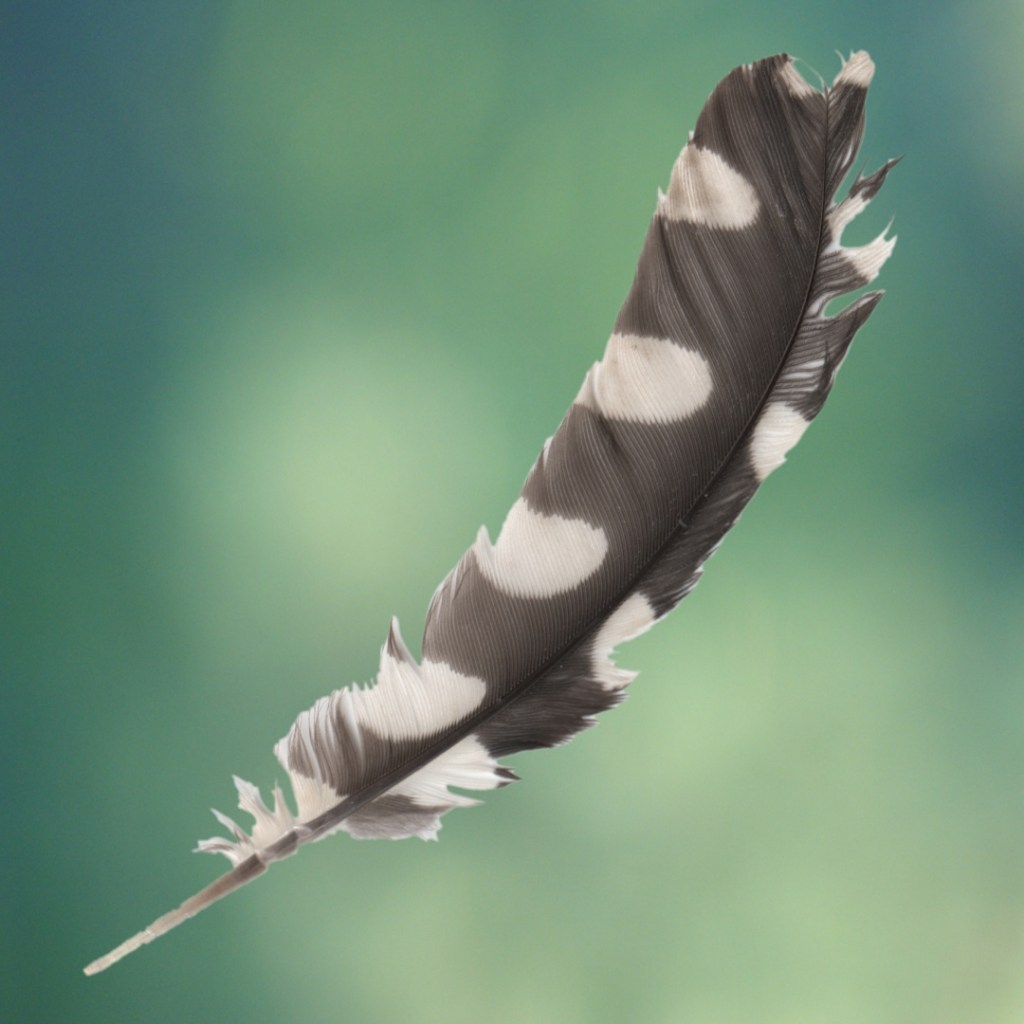
The feather I found in the woods near our flat, June 2023.

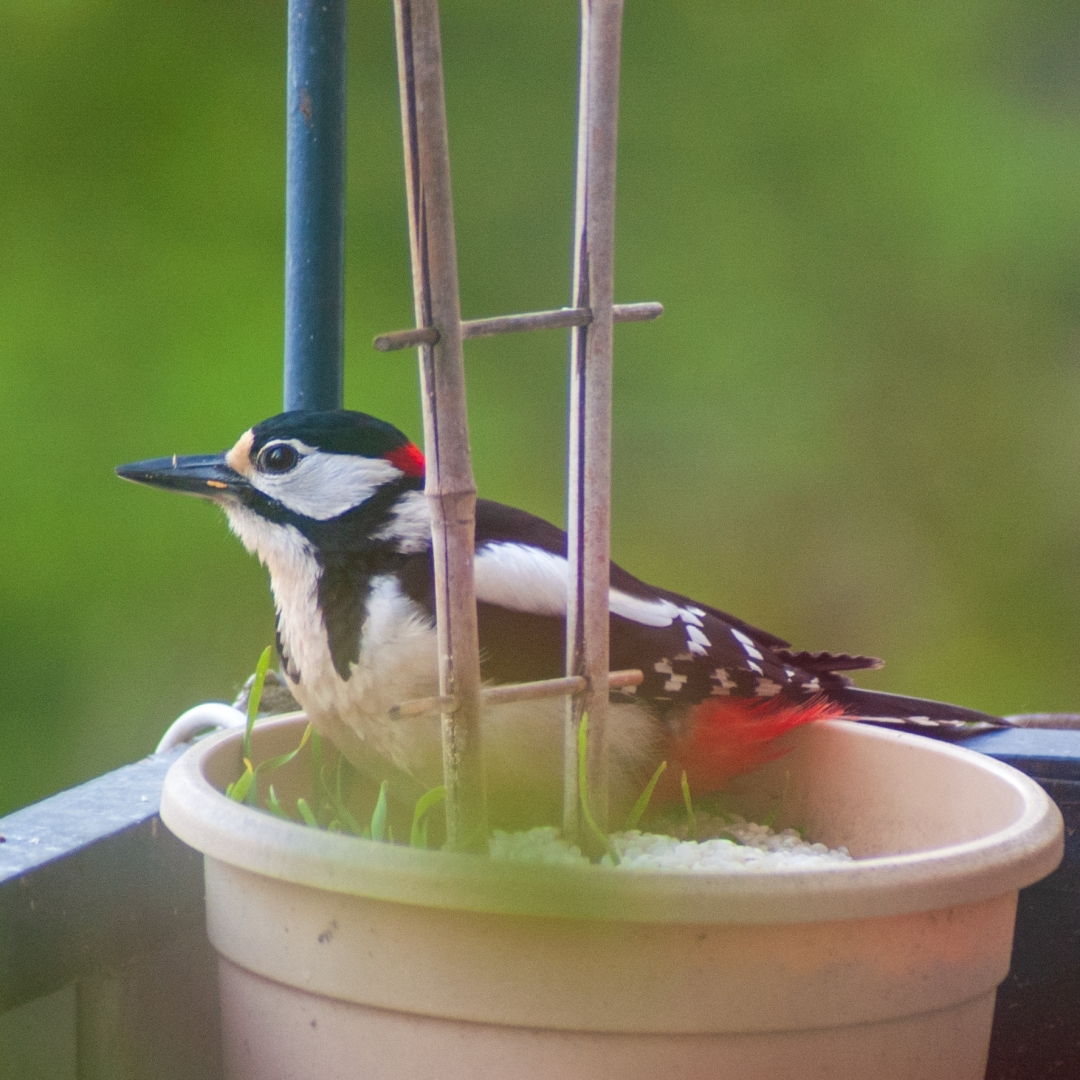
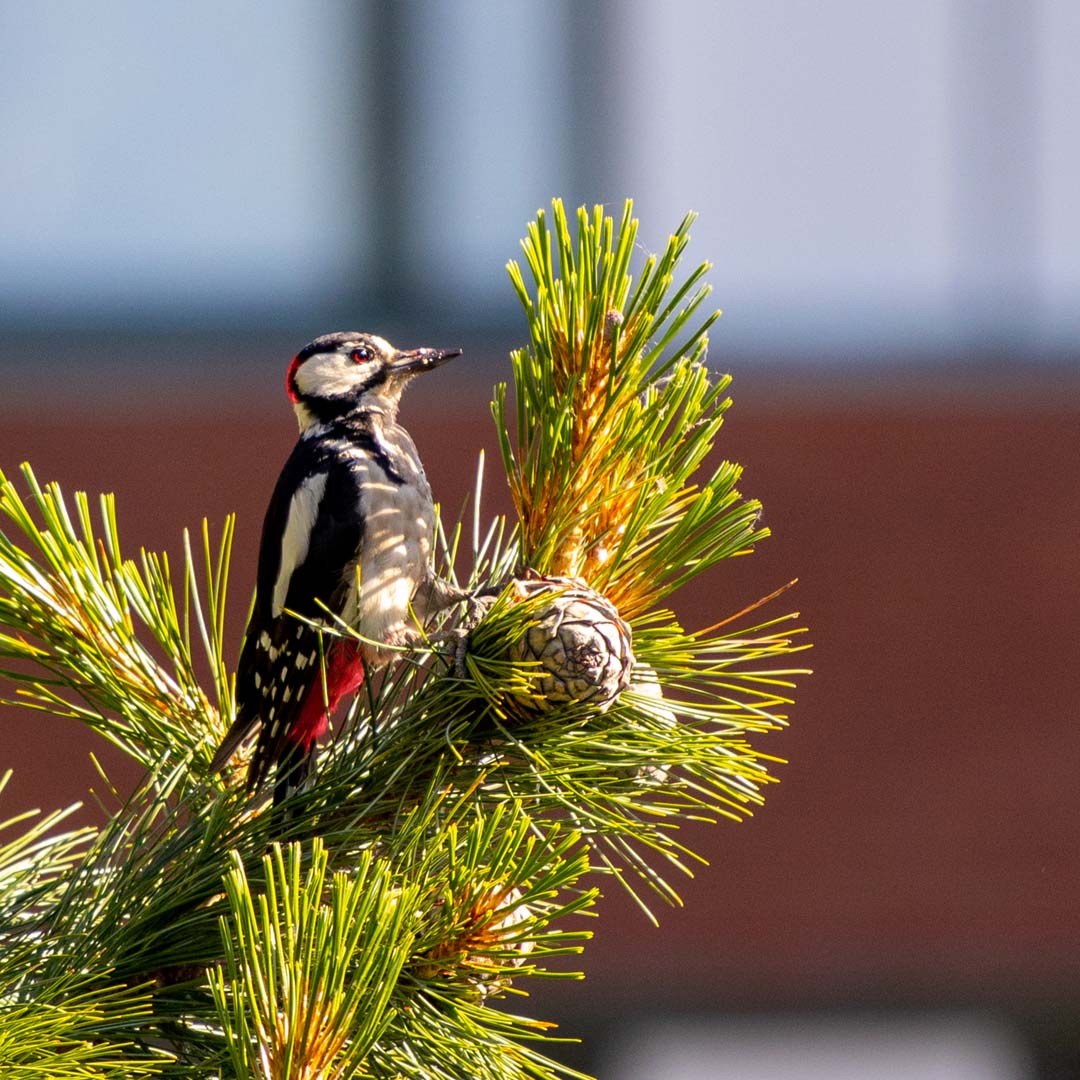
We did not see the specific bird this feather belonged to. But, we’re fairly certain it was once part of a Great Spotted Woodpecker‘s plume, one of many we’ve come to love in the woodlands near our home in Helsinki.

These creatures have visited our balconies for years, and we welcome their high-pitched somewhat annoying songs and signals, delight when we catch them flitting from tree to tree in search of food or finding their way back to their homes to feed their even more annoying fledglings. The trees around us are dotted with various occupied and abandoned holes this time of year. And, the woods are filled with their cries each evening as we wander on our evenings strolls. The only bird which gives me more of a thrill when spotted (no pun intended) is a hummingbird, and those tiny creatures do not venture this far north as far as I know.

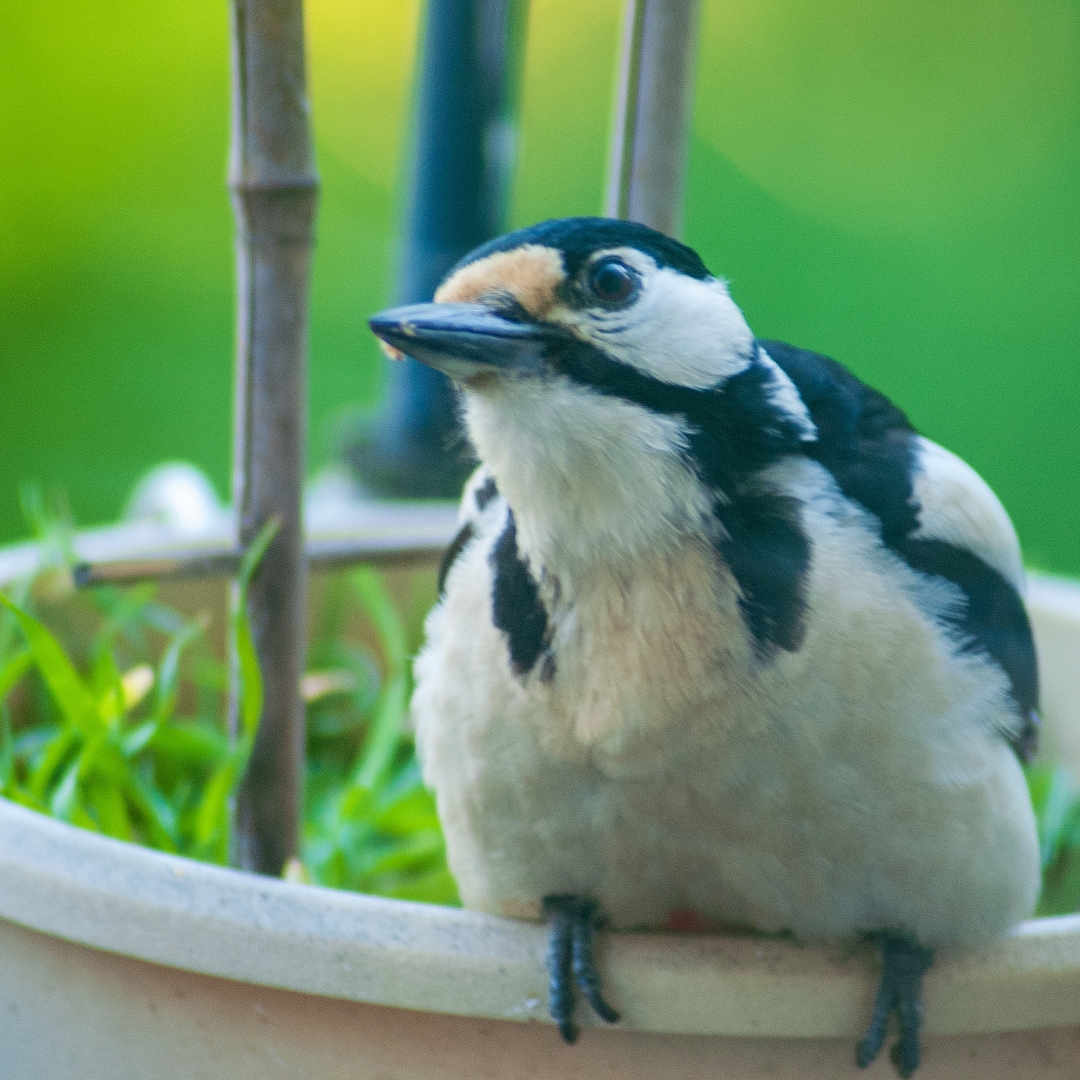
But, woodpeckers and these spotted versions with splashes of bright red on their heads (males) and bums (both males and females) are abundant. We love them, affectionately referring to each individual bird as ‘Woodie!’ Yes, we are just that creative with our bird names.

Several years ago, as I sat reading on the balcony of our last flat one afternoon, one of these amazing creatures landed on the balcony railing a metre or so from where I sat, and pecked at some of the seeds we had laid out for them. He then eyed me as I eyed him. I say ‘him’ without really knowing at the time if it was male or female. [Now, I believe it was a male, given the bright red markings on his head and thanks to the various bird books we’ve since acquired and consulted.]

It was an incredible moment, and one which took my breath away just as much as that tiny feather found on the path more recently did. More so, I’d say. Just me and a woodpecker sitting on the balcony looking at one another. No other sounds mattered. Nothing else really mattered in that moment. Just the two of us, bird and human. The entire encounter lasted no longer than a minute, if that. But, the memory of it will last a lifetime. Years later, it thrills me still.

We’ve come to recognise the call of the woodpecker, noting when we hear it for the first time in spring and understanding that spring is near. We also know that when we hear it from our balcony, Woodie is letting us know that we need to put out the bird feeder. We imagine his calls gently letting us know that we’ve neglected our bird-feeding duties.

Catching glimpses of these creatures in the woods provides moments of hope and peace. And, most likely, a quickening of our heart rates. We hear them far more often than we actually see them. But, in the years since we’ve learned their specific calls, we have also identified the high-pitched screeches of their fledglings, awaiting their evening meals. We have caught the shadow of young ones, not quite happy in their holes and not quite ready to venture out. We’ve also spied a juvenile or two, who look as though they are just leaving their nests and venturing a bit further from their homes. Tiny, fat fluffly birds, pecking away at the trees and looking for a tasty morsels to sustain them.

Whichever creature lost its feather, I hope it is thriving, and the loss of that single gorgeous bit of its plume simply reflected a change in the seasons rather than an encounter with a predator. I keep looking up and down now on our evening strolls, not simply hoping to catch a woodpecker in flight from tree top to tree top. I also hope to find another, perhaps larger and more symmetrical polk-a-dot feather.

But, if I never find another feather, at least we have this one. It’s gorgeous. Perhaps even more so, but at least as much as the bird who shed to whom it belonged.
Progress: 11 years of running

I love running. I really do. And, that surprises me. Still.

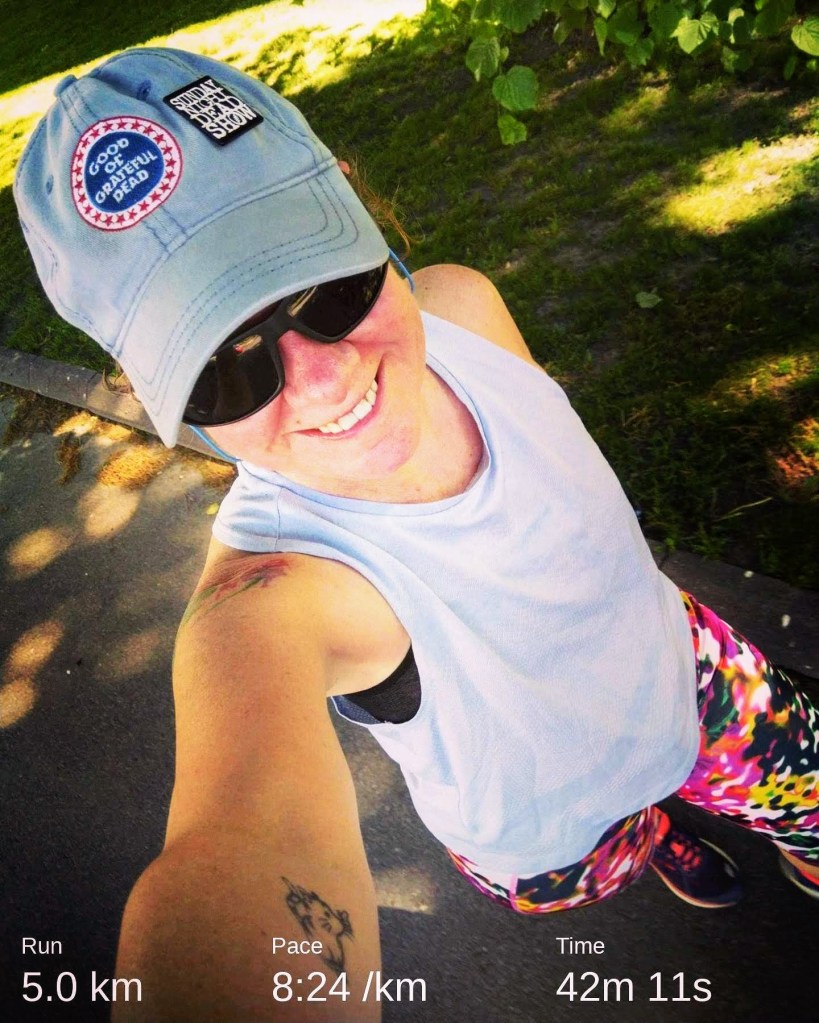
In July 2012, a crafting friend of mine was training for the Helsinki Midnight Run and invited me to join her on a run. Realising that I could certainly do with a bit of physical activity and understanding that I was far from in shape, I accepted her invitation. That first ‘run’ was more walking than running, but it was a start. Without much training and far from confident, less than two months later in September 2012, we finished that 10-k run dead last, neither one of us running the entire route, but simply focused on finishing.

Since then, I’ve logged a lot of miles (my SportsTracker app tells me, 11 203 km in total). But, it wasn’t until 2017 or 2018 that I really approached anything resembling consistency in my running habit, although winter running was still a bit more challenging. I was a run-walker, occasionally managing a 20- or 30-min run without walking, and a few very slow 5ks here and there.

Something shifted in 2020, however, moving from sporadic to consistent runs. By 2021, I became a daily runner, affectionately known in running circles as a ‘streaker’. [No, I am not a ‘naked runner’, also a term with a very different understanding amongst runners.] I blame Covid-19 — not testing positive, but the luxury of time in my schedule once commuting was no longer necessary, along with the desire and need to do something besides sit behind a computer all day every day, prompting me to go outside every day for a run. Run streaks — running at least 1.6 km or 1 mile daily — challenge and motivate me in equal measure, and have taught me that smaller goals help achieve much grander and seemingly impossible, unattainable ambitions.

Since 2021, running a full 10k was no longer impossible — I’ve achieved that once unachievable target. Just running daily for months on end, once unthinkable, is now normal; not running is abnormal. My current run streak, during which I have run on 118 consecutive days as of yesterday, is inching ever closer to my longest run streak (run streak day or RSD 173, which was halted thanks to a rogue appendix and emergency appendectomy last September). Barring injury or illness, my plan is to reach 174, hopefully reaching RSD 180, and then we shall see. Another goal is to run a 5k in 30 min or less (I’m currently inching closer, with new personal best of 33:07, down from ~42 min just a few years ago). My running goals shift, and that’s absolutely fine.

Had you asked me in 2012 if any of these things were possible, I’d have told you that you’re crazy.

None of this happened overnight. Comparing the woman who took those first tentative steps towards running in July 2012 to the woman writing this who kitted up for yesterday’s run astounds me. I see (and feel) how far I’ve come. It’s been an incredibly long journey, not just in terms of miles, but in terms of the mental battles I’ve fought on various runs, losing some, winning others. More than anything, I am much more confident in my ability to set running goals, forgiving (of myself) when I abandon or alter them regardless of reason, and knowing that not every run will leave me feeling awesome either about myself or the world. Some runs sucks, just like some days suck. But, I now know I can achieve the goals I set for myself, bit by bit, navigating peaks and valleys along the way, eventually reaching that destination I’ve mapped out for myself.

I’m currently reading Running Like a Girl, by Alexandra Heminsley. So much of her own journey resonates with me, from those first awkward runs to not knowing or understanding the specific lingo and language specific to runners, terms like pronation, wicking fabric, pace or hydration or fuelling needs, chafing, and the all-important but simple understanding that consistency matters and that it takes more than one run to make any progress at all.

Running has afforded me some mental space to process … shit. My own shit. I use that time on trails and paths working towards my running goals to also work through various problems and concerns in the rest of my life, to disentangle and leave behind the day’s woes. And, I yet to regret a run, even the bad ones. Weirdly, I also approach my daily life like I do most runs, particularly the harder ones. It’s all about the simple action of continuing to place one foot in front of the other, one step at a time, until I get where I need / want to.

But, running daily has also allowed me time to step away from everything else in life and this world, and simply focus on run the run I’m in, sometimes focusing on a single solitary kilometre. No comparison to others, beyond a comparison to myself. No competition or race, other than attempting to outpace myself.

My approach to running works for me, and demands I find my own path in order to reach that finish line, whatever and wherever it is.

And, these lessons have so much relevance to life as well. To my life specifically.

I have learned these last several years that I can do hard things. More so, the hard things seem less daunting more manageable and reasonable when broken up into smaller bits. Just as there have been days when simply getting out of bed has been hard, the hardest part of some runs has simply been kitting up or getting out the door. But, I also know that I can do all of these things, and then some.

Over time, hard things become easier. More accurately, I become stronger. Because I *am* stronger.

And, more than anything, this is why I love running.

Liminal state

As a long-time migrant, who’s lived outside her ‘home’ country nearly as long as she lived within its borders, I’m no stranger to existing in a space neither here nor there. Nor is this particular moment my first professional transition.

It is, however, the first time I’ve needed to truly redefine who and what I am at least in part, moving from a space and time in which I identified primarily as an ‘instructor’ of a very specific type to no longer laying claim to that title or identity. I am uncertain, about what role or position I will occupy in future, in addition to a great many other things. But, perhaps, removing the label ‘ & instructor’ from my email signature was yet one more difficult step in this rather lengthy transition.

Victor Turner referred to that betwixt and between reality that accompanies rites of passage within specific cultures as ‘liminal states’. We transition from one thing to another, but that period in the middle of opposing states leaves us hovering between identities, between what we were and what we will become. Typically, participants in processes and rituals have a label waiting for them to claim and occupy, although what that means for and to them might remain rather undefined and illusive.

I was an instructor until yesterday at 12.01 in the afternoon; I am not sure what I will become in the weeks and months to come.

Despite occupying an undefined liminal state, despite being what is referred to as a liminoid, a weird term applied to those of us fortunate enough to live in this post-industrial gig economy that demands multiple skills and talents, I am not one thing. ‘Instructor’ was simply one identity of many, and one which offered more than a paycheck, becoming an identity which was as much personal as it was intellectually challenging and rewarding in equal measure and unexpected albeit welcome ways.

I am a woman. I am a feminist. I am a wife, thankfully to a fellow feminist. I am a friend, as well as a daughter and in-law. I am a craftivist, a reader and a bibliophile. I am a writer, and I am a bloody good editor, although not of my own texts (who is, I wonder?). I am a runner, gratefully so. I am an anthropologist, more precisely a medical anthropologist. I am an American, despite questioning my ability at this point to physically live in my home country again for so many reasons. I am an activist. I am a lover of coffee and gin, depending upon the time of day. I am a birder, obsessed with tiny, loud baby woodpeckers and finding the nests of our neighbourhood goshawks. I am a migrant. I am a Deadhead. I am a science communicator. I am.

So many of these individual identities featured if not required transitions from one state to another, some instantaneous, others slow-burning transformations which took years. Others still feel like goals, as if I am in the process of becoming them. Some identities pervade my every action, whilst others happily occupy less-visible outward expressions. And, naturally, this list does not represent the totality of who and what I am.

There will come a day when I move beyond this liminality, and enter into a status and identity which will offer some new meaning and new status to me. What that will be, I do not know. When that will be is a nonspecific ‘eventually’.

Years ago, one of my mentors would answer the question, ‘How are you?’, with ‘I am.’

So, for now, I am…. Temporarily, I am becoming something else. And, that’s okay.

A series of lasts

Bloody hell the last few weeks have been emotionally draining and exhausting. And, quite simply, so very, very emotional.

Since definitively learning that I did not secure a job I desperately wanted and believe I would have done well in, a job I have also done albeit informally for nearly a decade, I’ve been extremely busy.

Doing what? Well, *that* job.

My teaching schedule this spring has been insane, particularly this last month. From 1 to 31 May, I logged 92 academic hours of teaching, which included 7 different groups of students for specific courses and a two-day workshop on grant writing to researchers from SE Asia. I’ve also had more revision work than I normally do this time of year. Sleep and rest have taken a back seat.

This week, however, the pace slowed down significantly. In total, I *only* had two lectures: one on Monday and one this morning. Today’s class meeting, one of my largest ever groups for the advanced grant writing workshop I designed, adjusted-based-on-feedback, and taught and one of the most active classes ever, concluded. It was also a few doors down from the very first classroom I stepped into as an educator at the University of Helsinki in August 2014.

After we finished and the last students left, I took a few moments to linger and just … be.

What am I feeling right now?

Resignation. Sadness. A sense of injustice. And, gratitude. Mostly, a profound sense of grief as well as accomplishment.

One thing I’ve learned in these last few weeks is that my time in these classrooms has not been wasted. Not only have I learned a tremendous amount about the topics I have taught, I’ve also heard from so many students, current and former, how much they’ve learned and taken from our time together. Out a sense of respect for the students I have had this month in particular, I was honest with them about my fate and future, because this affects them as well. And, perhaps more than it affects me — future course offerings available to them will undoubtedly change and shift next autumn.

I’ve also learned a hell of a lot about myself, in these past few weeks as well as looking back on my evolution as an instructor. And, I have absolutely no regrets about any of it at all.

None of this has been easy. Far, far from it. In fact, this has been one of the most difficult professional moments of my life. Partially because I know it is coming to an end based on decisions entirely beyond my own control. Partially because I do not know what comes next (other than a mountain of reviewing of student work). And, partially because I have had so many last moments over the past several weeks. Lasts I’d rather not be ‘the last’.

The last class meeting on the Meilahti campus and for the doctoral programme in health sciences, the programme I initially felt most able to and comfortable working with. [The room itself was bloody awful; the kindness and support from the students were immense and powerful.]

The last two courses on the Kumpula campus, the fields I felt least capable of communicating with because they focus on things like chemistry, mathematics, computer science and (space) physics — the natural sciences. [Forgive me for thinking of space lasers and robots, but I can’t help myself.] My last courses were immeasurably rewarding and the students were incredibly kind and supportive, as well as engaged and vocal, something I wasn’t really expecting, to be honest.

The last class meeting on the City Centre campus and in the humanities and social sciences. This class was in a room with one of my favourite views of Helsinki, and was with a group which remained in the classroom for more than 30 minutes after our course officially concluded to simply talk and commiserate with me. Leaving with three of the participants, they asked me if I needed a hug, which left me just a weebit more broken.

The last class meeting this morning for students in the environmental sciences was just down the hall from where it all began for me, and the last time I’ll teach my favourite course, Grant Writing, Part II. This group was amazing. They all are, but there was something about the dynamics of this specific course that made it … work. And, as I write this now, I am bereft.

And, come Monday, I will have my very last class meeting for UH’s doctoral researchers as a transferrable skills instructor. I am dreading it.

When I arrived back home this afternoon after class, I received feedback from the first of these lasts. Here’s three snippets from that feedback:

‘Everything in this course had a clear purpose, and it was all beneficial to my learning. I know constructive feedback is important for making improvements, but I can’t think of anything needing improvement. Great course, great lecturer, very unfortunate this is apparently the last time it’s taught.’ – Participant 1, Health 135, Spring 2023

Google translate version: ‘Course instructor Vanessa Fuller is excellent at her job! Grant writing 1 and 2 were both full of information and really provided heaps of learning for real life. Vanessa’s teaching style is very good, she gets the audience interested, focused and talking. She has a positive and encouraging attitude towards every student, and that’s why the audience dares to participate in the conversation, even if the level of the English language is not perfect. The lectures are a good immersion in the necessary academic vocabulary. Since she is a native speaker of the English language, it is really pleasant to listen to her speech. I will be very sad if Vanessa cannot continue to teach these courses. These teachings should be offered to every HY doctoral student in the future.‘ – Participant 2, Health 135, Spring 2023

‘Best teacher’ – Participant 3, Health 135, Spring 2023

I don’t know what’s next. But, at least I know I made some difference, helped some of these amazing young scholars achieve their own dreams. They’ve certainly allowed me to realise my own dreams, one’s I scarcely imagined possible.