‘Rights Here, Right Now!’

XVIII International AIDS Conference

The XVIII International AIDS Conference gets underway in Vienna this week.

This week, an estimated 25,000 individuals from across the globe who all work in one way or another on issues related to HIV will descend upon the fine city of Vienna for the XVIII International AIDS Conference.

The theme for this year’s event is ‘Rights Here, Right Now’, which refers to the connection between HIV and human rights.

How far have we come in meeting the needs of those affected by HIV in the past 25 years or so? Where is more work yet needed? How do national responses compare to one another? What success stories exist and how may they be adopted to other contexts? And, what human rights violations continue to undermine the responses to HIV, locally, nationally, regionally and globally?

These are a few of the questions that come to mind before the event. The first of those in particular has been on my mind lately.

I recently caught the Frontline special report from 2006, The Age of AIDS.  This sobering documentary chronicles the early days of the epidemic in the US, and then provides an overview of the global epidemic. It is available to watch online, and I encourage everyone to spend the time doing so.

What struck me is that many of the same issues that plagued the responses in the early stages of the epidemic continue to undermine our work. Stigma, discrimination, drugs pricing policies and treatment availability, and a lack of basic information at times. Strong leadership along with political will and determination could remove and/or minimise these barriers. And, would go a long, long way in honouring the human rights of those living with and affected by HIV.

There is a moment in the documentary when Dr Jonathan Mann, one of the early pioneers in the response to the global pandemic, states, ‘It’s about basic equity, simple justice’. This short yet poignant declaration was in reference to addressing the stigma and discrimination and horrendous human suffering experienced by those who literally had no hope and faced certain death in the early stages of the epidemic.

It is still about equity. And, it is still about social justice more than 25 years on.

In the current economic climate, many programmes which have allowed millions of individuals who had no hope and were close to death access to live-saving treatments (which have improved their overall quality of life) will come to an end. As programmes lose vital funding from development aid programmes, the real tragedy is that individuals will suffer. Individuals will die. Most of those individuals will be those who live in lesser developed countries and have no where else to turn for assistance.

Is that fulfilling the commitment to universal human rights we have argued and fought for?

A peaceful demonstration will be held Sunday, 18 July, 17.

Broken Promises Kill: No reTREAT, Fund AIDS

A peaceful demonstration will urge governments and global leaders to honour their commitments to fund AIDS programmes

00–19.00, at the Vienna Conference Centre, to coincide with the opening ceremony. Governments across across the globe have failed to fulfill their commitments to fund AIDS treatment and other health needs.

And, they must be held to account.

I for one will join others in Vienna to protest the broken promises and threat to upholding the human rights of those affected by the epidemic on Sunday, 18 July. I will be there not for my own rights, but for those who have no other voice. I will be there for those who are not in Vienna.
‘And I am the Drug Policy Alliance’…

I’m often quite happy to miss the ‘news’ on main stream television, particularly when I read of interviews and exchanges such as the recent ‘debate‘ between Fox News and the Drug Policy Alliance.

The Alliance has just released a rather poignant video highlighting the need for a rational, evidence-based and research-informed approach to drug policy. Rather than focusing our efforts and resources on criminalisation and incarceration, we should re-focus our attention on a human-rights based approach to drug use and policy. I fully embrace this approach, which is not at all surprising given what I do for a living.

A smattering of viciousness and derogatory language from Mr O’Reilly and his co-host Megyn Kelly highlight their inability to understand the issues at stake and how damaging and unhelpful the so-called ‘War on Drugs’ has been and remains.

Thus, the message in the Drug Policy Alliance’s latest video was completely and utterly lost on them. In addition, their segments (three, that I could find) were not based on intelligent debate, but on rhetoric and unsubstantiated claims, many of which are simply false.

Drugs have been legal and regulated in several countries to varying degrees for many years now. I spend about 25% of my time in the Netherlands these days, and there is very little in the way of ‘drug-related crime’. In fact, within the last year or so, I was told by Dutch that the state was forced to close prison facilities because they did not have enough prisoners to fill them. That is, prisons were sitting empty rather than bursting to capacity such as those in the US. Think about that for a moment.

John Stossel, also from Fox News, quite rightly made the point to Mr O’Reilly that prohibition drives the behaviour underground. Indeed. The prohibition of drugs has worked much the same way as the prohibition of alcohol—people will find ways around the law and will go to great lengths to hide it from the authorities.

The real shame in driving behaviours underground is that even if an individual does wish to seek help for dependency or any other medical and/or social issues, they are less likely to do so if they believe they run the risk of incarceration or any sort of reprimand. Thus, any programme designed to reduce drug- or substance-related harm, such as needle-exchange programmes, are less likely to reach them. In an age of HIV, this represents a tremendous shortcoming and travesty.

I support and applaud the Drug Policy Alliance in their efforts to advocate for a human-rights based approach to drug use. And I fully support an end to the War on Drugs.

Reproductive and sexual ‘freedom’….?

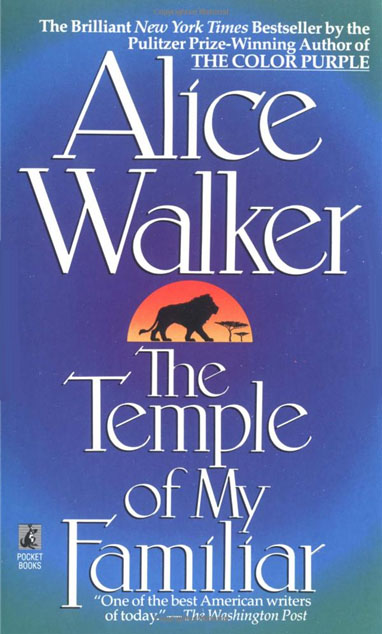
Alice Walker's book, The Temple of My Familiar, is one of the most moving fictionalised accounts of FGM.

It must have been 1992 or so when I first heard about the practice known as ‘female genital mutilation’, or simply, FGM. Sadly, it was not through a text or lecture on practices in a faraway land, but as a part of a public health debate in the greater Atlanta area.

The case was particularly troubling not merely because of the desire of a parent to have their young girl undergo a particularly severe form of the painful practice, but because it was being driven by the young girl’s mother. This was a fierce slap across the face to my young feminist leanings.

For those unfamiliar with the practice, the roughly 100 to 140 million girls and women who have been subjected to FGM have received no health benefit of any kind from the practice. It involves the partial or complete removal of the external female genitalia, and may result in severe bleeding, problems urinating, and potentially complications during childbirth. In its worst incarnation, known as ‘infibulation’, the vaginal opening is narrowed to such an extent that it needs to be cut open later to allow for sexual intercourse and/or childbirth’. Sexual pleasure is unsurprisingly limited if not altogether impossible for those who have been ‘circumcised’.

FGM is internationally recognised as a violation of the human rights of girls and women. While it is largely carried out in developing countries, it is not uncommon in the United States.

What’s more troubling is that it is becoming more common.

The practice in the US and in the UK is known as ‘clitoroplasty’. The procedure is increasingly on girls, young women and women when  the clitoris is deemed ‘too large’ or ‘unattractive’. For more on  the practice in the UK, try to find a programme entitled, ‘The Perfect Vagina‘.

Part of the concern and outrage surrounding FGM in general is that it is not merely the physical harm that are worrying, but also the psycho-social damage which lasts far beyond the physical wounds that make it so reprehensible. How then can we not be outraged by a physician at Cornell University in New York who takes that harm to an altogether different level?

Tell me, why is this a medically ‘necessary’ procedure? Who decides that a young girl, one who has not even enjoyed that right of passage known as puberty, has ‘abnormal’ genitals? And, by determining that a particular girl’s genitalia are ‘unattractive’ or ‘abnormal’, are we not then causing the very psychological harm we condemn for more ‘traditional’ brands of FGM? Finally, what sort of harm comes from ‘testing’ the ‘success’ of the procedure by using stimulators such as vibrators on girls as young as 6?!

And, how then can we ever attempt to advocate for reproductive rights or sexual freedom beyond our own borders ever again?

A tribute to the Fuller men

I have never met my own father. Father’s Day as celebrated in the US has always been about the father figures in my life, largely my grandfather and my uncle. Neither one my father, but both served as the best substitutes a girl growing up could ever need.

I spent a lot of time with my grandparents when I was growing up. Each summer until I was 14 or 15, I would spend with them. From the time I was 7, this would often involve trips to various destinations across North America in a fantastic motor home they bought for their retirement. My grandfather would mostly drive, although occasionally my tiny little grandmother could be seen behind the wheel of that great big huge thing. It was grand. We’d drive from historical site to national park, all the while my grandfather quizzing me on state capitals and past presidents and other factoids which I still remember without blinking.

I also remember his lovely imitations of Santa Claus with a deep East Texas twang on the cassette tapes he’d send to me before Christmas, advocating on my behalf that I had indeed been a good girl and deserved more than a lump of coal in my stocking. He was the perfect grandfather and I can’t help but smile when I think of him. He spoiled me rotten, and I worshiped him.

My uncle lies somewhere between a brother and an uncle. We are very nearly polar opposites on just about everything in life. From our beliefs to our politics to our interests to what we do for a living. I love him dearly because of and in spite of these differences.

Because he and my grandfather shared a dental practice, I would hang out there when I was very young. Just out of dental school, my uncle was working on my mother and a rather common occurrence rendered half of my mom’s face black and blue. It was harmless, but has provided our family with much laughter and chiding in the years since. However, as a four-year-old precocious sh*t watching my uncle at work a few days later, I said something like, ‘are you going to make that nice lady all black and blue like you did my mommy, Uncle Ralph?’ He simply said, ‘Out,’ at which point I left the room. His hygienist at the time stifled laughter I’m sure. But, he did not. And, the patient certainly didn’t.

One of my fondest memories of time spent with my uncle was during a visit home several years ago. He plays golf regularly with a group of very close friends. They’re all a hoot and I certainly cramped their style as the only woman in the bunch. I tagged along with him as his ‘caddy’ (even though they take advantage of the golf carts), and they all behaved as fine Texas gentleman do. It was a bit chilly on the back nine, but lovely and quiet and still in the spring morning. Deer roamed freely through the course (this is Texas, after all), and one of his oldest friends played through 18 holes with him that morning. It was lovely.

He was so happy on the golf course and it was a joy to see him so relaxed and in his element. We went home after a few cocktails in the clubhouse and made ribs (his finest meal by far and a real accomplishment on the BBQ). I helped by making the trimmings. It was one of my favourite days spent with just my uncle. And, I cherish it.

The memories I have of these two men are countless. I love them both dearly and think of them often. The two men are more alike than either’d care to admit, most likely. Proud, strong, stubborn, intelligent men surrounded by equally strong, proud, stubborn and intelligent Southern women. Poor fellas, as we say in Texas.

Happy Father’s Day to my Papa (Ralph Shaw Fuller, Sr) and my Uncle Ralph (Ralph Shaw Fuller, Jr). Thank you both for always being there for me. I love you both dearly and miss you terribly.

Extra-ordinarily (un)common

I’ve been thinking a lot lately about things which used to seem exceptionally extra-ordinary that have become rather banal and common.

What started this train of thought was the tragic story of a young man from the UK who summited Mount Everest but ultimately died on the mountain after suffering from blindness and not being able to climb down unaided. Rather than risk the lives of the entire team, he was left to die alone on the highest peak in the world.

Many have died there undoubtedly. But, what struck me was how many actually attempt to summit Everest each year now and how many of them die in the process. It seems to me that attempting a super-human feat such as summitting the highest peak on the planet should not be a goal undertaken by just anyone.

But another story of ordinary individuals attempting and succeeding in exta-ordinary feats also serves to inspire me.

Recently, several individuals from a South African-based organisation called Positive Heroes ran an 89-km marathon. What made this such an amazing tale is that all of the individuals are HIV-positive. Further, this was not their first time running the marathon and they’ve managed to incorporate the rigid routine of taking their anti-retrovirals during the marathon.

These are truly positive heroes. They demonstrate in an extra-ordinary way the amazing feats that ordinary individuals can aspire to and use as inspiration to others.

Congratulations to the ultra-marathon runners on their success and victory! And, many thanks for demonstrating the true meaning of extra-ordinary.

Happy World Environment Day 2010

The United Nations Environment Programme celebrates World Environment Day on 5 June this year.

The idea behind WED is to ‘celebrate positive action for the environment’. Tree plantings and naming baby gorillas provide Rwandans with an opportunity to celebrate their country’s rich ecological niche. Bahrain organised a Cultural Environment Week which folds in nicely as a part of the International Year of Biodiversity. Arts and essay competitions along with photo exhibitions have been combined in many countries with invitations extended to local artisans to create works that focus on biodiversity and the ecological riches found the world over.

Contrast the idea of WED to the travesty occurring in the Gulf of Mexico at the moment.

An oil-covered brown pelican found on the Louisiana Coast on 4 June 2010. Photo by Win McNamee/Getty Images, reposted from The Huffington Post.

A few days ago, new images of pelicans and other seabirds, dead fish and dolphins appeared, all of which were covered in oil from the Deepwater Horizon oil spill. The images were vile and stomach-churning to say the least. I’ve seen a few news items within the past few weeks where some claim that the impact on the eco-system surrounding the spill won’t be impacted too badly. The damage won’t be ‘that bad’.

My question to those who make such claims is this: what do you consider ‘not that bad’?

There are so many things about the tragedy in the Gulf that impact those beyond the workers on the platform or the company (-ies) losing precious cash. Those who live in the Gulf will be perhaps impacted the most—from the fishermen who benefit from the delicate eco-systems to those who work in the tourism industry in a region of the US that is amazingly beautiful. With news that the Gulf currents could extend the effects of the spill up the Eastern seaboard and beyond, another place close to my heart could also be profoundly impacted—Cuba. If it took the area effected by the Exxon Valdez oil spill 30 years to recover, how long will it take the Gulf? And, is the immediate pay off worth the sacrifice?

Our—Americans’—reliance on oil is and has been gluttonous. On World Environment Day, shouldn’t we consider the impact of that gluttony and move towards less detrimental means of enjoying our way of life?

The Ultimate Go-Go Juice

Give me intravenous coffee as an alarm -- the perfect alarm clock.

As I opened up my various daily news sources, I had to chuckle when this headline and the associated image at alternet.org popped up. Intravenous coffee as an alarm clock has long been my idea of the perfect gift/gadget.

I love coffee. It’s taste. It’s smell. The various ways in which you can brew it. And, most of all, I love the varieties. I’m a bit of a snob in some ways in that my perfect cup of joe is a fresh dark roast finely ground just minutes before brewed. Most days, I’ll take whatever I can get as long as it is extremely strong and a rich dark roast.

As an undergraduate in Atlanta, I’d normally start the day with an entire pot of coffee. At the time, hazelnut was my preferred flavor (can’t stand it anymore). I had this huge 32-oz coffee mug that I’d carry with me throughout each day during classes. I’d run to the commissary in between classes to fill it up. At the peak of my consumption, the tally was shocking—something like more than 20 cups a day on average. As I said, shocking.

In graduate school both at The University of Alabama–Tuscaloosa and at The University of Connecticut in Storrs, we were fortunate to have brilliant coffee joints on or close to campus. In Tuscaloosa, the coffee shop across the strip from campus (and luckily a mere 5-minute walk from my flat) would roast their beans in-house. The smell was amazing, and the coffee matched that aroma. It was then that I realised just how yummy a fresh dark roast can be. My consumption went down, but the enjoyment of the coffee increased. My favourite cups of joe were those shared with my thesis advisor, mentor and friend, normally in the afternoon.

In Storrs at UConn, Java Joint became my daily dose source. This is where I learned what flavours I truly enjoyed. Tanzanian Peaberry. Sumatra. Ethiopian something or other. Brazilian Santos. Guatemalan Antigua. I think of them all the Sumatran and the Brazilian Santos were and still are my favourites.

Every day, I’d arrive at the little trailer which became a bigger trailer which eventually became a proper shop inside the bookstore with my more manageable thermos and have it filled with the most divine coffee. I’d usually stop in sometime later in the day in the afternoon before a seminar or office hours or a meeting with a committee member. Occasionally, the cup of joe would serve as a prop and pick me up during a peripatetic meeting with a close friend and intellectual giant with whom I was fortunate enough to work. I miss those days, and I desperately miss that coffee.

Bags of cafe de cuba from a fantastic coffee shop in Havana, Cuba.

These days, I’ll take whatever dark roast I can get. The latest great-tasting coffee to hit our kitchen is Cuban coffee. It’s subtle and lovely, and packs an outstanding kick. The Cubans in my life think anything other than a thimble’s worth of coffee is too much. I’m quite happy to enjoy two cups a day now.

That said, it’s time for that second cup.

Where does all the snow go?

This picnic table was completely buried by Februrary. This photo was taken in mid-January 2010.

For those who have followed my Facebook updates, you know that this past winter in Helsinki brought maddening and never-ending amounts of snow. We haven’t yet heard how much snow ultimately fell over the course of the entire winter for 2009-10. Suffice it to say, it was buttloads.

Upon our return from our holiday in mid-January, we were greeted with about 20-30 cm of snow. The snow kept coming. For much of the winter, we had more than 70 cm of snow covering the ground, with mountains of snow lining the roads and sidewalks and well…everything. It made the snowpocalypse that hit the Eastern US look like a few flurries. Through the end of March and into April, the snow continued to fall.

It’s taken the snow several weeks if not a full month for the snow to melt. It’s now the second full week of May and remnants can still be found here and there. The piles that grew to mountains as roadways and sidewalks were cleared are now almost gone. We have one remaining pile behind our building that at one point was nearly level with our windows on the third floor.

This got a friend of mine and I thinking: where did all that snow go?

As saturated as the ground is, there isn’t too much standing water around. The Cuban and I have seen some swamp-like areas in the forest around our flat. Yet, it’s amazing how the snow just seems to disappear.

Winter this past year was enchanting if not a little intimidating. However, spring is most welcome and just as beautiful.

A tribute to moms everywhere

One of the best kids and moms I know: Mackenzie & Jennifer

In the US on the second Sunday in May each year, we celebrate our moms.

For me, this means paying tribute to all of the women in my family who helped shape who I’ve become. Thanks to my mother, Mary Fuller; my great aunt, Lora B Thomas; my beloved aunt and fantastic friend, Tandy Harlan Fuller; and my grandmother, Katherine Louise Baring Fuller.

Even now, I’m not sure that I’ll be a biological or adoptive to mother to my own children. It’s such an amazing act of selflessness and I’m continually in awe of all women who are mothers. In an era when it is a given that women will work and take care of children, those who do combine professional success with a stable and healthy family life deserve even further awe.

I grew up in a single-parent household at a time when it was exceedingly rare and perhaps unacceptable. How she managed it, I’ll probably never understand. The rest of the women in my family helped, of course. But, what a task.

Happy Mother’s Day to all the moms out there. And, thank you, ladies, particularly to those who helped raise me.

Random nonsense

Welcome to my latest distraction.

The state of the world frightens me, and random acts of kindness and silliness thrill me. Rather than simply using my Facebook page to post links and Twitter to repost pithy comments and links to articles, I wanted to find a space that would allow me a bit more space for reflection and pontification. Thus, this space.

The night I met The Cuban, friends from all over really discussed the disconnect between where we were then standing and where we were all from. In what would become a regular occurrence, The Cuban stated, ‘I’m just a tropical fish out of water’. Indeed.

Please post comments if the mood strikes you, and feel free to link to this space. All I ask is that all those who enter this space do so knowing that respect for differences of opinion are paramount. Disagreement is a part of life; disrespect and intolerance are not welcome here, however.

Enjoy. And, thanks for reading!