Day 5: Proekt 365

Day 5: Proekt 365 It's all about the light.

Day 5: Proekt 365
It’s all about the light.

Light is a precious commodity in Helsinki in winter. So, when LUX comes to town, you go. It’s all about the light.

My favourite installation this year was a gigantic blinking-light pinball machine with sound on the fascade of a building in downtown Helsinki. I didn’t get to play it, but I loved it all the same.

Thanks, LUX, for brightening the otherwise dark January evening when light is exceedingly rare.

So Very Unexpected, So Incredibly Welcome

Eight years ago, on an ordinary day in my then-home Moscow, I met a man who loved great music and wanted to share it with the world.

He had a quick wit, a wicked sense of humor, and a commitment to social and economic justice that completely inspired me. He was kind, gentle, strong beyond his own awareness, and conveyed a quiet calmness which immediately enfolded those around him.

The first time we hung out, he described himself as just a ‘tropical fish out of water’. Indeed.

Our courtship was short and sweet. What was there to really ‘decide’? The Cuban and the American who met in Moscow were simply meant to be. As cliche as our story is and as unexpected as meeting him was, his entry into my life was more than welcome — it was necessary.

On this day two years ago, we finally took the plunge and made it official. In the Helsinki Courthouse on a bright, warm, late-August day, we became husband and wife. It was a small, intimate ceremony and at moments a bit silly, but it was all us.

The last eight years have been more meaningful because of the man with whom I share my life. It hasn’t always been easy — but, not because of the two of us, just because life isn’t always rainbows and unicorns. I can’t imagine having gone through it with any other person on the planet. I wouldn’t want to.

Rather fittingly, the night before we married, we spent a delightful evening seeing music we both love—AfroCubism. For anyone who doesn’t know the story of how a group of insanely talented musicians from Mali and Cuba joined forces to create some of the most beautiful sounds around, it’s a tale of impossible odds and years of patience and waiting for a dream to become a reality. Perhaps that is why we love them so.  It was a perfect bridge between ‘co-habitating’ and ‘married’.

He is my best friend, my family, my hero, and my moral compass. He understands my fears and insecurities better than anyone and can bring a smile to my face when all I want to do is cry. As unlikely as a couple as we are, I cannot imagine spending every day of my life with any other individual than the man from Cuba with the insatiable quest for great music who stole my heart and captured my imagination on an ordinary night in Moscow.

Happy anniversary, Tweetie! Here’s to us…and wherever this life takes us next.

This slideshow requires JavaScript.

Water, water everywhere; not a drop to drink or use…

Not long ago, I was musing about how fortunate and privileged we are in our comfortable life here in the uber-developed North. Today, I’m realising just how incredibly privileged we are and how a mere 8-hour disruption is, well, disruptive to our normal routine and cushioned life.

First-world fortunate, indeed.

The story:

A few months ago, some maintenance men with clipboards and tape measures traipsed through our flat looking at the pipes in our kitchen and bathroom to determine how sound they were. They went to each and every flat in the building and we knew they would be carrying out this inspection well in advance. After the inspection, the decision was taken to replace the building’s entire plumbing and drainage system. Thus, the next few months will see loads of renovations taking place throughout our normally quiet and convenient life. All of the pipes and plumbing fixtures in our four-story, four-entrance apartment block will be replaced with shiny new pipes and fixtures. It all appears to be very well organised and orchestrated. And, we are given updates through our mail slots of impending disruptions and what to expect with plenty of notice.

Rather impressive, really.

The problem is that occasionally over the next several months, we will have no water nor drainage in our flat. Given that both my husband and I work from home, logistically, this is not quite ideal. A bloody nuisance when you think about all the various ‘functions’ which require drainage or running water.

Today — the first of those several days  — I’m truly astounded by how many tasks and ‘things’ require water and/or drains. And, I am so, so, so happy that it is for only 8 hours.

This also has me thinking about those who have no running water. And, those who have no drainage systems or modern plumbing.

UNICEF’s US-based website lists the following in relation to world wide stats on safe water and sanitation:

Water is life. Yet 768 million people do not have access to safe, clean drinking water, and 2.5 billion people live without proper sanitation. When water is unsafe and sanitation non-existent, water can kill.

Across the globe, nearly 4,000 children die each day from unsafe water and lack of basic sanitation facilities.

That’s quite staggering to me. The WHO/UNICEF Joint Monitoring Programme for Water Supply and Sanitation (JMP) lists diarrhoea as the leading cause of illness and death. Furthermore, 88% of diarrhoeal deaths are due to inadequate access to sanitation facilities, together with the inadequate availability of water for hygiene and unsafe drinking water.

Water is life, indeed.

To understand the importance of having clean and safe drinking water and adequate sanitation and just how much water we use along with how easily available it is to us in the developed North, take a day to make note of your daily water use. It’s eye-opening to say the least.

All the various, seemingly meaningless tasks which at some point require running (or at least clean) water and functioning drains add up and add up quickly.

We stocked up on bottles and buckets of water yesterday evening and also put out a few refuse buckets for the kitchen and bathroom sinks, mostly to remind us not to use the drains. Despite having spent a fair amount of time either traveling in places where water was a luxury or inconsistently available, numerous camping expeditions when it was all about humping water in and out in my backpack, and the completely unpredictable water cut-offs in Moscow and on holiday in Cuba, I’m still struggling with this inconvenience. Because, honestly, for us in our relatively posh life in Finland, this 8-hour disruption is a mere inconvenience rather than a daily fact of life.

And, I am extremely grateful!

UN Water estimates that each person—each individual human living on this giant rock racing through the universe—needs 20-50 litres of water each day to meet their basic needs for drinking cooking, and cleaning. Here in Finland, particularly in Helsinki, those 20-50 litres can be accessed quite easily by opening up any number of water taps in our flat.

From brushing our teeth, to using the toilet, washing our hands, making coffee, rinsing our coffee cups or spoons to get the bits of grounds off of them, drinking water because we’re simply thirsty, to showering, and all of the various things we do throughout the day which mean opening up the water tap, water most definitely is life.

And, I’m looking forward to opening up those lovely, luscious water taps at 16.00 (or in an hour and 40 minutes).

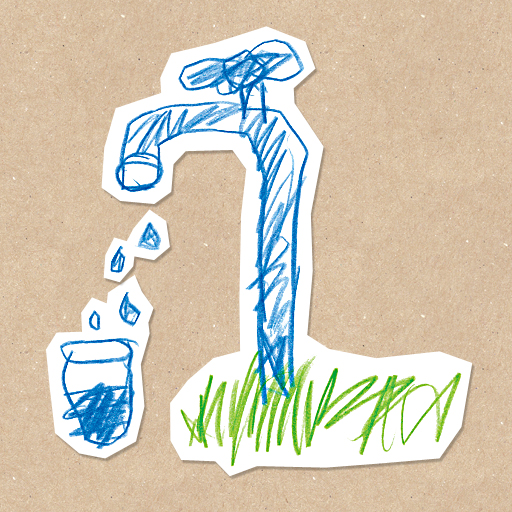
Image from Save the Children Australia
Image from Save the Children Australia
Hooray for moms!

I am continually amazed at just how awesome today’s moms are. Since moving to Finland, we  met some pretty amazing people, including talented and intelligent women and their incredibly inquisitive and lovely children.

This is my homage to them.

Perhaps it is because we live in the best place on the planet to be a mother or simply a consequence of age, but most of the women I know here have children, many of whom are young kids. (As I write, I’m anxiously awaiting news of the arrival of one friend’s baby girl!) From the newest editions to the planet’s population to young adults embarking on epic journeys, each of these families have enriched our lives and our time in Finland immensely.

Finland is a pretty fabulous place to have kids. From the incredible landscape and clean, well-organised environment to the impressive system of health and social services, families are well provided for and supported. Recently, the Finnish tradition of providing a box of clothes, baby supplies, and other necessities which in turn can serve as a baby bed was spotlighted in the media, and even sent to the royalist of families before the arrival of their own little bundle of joy. Finland makes it easier to be a parent and evens the odds for all as much as possible for each new life. Those are all great things.

But, that doesn’t mean that being a mother is at all easy or without its challenges. The demands of contemporary life—busy social calendars all situated in a foreign land and/or in multiple languages—are enough to exhaust (and at times frustrate) anyone. Add into this mix children particularly young ones, and I honestly don’t know how today’s expat moms survive with their sanity in tact! What’s more, many of the super moms I know either have husbands who travel a LOT and/or also have their own careers and jobs to juggle as well.

Nevermind the cape — I often imagine these women with two heads (to accommodate what I’d imagine as the necessary brain power to keep everything in its proper intellectual place) and more tentacles than a school of octopi!

Mutants they are not. They’re just fabulous women who love their children, and are shaping amazing little people. It’s an absolute honour to spend time with all these amazing moms and children. Whilst I don’t have photos of them all, I’ve included a few of the moments I’ve been fortunate to share with these fantastic families. Thank you for all that you do and for sharing your lives with us!

This slideshow requires JavaScript.

Six months from now….

….I shall seriously miss this weather on my near-daily runs.

There is an enormous contrast between seasons here. It’s difficult in winter to remember what summer feels and looks like. If only summer were a bit longer. Alas, for now, we’ll enjoy the long days, need for fewer layers, and the ease with which we may get out the door and on our way. In winter, we’ll remember the lazy days of summer (or try to). And, when we can’t recall what summer looks like, at least we have photos.

This slideshow requires JavaScript.

The ‘List’

A few weeks ago, a fellow expat living in Holland posted her wish list of goods she missed or wanted her sister to bring from the US. Every expat I know has that ‘list’ of items that they want and simply cannot find wherever they live. Doesn’t matter which country they call ‘home’ or which country issued their passport, they have a ‘list’.

It’s been a month or so shy of 14 years since I ‘moved’ overseas and I’m now in the second country to be ‘home away from home’. My list has changed over the years (mostly in length), and changed significantly from those first few years when I was going home for long stretches at a time a few times a year.

Those first few months in 1999 in Moscow, I gave a lecture in one of my classes about culture shock, something which became quite meaningful on a deeply personal level. Who knew it was possible to discuss half-and-half alongside one of those most basic of anthropological terms. Not only did it help my students understand the concept, but they also provided tips about a substitute (сливки or ‘slivki’, which is basically creamer and widely available) to help ease my discomfort, but I also found a kitten in the process (I had also discussed how sad it was to come home to a flat without my darling kitties). Thinking about that particular lecture now is rather mortifying but also reminds me of just how different ‘my list’ is now.

When we still lived in Moscow, many of my trips beyond the Russian border to any country outside the Iron Curtain involved mad dashes to the nearest book store, stocking up on clothes which fit, and coffee—fresh, luscious, dark roasted coffee. My freezer never had space for much more than large ziplocks stuffed with 1-lb coffee bean bags for the first few months after a trip home. During those years, in addition to coffee, I would normally come back with any combination of the following: books, clothes, cold medicines, ibuprofen, and, as vain as it sounds, Aveda and Origins products. When visiting the US, I would eat all of the TexMex / Mexican food I could find. And, steaks. The bigger, the better. Many a mad dash through airport shops before leaving the familiar ended in what was affectionately labelled ‘Duty Free Shit Happens’, that inevitable panic that ensues when leaving the borders for months at a time.

When we moved to Helsinki in 2007, that whole process of culture shock took over once again and I found myself missing items from Moscow. Mostly, we missed our life and friends desperately. Rather ironically, both my husband and I missed our beloved сливки. We missed the birds that sang outside our flat every morning. We missed the pet shop near our house with the lovely people from whom we bought cat food. We missed Moscow. We missed the familiar.

But something strange has happened over the last few years here in Helsinki. There aren’t many items that I’m desperate to get that can’t be found here or for which substitutes do not exist. Mostly now, I miss friends and family. I miss driving on highways across the US. I miss NPR — Yes, it’s all available online and via podcasts, but I miss turning my radio on in the morning to my favourite station and leaving it there.

But, I do have ‘a list’, in no particular order than:

  • Coffee beans from Java Joint (which sadly no longer exists)
  • Vintage fabrics for quilting and sewing
  • Freshly made tamales (I’ve learned to make them, but it just isn’t the same!)
  • Bigelow’s Mango Green Tea (thanks to a fellow expat friend living in Amsterdam)
  • NPR live from a radio
  • Big bottles of 200 mg ibuprofen tablets
  • Friends and family.

The more things change, the more they stay the same. All but one of those items have been on my list for the past 14 years. I’m pretty sure they will remain there no matter where I call ‘home’ and no matter how long I live beyond the US borders.

Polar opposites

This time of year in Southern Finland, I always marvel at just how incredibly drastic the differences are between summer and winter. Just a few weeks ago it seems, we still had much snow, temps necessitated donning several layers of clothing and the sun was a thing we only glimpsed fleetingly or dreamt of.

The last week has been glorious. Truly and astoundingly glorious. This weekend, it’s hard to recall November through March at all. And, we are grateful.

There is a point in late winter—sometime around February or March—when it’s simply impossible to believe that anything at all survives here. The landscape is completely frozen, covered in half a metre or more of snow with more falling or on the way. Most trees look lonely and dead and there is not a spot of colour anywhere. (Perhaps this explains my need for outrageously garish winter garb!)

At just the right time and literally as hope is close to fading entirely, the days lengthen, the birds sing a little more loudly, and the sun appears with an ever-greater frequency. Hope returns and with it comes a burst of energy.

Here we are in the first week of June. The trees are full and green and lush, birds are everywhere and seemingly sing at all hours, the days are incredibly long and continue to stretch well into the wee hours, and the Helsinki world is stunningly beautiful and full of life.

We may not be in polar Arctic, but we are damn close. And the difference between the seasons could not be more in opposition to one another.

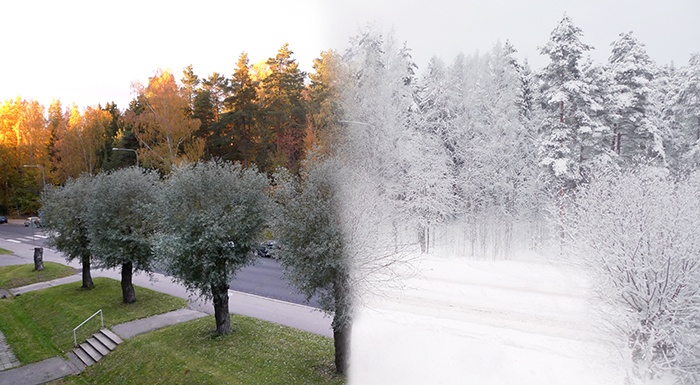
A photo which shows the contrast between the height of autumn and a month or so later after a substantial snowfall

A photo which shows the contrast between the height of autumn and a month or so later after a substantial snowfall

Knitta, please….

Several years ago, a very close friend of mine gave me a set of knitting needles. It had been decades since I’d done anything craft-like, but I was inspired to pick up the hobby again. Little did I realise that that ‘gift’ would lead to an almost obsessive love affair with all things needle and yarn. (Thank you so, so much, Brad!)

Whilst I thoroughly enjoy creating items which serve a purpose—that is, hats, scarves, blankets, jumpers, etc.—guerrilla knitting fits with my overall philosophy in life in general. Guerrilla knitting—or yarn bombing and yarn graffiti—has taken root in many knitting circles as a way to bring a bit of beauty to urban landscapes through the simple act of leaving a colourful knit or crocheted fibre object on existing structures. Guerrilla knitting began with the works of a Houston-based self-taught knitter Magda Sayeg, also known as PolyCotN, who formed the group Knitta Please in 2005. Originally intended as a way to deal with unfinished projects or objects (which are affectionately known as UFOs amongst the yarn-obsessed), guerrilla knitters target public architecture such as lampposts, parking metres, telephone poles and signage with the mission of making street art ‘a little more warm and fuzzy’.

Think of it as fibre community activism.

Last summer, I engaged in my first yarn bomb. My own local knitting group has long discussed yarn bombing the city’s landscape with knit fish or kippers. Given that we knit in public, and the acronym most commonly used by the group is KIPpers, fish are an appropriate mascot. After finishing one of my larger projects and looking for a suitable purpose for the insane number of tiny leftover balls of yarn, I decided to knit a bunch of fish. As I was doing so, I came up with the idea of creating an aquarium at our local bus stop.

On a sunny Sunday summer afternoon, my husband and I strung up about 40-something knit fish and a few bits of crocheted ‘seaweed’ to go along with the fish. To our delight, that first yarn bomb remained in tact for the neighbours to enjoy for about two months. We both spied individuals gazing at the fish, taking pictures with their kids or just looking at it with puzzled looks and quiet smiles. It was a treat to see.

Another fellow KIPper has taken yarn bombing with the group’s mascots to an international level, leaving fish and signs in Iceland, Denmark and Germany along with those strung and hung in Finland since last summer. Just doing our part to bring smiles and a bit of fibre joy to the masses, you could say.

More recently, some of the ladies from my local KIPpers group decided to combine our love of fibre with a bit of civil disobedience in support of social justice. Marriage equality has been on the political agenda in earnest here in Finland this year, with various groups gathering signatures to demand a debate and vote in Parliament making marriage equality a right for all. As a part of that, we decided to yarn bomb Parliament with rainbow-themed knit triangles.

I suppose you could say this is simply our way of trying to make the world a little bit better for everyone and a little lovelier as well.

This slideshow requires JavaScript.

The Emergence of Snow

I love it when it snows, particularly that first substantial snowfall of the season.

There is something about that childhood excitement that comes with watching the snow fall and accumulate that harkens back to the days when the anticipation of a ‘snow day’ made me long for massive amounts of snow. I still get that sense of joy even though there is no such thing as a ‘snow day’ here in the land of reindeer and Santa. Blizzard and white out conditions? Bring it on!

The sound of snow falling (yes, there is a ‘sound’), the smell of snow as the air changes with an approaching winter storm, the variation in the consistency and size of individual snowflakes, and those little bits of snow that accumulate on the outside of our quadruple-glazed windows. All of this is incredibly enchanting.

Here in Helsinki, as we survive the darkest part of the year, snow brings with it a particular brightness that is otherwise lacking in November / December. A freshly fallen layer of whiteness reflects what passes for ‘daylight’ here and brings with it hope. The temperatures may plummet with the coming snow, but we’ll take it over rain and endless days of grey.

Thank you, snow. Please, come often this year and stick around as long as like. You make winter livable!

This slideshow requires JavaScript.