Proud to be an ally; not proud that it is necessary

It’s Pride Week in Helsinki. My husband and I will be there to march and show our support and allegiance with not just Finnish but all lesbian, gay, bisexual, transgender and intersex (LGBTI) individuals during a week we’d rather be celebrating marriage equality for all. Alas, Finland has yet to adopt a measure which would allow all couples regardless of their genders to marry legally.

Now, more than ever, it seems crucial that we do something, anything, to show our solidarity with all LGBTI communities.

We unequivocally support everyone’s right to love who they want and to show that love for one another openly and without fear of being persecuted. Love is love. It’s a thing of beauty in its many varied forms, shades and expressions. And, the world and all of us could benefit immensely from a bit more love and a lot less contention and hate.

But, as we in much of Western Europe and North America works towards marriage equality, LGBTI communities in places like Uganda, Jamaica and Russia among far too many others face situations much worse and far more dangerous. The reality in these contexts for individuals suspected let alone known to be gay, lesbian or transgender is akin to what I’d imagine is hell on earth. There is an element of extreme hatred towards LGBTI communities, where violence and criminal prosecution for simply existing are daily realities. And, yes, LGBTI individuals fear for their lives.

What does this have to do with me? Well, my fellow countrymen are complicit in creating these realities. It goes without saying that I do not support their actions nor their efforts and will do what I can to call them to account.

God Loves Uganda tells the story of how American evangelicals, primarily those affiliated with the International House of Prayer (a more sinister use of the acronym IHOP), work to ‘spread the good news’ to Ugandans (and others further afield). Unfortunately, rather than spreading messages of loving they neighbour, the growth of evangelicalism in Uganda seems to be fanning the flames of hatred and bigotry.

Essentially, interpretations of Biblical dogma legitamize and grant licence to allow hate, violence and in extreme cases death to individuals identified as LGBTI or their allies. During a two-conference lead by Americans in Kampala in 2009, my fellow countrymen provided justification and fodder which ultimately resulted in a law which would make homosexuality a criminal offence.

It’s sick. And, quite frankly, the worst sort of application of religion possible. In all honesty, I’m struggling to describe the film in a way that isn’t just as hate-filled as the rhetoric it captures.

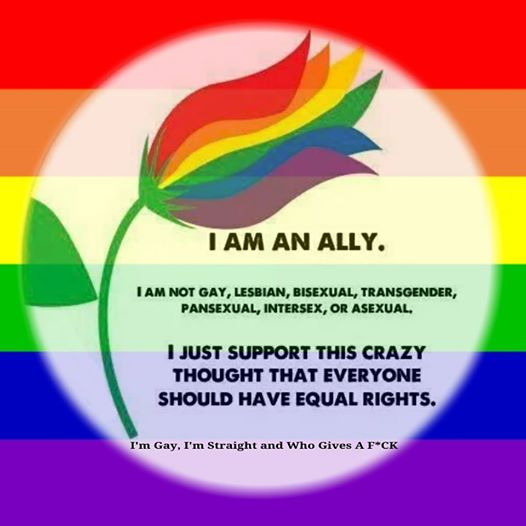
Perhaps it is because it is Pride Week here that we feel compelled to act and even more motivated to voice our allegiance. As an American and as an American who grew up in a relatively conservative Christian household, I find myself particularly proud to be an ally. I am not, however, proud that it is necessary.

10246591_758289330888980_7285723713478773961_n


Phenomenal Women (Day 66: Proekt 365)

Day 66: Proekt 365 International Women's Day

Day 66: Proekt 365
International Women’s Day

The 8th of March is International Women’s Day. During my time in Russia, it was a time of year when all of the men and most women celebrated the ladies in their lives. Men showered women with flowers and raised their glasses to toast the fabulousness that is women. Women, much like every other day, celebrated and supported one another, but with just a bit more sense of sisterhood and infinitely more booze.

As a woman and as a feminist, I’d rather not just have one day when the work, worth, beauty and burdens faced by all women are given the spotlight. I’d rather we applaud ourselves and are celebrated every day. I’d rather we were equally rewarded, equally valued and equally represented in all aspects of life and in every corner. I’d rather we worked towards righting the injustices and eliminating the gender-specific barriers which make life more difficult for women every single day until they were a distant memory.

Still, the fact that I’m admittedly privileged is not lost on me—my husband is a feminist (and at times more so than I am!), I live in a society which places great value on the work of women domestically and beyond the home and I am afforded specific protections which prohibit discrimination against me based solely on my private parts. These are all great things, and for them I am grateful.

That isn’t the case for all women. Far, far too many women. And, not just those who live in lesser developed places, but also women who live in my own society. Whether it is allowing women and girls to attend school, work outside the home, drive, vote, voice their opinions, marry whom they love / wish, choose when and under what conditions to have children or when and with whom to have sex, every day should be an opportunity to make gender equity and justice a reality. For all women. Because all women are of value. All women are beautiful. And, all women should be celebrated. In all our diversity.

On this International Women’s Day, the words of the brilliant Maya Angelou come to mind. Whilst recognising and grieving for the difficulties and outright horrific conditions in which some women are forced to live, I am mindful today (and everyday) of just how amazing women are. Here’s to all of the truly phenomenal women in the world, particularly those who have enriched my life so, so much.

Phenomenal Woman

Pretty women wonder where my secret lies.

I’m not cute or built to suit a fashion model’s size
But when I start to tell them,
They think I’m telling lies.
I say,
It’s in the reach of my arms,
The span of my hips,
The stride of my step,
The curl of my lips.
I’m a woman
Phenomenally.
Phenomenal woman,
That’s me.
I walk into a room
Just as cool as you please,
And to a man,
The fellows stand or
Fall down on their knees.
Then they swarm around me,
A hive of honey bees.
I say,
It’s the fire in my eyes,
And the flash of my teeth,
The swing in my waist,
And the joy in my feet.
I’m a woman
Phenomenally.
Phenomenal woman,
That’s me.
Men themselves have wondered
What they see in me.
They try so much
But they can’t touch
My inner mystery.
When I try to show them,
They say they still can’t see.
I say,
It’s in the arch of my back,
The sun of my smile,
The ride of my breasts,
The grace of my style.
I’m a woman
Phenomenally.
Phenomenal woman,
That’s me.
Now you understand
Just why my head’s not bowed.
I don’t shout or jump about
Or have to talk real loud.
When you see me passing,
It ought to make you proud.
I say,
It’s in the click of my heels,
The bend of my hair,
the palm of my hand,
The need for my care.
’Cause I’m a woman
Phenomenally.
Phenomenal woman,
That’s me.

Maya Angelou, ‘Phenomenal Woman’ from And Still I Rise. Copyright © 1978 by Maya Angelou. Used by permission of Random House, Inc.

Day 38: Proekt 365 (Solidarity)

Day 38: Proekt 365 Well played, Google!

Day 38: Proekt 365
Well played, Google.

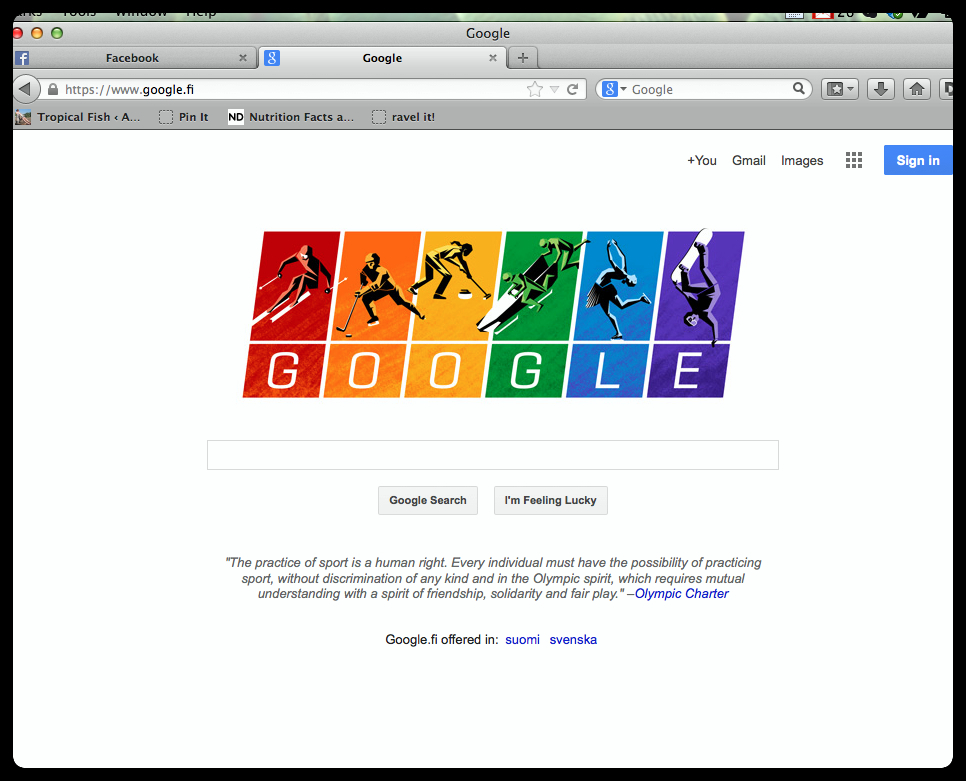
I’m tipping my hat to Google today. They deserve it. As do all those who stand up to oppression.

I’m sure that there will be loads of posts about this today. And, that isn’t a bad thing at all. If anything, more agencies should be voicing their concern and dismay at an incredibly bad policy with very real consequences.

In case you’ve been living under a rock, Russia enacted a law in June last year which essentially makes life incredibly difficult for its country’s LGBTI citizens and residents. (I’ve already written at length about my own thoughts on this elsewhere.) There has been loads of coverage about this insane law given that the Winter Olympics in Sochi are starting this week. Most of that coverage is focused on what it means for those who will be competing and spectating, with far less devoted to how it affects LGBTI community. There has been plenty of outrage voiced from various countries and ‘VIPs’, but not nearly enough and certainly nothing on an organised, large scale. And, far, far too little action, IMHO.

A few days ago, United Nations Secretary-General Ban Ki-moon called on participants to promote equality and non-discrimination during the games (I’d say, why not extend this to the host country, but…nevermind). And, today, the Google Doodle makes a statement loud and clear. I like these statements and I applaud them.

Yet, the (most expensive) Olympics are continuing. Violence against LGBTI in Russia goes on unchecked.

Borrowing from Google, I’ll end this post with the bit of the Olympic Charter we all need to be reminded of during these troubled games:

The practice of sport is a human right. Every individual must have the possibility of practicing sport, without discrimination of any kind and in the Olympic spirit, which requires mutual understanding with a spirit of friendship, solidarity and fair play.

In solidarity…

Where an ‘I love you’ text is a crime

A week ago, a man in Cameroon died. Roger Jean-Claude Mbede, who was only 34 years young, died of complications and lack of treatment for a hernia. As if this wasn’t tragic enough, Roger died needlessly and senselessly after having to live in hiding and knowing that his family wanted to remove the ‘curse’ which plagued him. Why?

Because he was gay.

Roger was jailed under Cameroon’s anti-gay legislation in 2011 for sending a text message to a man which read, ‘I’m very much in love with you’. He was sentenced to three years in prison, and later released on medical grounds. He lived in hiding upon release and some reports suggest he was barred from receiving medical treatment. Even his family said that it would be better to just let him die.

Because he was gay. Because he loved a man and declared that love.

There are far, far too many countries in which individuals who do not fit the ‘norm’ face criminal charges for simply declaring an emotion which should bring joy, happiness and hope. Depending upon how you classify both country and legislation, a total of 83 countries (84 if you count Russia) have laws which place strict limitations on the human rights freedoms to those citizens who are gay, lesbian, bi-sexual and transgender. That’s 84 too many. Imagine living in a place where you cannot declare your love for another human being. Where you cannot show your love for another human being. Where you are not free to love and show that love for whom you wish.

With all of the attention Russia and President Putin have been quite rightly getting given the upcoming Olympic games, perhaps we can also shine a spotlight on all those other countries in which LGBT men and women face prison, discrimination and stigma on a daily basis simply for being who they are. This includes Cameroon, Nigeria, Uganda and 35 other African nations (although the Ugandan law has not been signed by the president as of this morning). These are only the countries from one continent in which laws exist making it a crime to be gay. Let’s not forget the Americas, Asia, and, yes, Europe. As we in the developed North applaud the steady march towards marriage equality in the United States, the spread of laws which criminalise homosexuality continue and with them stigma, discrimination and hatred become more common and, in a way, legally sanctioned and institutionalised.

Despite Putin’s claims that the Sochi games will be welcoming to all athletes and free of discrimination in any form, what about the remainder of Russia outside the Olympic bubble? Actions, and in this particular case, legislation speak infinitely louder than words. So loud in fact that 27 Nobel laureates and Sir Ian McKellen (aka Gandalf) have penned a letter asking President Putin to reconsider the anti-gay propaganda law. Once the Olympic torch is extinguished, I’m dubious that anything will change, and suspect that things for Russia’s LGBT community may in fact become more grim.

But, what of those other countries in which the laws are even harsher? What of those countries who punish their LGBT citizens with decades long or even life prison sentences? What of those countries where being gay carries the death penalty? Where is the outrage? Where is the international support? Where are the protest letters from those 27 Nobel laureates and knighted actors?

In some parts of the world, undoubtedly we’ve come a long, long way towards making it safe and legal for all to love whom they love, openly and without fear (or, as it should be). But, as the senseless and tragic case of Roger Jean-Claude Mbede illustrates all too cruelly, we still have a very long way to go.

The Anti-Gay World (pinched from Buzzfeed)

The Anti-Gay World
(pinched from Buzzfeed)

Suffer the Little Children

It’s hard to imagine life in Syria today. Harder still to imagine that fleeing to Iraq would be preferable to remaining in Syria.

Being a child and experiencing either is unimaginable.

Yet, Save the Children estimates that as many as 1 million Syrian children are now living as refugees. One million.

War and conflict are tragic enough. But, robbing children of their childhood and all the attendant delights of youth is simply criminal. I cannot imagine a more helpless feeling than being a parent to a child living in a war zone or fleeing from conditions which are nightmarish at best and a living horror at worst.

How do you explain it? How do you try to shield your child from the reality of war without deceiving them into a false sense of security? How do you instill hope whilst living in conditions which leave little room for belief in a brighter future?

Children under Fire, Save the Children’s report documenting the reality in which children now exist as a result of the civil war raging in Syria, is gut-wrenching.

By their estimates, more than 2 million children in Syria now need some sort of assistance. Figures from a study conducted by Bahcesehir University in Turkey which is referenced throughout the report suggest that three out of every four Syrian children have lost at least one loved one because of the conflict. Three of every four. Many children have lost multiple family members. Many of those children have watched as those loved ones died.

In their own words, children describe the horror of constant shelling and gunfire, as well as living in houses which are shelled whilst they sit inside. They describe running for their lives through neighbourhoods they used to run around in for play. They describe the loss of their schools, either to serve as shelter to the millions displaced within Syria or which have since been burned to the ground. They describe watching friends and family members being shot in front of them. One child’s mother recalled the first word spoken by her young child, born into a world lived only in a state of war: ‘explosion’. That was the first word a mother’s child ever uttered.

Malnutrition is now the norm. Children go un-vaccinated because the manufacturing of medicines has declined if not completely ceased (along with all manufacturing in the country) or because it is impossible to get through the multitude of checkpoints set up by various factions within the country. Thus, the likelihood of epidemics are all the more real. When children do get sick, it is either impossible to reach a clinic or hospital due to the continued threat of sniper-fire or bombings or the impossibility of simply getting through or there is nowhere to go because most if not all hospitals and clinics have been destroyed in a particular area.

Young girls now face the threat of sexual violence as well as the violence of war, and are thus kept indoors for weeks on end. Young boys, some as young as 8 years old, are being recruited as child soldiers and have been used as ‘human shields’.

Suffer the little children. ‘Suffer’ seems insufficient to describe the hell that is life in Syria today.

The easiest way to end the suffering is to end the conflict in Syria. As the US and others in the West beat the drums of war, peace looks unlikely any time in the near future. But, what of the children now? And, how to help even if we cannot physically be there?

In addition to prevailing upon our own leaders for peaceful solutions rather than violent retaliations, we can take steps to help in the seemingly smallest of ways.

As Syrians flee for refugee camps and as winter approaches, many of those fleeing have nothing but the clothes on their backs. One charity which is specifically designed for the crafty amongst us and focuses on helping children in need is asking for a very simple show of support and kindness—send knit or crochet squares.

LILY—or, Love in the Language of Yarn—is calling upon the community of knitters and hookers (not those hookers) to spend a bit of time busting their healthy yarn hordes to make squares, which are then pieced together and given to child refugees. As a knitter, I love this idea. As a humanitarian, it is so elegantly simple and yet necessary. As winter approaches and warm shelter, let alone a warm blanket, is often non-existent, I’ll gladly use some of my time and precious yarn stash to make as many squares as possible.

It may not be much, but it is something.

If we cannot give them security and safety, perhaps we can at least give them warmth.

Some of the squares I'll be sending in the hopes that they bring some 'security' to Syria's forgotten children living as refugees.

Some of the squares I’ll be sending in the hopes that they bring some ‘security’ to Syria’s forgotten children living as refugees.

Dare to Defy the Impossible

I’ve been thinking a lot lately about possibilities and if anything is really impossible. A quote by Nelson Mandela has been stuck in my head for most of this week:

It always seems impossible until it’s done.

This lead me on a quest to find other quotes which speak of defying seemingly insurmountable odds and spitting in the face of the naysayers. Here are a few of my favourites:

‘Listen to the mustn’ts, child. Listen to the don’ts. Listen to the shouldn’ts, the impossibles, the won’ts. Listen to the never haves, then listen close to me… Anything can happen, child. Anything can be’. ―Shel Silverstein

‘Never say that you can’t do something, or that something seems impossible, or that something can’t be done, no matter how discouraging or harrowing it may be; human beings are limited only by what we allow ourselves to be limited by: our own minds. We are each the masters of our own reality; when we become self-aware to this: absolutely anything in the world is possible.

Master yourself, and become king of the world around you. Let no odds, chastisement, exile, doubt, fear, or ANY mental virii prevent you from accomplishing your dreams. Never be a victim of life; be it’s conqueror.’ ― Mike Norton

‘If nature has taught us anything it is that the impossible is probable’. ― Ilyas Kassam

‘Many things worth doing in the world had been declared impossible before they were done.’ ― Louis Dembitz Brandeis

‘My dear, just because something seems implausible doesn’t make it impossible. Think about how long people believed the world was flat.’ ― Angela Henry, The Paris Secret

‘Start by doing what is necessary, then what’s possible, and suddenly you are doing the impossible.’ ― Francis of Assisi

That last by Francis of Assisi particularly speaks to me. There are so many moments when just starting out and doing the tiniest of tasks resulted in possibilities which then accomplished what had at one point seemed impossible. It’s a nice a reminder to us all, and can serve as a gentle reminder to simply break any larger task which seems impossible into the various necessary components. Before long, we’ll be achieving the impossible. Nice!

And, then there’s this gem, from Dejan Stojanovic, which is simply perfect:

‘Possible impossibility emerges
From an impossible possibility,
Or possibly, impossible possibility
Blooms from the impossibly possible impossibility’.

However you define ‘impossible’ and regardless of what obstacles you think stand in your way, just get on with it. Dare to dream and dare to defy the odds. Then, everything is possible. And, the possibilities are endless.

Couldn't have said it better myself.

Couldn’t have said it better myself.

Don’t mess with Texas women

I am a Texas woman.

There. I said it.

To my Texan brethren, I am a Yankee. Fine. I’m a Texan Yankee. Whatever.

But, I was born in Brenham, Tx, home to the finest ice cream on the planet, and descend from the men and women who defended the Alamo long before Texas was a part of the United States. There is nothing more beautiful to me than a field filled with Texas bluebonnets. Nothing. Texas, as much as it completely baffles me, is still home. And, I am proud of my family’s heritage in the history of that most enigmatic of states. The steaks do taste better. The mosquitoes are gigantic. The TexMex is the finest anywhere (of course — ‘Texas’ is right there in the name!), and the margaritas flow bigger and colder than anywhere I’ve ever been.

All of these things are now things which fill me with a sense of pride at my Texan heritage.

I lost the accent long ago (something about being 3 and sounding incredibly different to all the other kids made that a lightning-fast loss), and I talk faster than a Texas twister I’ve been told on more than one occasion. I was a vegetarian for many years to the utter disbelief of some. Once I became active and cognizant of the political sphere as an undergraduate, I became not just a {gasp} Democrat, but a god-less liberal (resulting in many a family ‘intervention’ at holidays and visits). I do not own a gun, nor do I hunt. When I still had a car, I drove a Japanese car. And, I lived far, far North of the Mason-Dixon line when I last lived in the US.

Perhaps the parts of that heritage which resonate most soundly with me, however, are the attitudes and sass of just about everyone I know there, which rival none. We like our sass as big as our trucks and hats — super sized. The two phrases in my own family which carried the most meaning were ‘Don’t mess with Texas’ and ‘Don’t cross Grandma’. (My dearest darling grandmother, Katharine, to whom I owe much of my own personality now, was the strongest, most intelligent woman I’ve ever known. And, she was Texan through and through.)

Despite the many reasons I am proud of being a Texas woman by birth, yesterday’s utter insanity in the state Senate (along with Texas politics, in general) is a big reason why I am reluctant to shout my heritage from the rooftops.

For those sleeping under rocks or completely tuned out from all news and media outlets, the Texas Senate was poised on Tuesday to pass a sweeping bill which would eliminate 37 of the 42 clinics in the state that provide abortion services to Texas women*. (They are also acting incredibly fast to enact legislation which would make it harder for poor and minority citizens to vote in elections.) This is the state whose Governor refuses to expand Medicaid services with federal funds, despite having one of the highest percentages of uninsured individuals in the country. This is also the state in which spending on family planning services across the board were cut by two-thirds in 2011. Thus, not only will Texas women be unable to access abortion services, they won’t be able to prevent unintended pregnancies to prevent the necessity of seeking such services. Social benefits are hard to come by for poor Texans given the state’s largely conservative mentality.

Despite not living there for a long, long while, as a Texas woman I’d like to thank Senator Wendy Davis for her courageous and sadly necessary attempt to thwart the insanity in the state Senate yesterday. Even if ‘dirty tactics’ by the state GOP circumvent her filibuster, she stood up for all women across Texas and we witnessed the tenacity and bravery of a woman who said ‘no more’. And, she did so with grace, dignity and quiet contemplation. She did so in the tradition of those who fought for Texas Independence at the Alamo so long ago and gave us reasons to be proud of our heritage and state.

State Senator Wendy Davis is a hero among ‘thieves’ (in this case, thieves = Texas GOP politicians), to adapt and borrow a favourite phrase. And, she stood with honour yesterday, and provides yet another reason for me to be proud to be a Texan. And, prouder still be a Texan woman.

I #StandwithWendy and all Texas women, even those with whom I disagree.

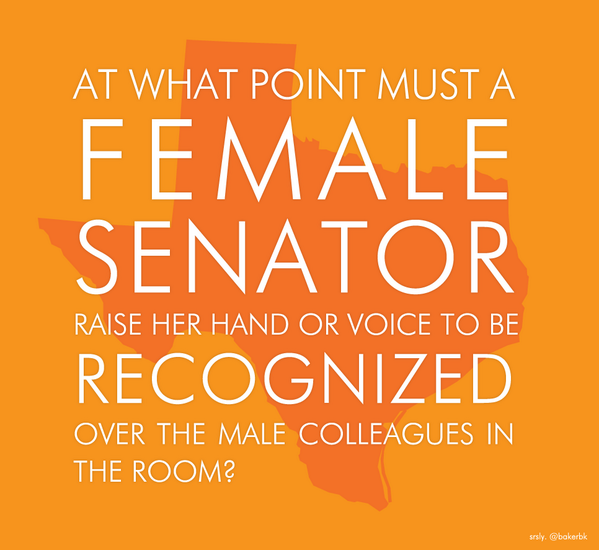
I #StandwithWendy and all Texas women, even those with whom I disagree. (Image from Sarah Baker @bakerbk)

*I don’t want to go into the whole abortion debate, which is basically impossible here. To me, it’s no one’s business but a woman’s. What she chooses to do is between her and her doctor and partner. That’s all I’m saying here.

Knitta, please….

Several years ago, a very close friend of mine gave me a set of knitting needles. It had been decades since I’d done anything craft-like, but I was inspired to pick up the hobby again. Little did I realise that that ‘gift’ would lead to an almost obsessive love affair with all things needle and yarn. (Thank you so, so much, Brad!)

Whilst I thoroughly enjoy creating items which serve a purpose—that is, hats, scarves, blankets, jumpers, etc.—guerrilla knitting fits with my overall philosophy in life in general. Guerrilla knitting—or yarn bombing and yarn graffiti—has taken root in many knitting circles as a way to bring a bit of beauty to urban landscapes through the simple act of leaving a colourful knit or crocheted fibre object on existing structures. Guerrilla knitting began with the works of a Houston-based self-taught knitter Magda Sayeg, also known as PolyCotN, who formed the group Knitta Please in 2005. Originally intended as a way to deal with unfinished projects or objects (which are affectionately known as UFOs amongst the yarn-obsessed), guerrilla knitters target public architecture such as lampposts, parking metres, telephone poles and signage with the mission of making street art ‘a little more warm and fuzzy’.

Think of it as fibre community activism.

Last summer, I engaged in my first yarn bomb. My own local knitting group has long discussed yarn bombing the city’s landscape with knit fish or kippers. Given that we knit in public, and the acronym most commonly used by the group is KIPpers, fish are an appropriate mascot. After finishing one of my larger projects and looking for a suitable purpose for the insane number of tiny leftover balls of yarn, I decided to knit a bunch of fish. As I was doing so, I came up with the idea of creating an aquarium at our local bus stop.

On a sunny Sunday summer afternoon, my husband and I strung up about 40-something knit fish and a few bits of crocheted ‘seaweed’ to go along with the fish. To our delight, that first yarn bomb remained in tact for the neighbours to enjoy for about two months. We both spied individuals gazing at the fish, taking pictures with their kids or just looking at it with puzzled looks and quiet smiles. It was a treat to see.

Another fellow KIPper has taken yarn bombing with the group’s mascots to an international level, leaving fish and signs in Iceland, Denmark and Germany along with those strung and hung in Finland since last summer. Just doing our part to bring smiles and a bit of fibre joy to the masses, you could say.

More recently, some of the ladies from my local KIPpers group decided to combine our love of fibre with a bit of civil disobedience in support of social justice. Marriage equality has been on the political agenda in earnest here in Finland this year, with various groups gathering signatures to demand a debate and vote in Parliament making marriage equality a right for all. As a part of that, we decided to yarn bomb Parliament with rainbow-themed knit triangles.

I suppose you could say this is simply our way of trying to make the world a little bit better for everyone and a little lovelier as well.

This slideshow requires JavaScript.

Why I Walk…

Today was the annual Avon Walk for Breast Cancer. This event takes place each autumn and is used to raise awareness and much-needed funding for research on breast cancer in Finland. I’ve taken part in the walk physically three years now, and at least supported the walk if I wasn’t able to attend it every years since 2008.

I won’t be missing any future years if at all possible.

One of the reasons it was a special day both this year and last revolved around sharing the event with dear friends who are breast cancer survivors. One of friend was in the middle of her chemotherapy treatment during last year’s walk and bravely and courageously walked the longer route through Helsinki despite not feeling at all at her best. This year she’s doing fantastic, she’s finished chemo, and she continues to amaze and marvel providing endless amounts of inspiration to many. This year was additionally special as another dear friend celebrated the official notice that she is cured of her own battle against breast cancer which started five years ago.

I honestly can’t imagine life without either of these two brilliant women, and I’m incredibly grateful and humbled to share the day with them.

The day was even more poignant when I arrived home to find a message from an old friend who is now beginning her own battle against breast cancer. It may have been years since I’ve seen her, but this news hit me hard and brought home once again just how precious life and time are. I hope she knows I’m with her, even if not physically there.

For the three women above, and for the other women who have fought and won, as well as those who have sadly lost, their individual battles against breast cancer, I will walk. With hope and the dedication of those who dedicate their own lives to finding a cure, may we be a few steps closer to eliminating it finally and definitively.

This slideshow requires JavaScript.

Misogynist 0; Activist 2

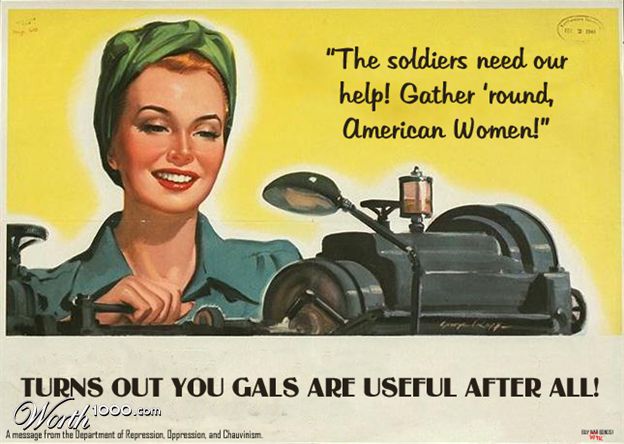
Yes, we are useful.

We’ve recently had incredibly bad luck with our various means of connecting with the rest of the world. In our dealings with customer service representatives and repairmen, we’ve been amazed at just how misogynistic and condescending some of these individuals continue to be.

To be fair, customer service is not exactly understood in precisely the same way here in Finland as it is in the US for example. Almost a year ago, I had an unfortunate experience with one of my formerly favorite local yarn shops when a pair of knitting needles I know to be guaranteed for life had an obvious flaw, rendering their continued use impossible. After exchanging emails with the European headquarters, I received not just one but three replacement sets and the store no longer enjoys my patronage (their loss, given just how much I had previously spent in that particular store). It amazed me at the time, however, how utterly unconcerned the manager was with pleasing a customer and a regular one, and how brazenly she showed her contempt for me as a customer merely wishing to exchange an obviously flawed product.

Perhaps then I shouldn’t have been as surprised by recent experiences with our internet and mobile service provider. I certainly wasn’t expecting outright contempt and disdain. Nor was I expecting to be treated as a technology neophyte who didn’t understand how to turn on a machine let alone discuss the possibilities regarding what had gone wrong in any meaningful and intelligent way. That is, I was expecting to be treated as an equal. Not an idiot.

First, our normally insanely fast cable internet failed us miserable over a one-week period. This is virtually unheard of in Finland, a country which considers access to broadband connections a fundamental human right. In the various calls I made to our provider, I was told it was a) a building-wide problem; b) a network issue that had been sorted; c) they had no idea but would send a repairman anyway; and d) all of the above.

My patience wore out completely when, during our fourth for fifth consecutive call, the unhelpful twit at the other end of the line told me to simply reset the modem, and then proceeded to explain to me what a modem was. (At that point, my husband sensing I was about to go postal took the phone and explained to said twit that we are not neophytes to technology, thank you very much.)

The first of two repairmen arrived, tested the modem, the wall fitting and the cables, and came up with the explanation that it was a problem with the splitter. Fine. But, why the smirk and smugness? He then said a previous technician misspoke and there had not been building-wide problem. It was only a problem in our flat. That evening, our internet connection was lost again.

Given how reliant we both our on our internet service for, you know, our work and livelihoods, this gave us serious reason to consider switching providers. Our next phone call was not to technical support but to customer service. For the first time in this ordeal, we received ‘customer service’. Another repairman arrived, carefully checked everything, told us that the previous repairman had been out of line and explained what and why he was doing everything. He did not speak to either of us as if we were beneath him, but as if we were equals and partners. In other words, we felt he was concerned for our experience and that he wanted nothing more than to help fix the problem. He also reassured us that he would check various things out for the building, since obviously nothing was awry in our flat. Since then, our internet connection has been stable.

Fast forward to yesterday.

Our mobile phone service is provided by the same company as our internet service, although the accounts are separate. For the most part, we’ve had very little to complain about in relation to 3G services. The only thing better than internet connections in Finland is the mobile phone service. Data transfer is free and unlimited, our monthly service fees are a pittance, and coverage is available everywhere. It’s incredible really. (I’ll refrain from mentioning roaming fees; they suck for everyone in the EU.)

That said, I’ve been having issues with a connector cable for my lovely Samsung Galaxy S III, which is a relatively recent addition to my gadget collection. If the cable isn’t positioned just so, it won’t charge. Not exactly a great thing to have go wrong with your phone. I suspect it is a problem with the cable’s connector, and just need a replacement.

Armed with my phone, cable, the original box and receipt, I visited one the many sales and service points for my mobile service provider. I’ve been to this shop on several occasions, and whilst it is normally quite busy given it’s location, the staff are generally quite friendly and helpful. Not yesterday. Not at all.

First, Snarky Boy, as he is now known, told me that the cable wouldn’t work when connected to a computer since there wasn’t enough ‘power’. (Then, why did it work just fine up until a week or so ago? And, why does it not work any better when plugged into the wall?) Then, he tried to tell me that it wouldn’t charge now because it was completely charged. (Really? Then, why when we got to settings and to the battery settings in particular does it show the charge at 65%?) Upon learning that the phone would then need to go to repair (‘even though there is nothing wrong with it’), I asked about what I would do for a phone whilst mine was in repair. ‘Well, I don’t know what you will do while your phone in is for repair,’ in a voice which was dripping with disdain, contempt and a ‘not my problem’ attitude. (I learned later from a friend and via the company’s website that if your phone requires service, the company gives you a loaner until you get your phone back. This was never mentioned at all by Snarky Boy.)

What was even more disconcerting given this entire experience was the attitude not just of Snarky Boy, but of his colleague. The two exchanged several glances during the above exchange and, at one point, the other employee laughed. He sat in his chair with another customer and laughed.

Utterly pissed off and fed up, I asked for Snarky Boy’s name, packed up and left. His parting question was, ‘Don’t you want your phone to go for repair?’ My response was simply, ‘I’m not dealing with you nor this store. I will call customer service to explain to them a) what has happened here and b) what the issue is to get it sorted.’

Customer service again came through. Perhaps it was speaking with another woman, but…she was helpful, kind, apologetic, and interested in solving my particular problem with a minimum of fuss and hassle. She took the time to make note of Snarky Boy’s name, the store I visited and the approximate time events occurred, and reassured me that some sort of reprimand would be issued. She also checked with her supervisor to make sure she knew how it would be handled before ending our call. My confidence in my provider was restored, needless to say.

Will it make a difference? Probably not. But, maybe it will. And, maybe, if more people would stand up to this sort of behavior, things would change. Ultimately, if we all want a world free of misogyny, then we must take a stand, confront it as it occurs, and demand better treatment, whether it is directed at us or at those around us.

One thing is certain: if we remain silent, the misogynist wins.