Hope Where There Is None

For more than eight years, Moscow, Russia was my home.

As cliche as it is, I learned more about myself in that time than I ever thought possible, met amazing people along the way, and discovered a place that had been mythological in my post-Cold War imagination. As a child of the ’80s, Russians were ‘the enemy’. At moments during my stay there, they took on that persona to a tee. However, that was the exception, and I loved my life in Moscow and wouldn’t trade any of the time I spent there. So many individuals welcomed me as the ‘silly American’, and I miss the daily interaction with them despite the difficulties inherent in contemporary Russian life.

Perhaps that’s why it pains me to hear of how little things have changed in the five years since I left. Russia has the dubious distinction of being one of the few remaining countries in which the HIV epidemic continues to expand. What’s more, it has occupied one of the worst of all statistics as the country with the fastest growing epidemic in the history of the global pandemic. That is not an accolade any country should aspire to and most governments would take action to remedy it quickly.

That hasn’t been the case in Russia. In fact, the opposite holds true.

Primarily fueled by the sharing of unclean injecting equipment and compounded by one of worst tuberculosis epidemics in the world, the Ministry of Health has maintained its hostility towards ‘Western’ or ‘foreign’ evidence-based practices and prevention methods which could save a generation of young Russians and prevent the further spread of HIV. Many small-scale local-level projects were funded not by domestic sources by but international agencies such as the Global Fund to Fight AIDS, Tuberculosis and Malaria. Distributing clean paraphernalia and informational materials on safer sex and drug use, providing counseling and social support services to those who had no where else to turn, and delivering training seminars to local-level healthcare professionals to introduce international experiences and human rights-based approaches have helped immensely. Yet, as obvious as it might be, Russia is huge and reaching every corner without governmental support is impossible. Furthermore, as the funding from international sources has dried up, many of those local-level initiatives have had to close and left a gaping hole for those least accepted and cared for in Russian society.

It’s quite simply heartbreaking.

Much of our news in the West focuses on the Russian elections. However, there are many other unheard stories, both of unimaginable determination and heroism, as well as of tragedy and despair. The Andrey Rylkov Foundation has made it their mission to work towards a humane and just approach to drug use and fight for the rights of those who most need it, and listen to and respond to those most ignored. Engaging with drug users, they provide harm reduction services in and around Moscow. They also work to highlight the extreme positions of the Russian government towards drug treatment and harm reduction strategies which have been proven to help prevent HIV. Spend 20 minutes from your day and watch this video about what they do and why.

Is there hope? There must be. Is failure an option? Not really. Life in Russia is not easy. But, working with individuals who are considered social outcasts, undesirable, and many perceive the best solution is to simply ‘let them die’ is unimaginably difficult. But, it’s well-worth the struggle if it improves the conditions for even a few individuals at a time.

So, as insignificant as it may be, I just want to thank Anya and all those who continue to do this type of work. Keep fighting the good fight!

Family is family…

I’ve been thinking a lot about the composition and meaning of family recently.

For me, it has always been those who I know I can count on when things are very bad at a particular moment and those who share my joy at the happiest of times, my sorrow at the darkest moments, and the mundane for everything in between. For me, despite the distance between me and my biological family, I know they are ‘there’ and hope they know the same holds true for me. Obviously, my husband has been my daily family tie since we fell in love, and his gigantic family has welcomed me with the warmest of arms. But, my ‘family’ has also consisted of ‘my tribe’—a small group of several individuals whom I love and who love me back unconditionally in that way that only families can. None of this really has to do with any specific identity or sexual preferences. The most important qualification is love. Simple, honest, persistent love.

My pontification of ‘family’ recently has been more related to politics (of course) and how others find it so simple and necessary to define the meaning of ‘family’ for people they do not know. I’m a fervent supporter of marriage equality for all, largely because I see the desperate sadness of those who are denied that joy of defining their family for themselves. I also find it unconscionable that there are individuals who find it so repulsive. Largely, I’ve found that those who object to same-sex marriage are the very same individuals who deride LGBT rights in general because of the ‘promiscuous lifestyle’ of gay men whilst dismissing extra-marital affairs of their own as irrelevant and a ‘private matter’. Nevermind that there are plenty of examples of gay men and women who have been in decades-long relationships with their partners and never had an affair. Not that it is anyone’s business but that couple’s.

I don’t understand preventing couples in loving, committed relationships from enjoying the same legal rights as heterosexual couples vis-a-vis a recognised civil union. If a church wants to prevent it, fine (although I find fault with that as well). And, if the couple’s only ‘difference’ is that it is a same-sex couple, who is it hurting? Not the gay-bashing homophobes, surely. If they are concerned with examples of solid, loving and life-long relationships — e.g., preservation of ‘the family’ — why prevent two individuals who have lived together in good times and bad from publicly declaring that union and granting it the same legal protections?

I don’t get it.

Perhaps that’s why initiatives such as The Devotion Project are so incredibly important. Quoting their Facebook page, ‘The Devotion Project is a series of short documentary portraits of LGBTQ couples and families, chronicling and celebrating their commitment and love’. Couples and families.

The third video in their series, ‘Listen from the Heart‘, follows the lives of the Fitch-Jenett family. And, what a family it is. You need only listen to them to hear their devotion. Watching it and seeing the love and commitment is not only a shining example of how families should be, but should thaw the heart of even the staunchest opponent to same-sex marriage.

Simon is an incredibly lucky boy. If more children had parents as devoted to him and to one another as his are, the world would be an infinitely better place. And, many a heterosexual couple would do well to learn from their example.

‘Rights Here, Right Now!’

XVIII International AIDS Conference

The XVIII International AIDS Conference gets underway in Vienna this week.

This week, an estimated 25,000 individuals from across the globe who all work in one way or another on issues related to HIV will descend upon the fine city of Vienna for the XVIII International AIDS Conference.

The theme for this year’s event is ‘Rights Here, Right Now’, which refers to the connection between HIV and human rights.

How far have we come in meeting the needs of those affected by HIV in the past 25 years or so? Where is more work yet needed? How do national responses compare to one another? What success stories exist and how may they be adopted to other contexts? And, what human rights violations continue to undermine the responses to HIV, locally, nationally, regionally and globally?

These are a few of the questions that come to mind before the event. The first of those in particular has been on my mind lately.

I recently caught the Frontline special report from 2006, The Age of AIDS.  This sobering documentary chronicles the early days of the epidemic in the US, and then provides an overview of the global epidemic. It is available to watch online, and I encourage everyone to spend the time doing so.

What struck me is that many of the same issues that plagued the responses in the early stages of the epidemic continue to undermine our work. Stigma, discrimination, drugs pricing policies and treatment availability, and a lack of basic information at times. Strong leadership along with political will and determination could remove and/or minimise these barriers. And, would go a long, long way in honouring the human rights of those living with and affected by HIV.

There is a moment in the documentary when Dr Jonathan Mann, one of the early pioneers in the response to the global pandemic, states, ‘It’s about basic equity, simple justice’. This short yet poignant declaration was in reference to addressing the stigma and discrimination and horrendous human suffering experienced by those who literally had no hope and faced certain death in the early stages of the epidemic.

It is still about equity. And, it is still about social justice more than 25 years on.

In the current economic climate, many programmes which have allowed millions of individuals who had no hope and were close to death access to live-saving treatments (which have improved their overall quality of life) will come to an end. As programmes lose vital funding from development aid programmes, the real tragedy is that individuals will suffer. Individuals will die. Most of those individuals will be those who live in lesser developed countries and have no where else to turn for assistance.

Is that fulfilling the commitment to universal human rights we have argued and fought for?

A peaceful demonstration will be held Sunday, 18 July, 17.

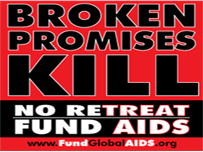
Broken Promises Kill: No reTREAT, Fund AIDS

A peaceful demonstration will urge governments and global leaders to honour their commitments to fund AIDS programmes

00–19.00, at the Vienna Conference Centre, to coincide with the opening ceremony. Governments across across the globe have failed to fulfill their commitments to fund AIDS treatment and other health needs.

And, they must be held to account.

I for one will join others in Vienna to protest the broken promises and threat to upholding the human rights of those affected by the epidemic on Sunday, 18 July. I will be there not for my own rights, but for those who have no other voice. I will be there for those who are not in Vienna.

‘And I am the Drug Policy Alliance’…

I’m often quite happy to miss the ‘news’ on main stream television, particularly when I read of interviews and exchanges such as the recent ‘debate‘ between Fox News and the Drug Policy Alliance.

The Alliance has just released a rather poignant video highlighting the need for a rational, evidence-based and research-informed approach to drug policy. Rather than focusing our efforts and resources on criminalisation and incarceration, we should re-focus our attention on a human-rights based approach to drug use and policy. I fully embrace this approach, which is not at all surprising given what I do for a living.

A smattering of viciousness and derogatory language from Mr O’Reilly and his co-host Megyn Kelly highlight their inability to understand the issues at stake and how damaging and unhelpful the so-called ‘War on Drugs’ has been and remains.

Thus, the message in the Drug Policy Alliance’s latest video was completely and utterly lost on them. In addition, their segments (three, that I could find) were not based on intelligent debate, but on rhetoric and unsubstantiated claims, many of which are simply false.

Drugs have been legal and regulated in several countries to varying degrees for many years now. I spend about 25% of my time in the Netherlands these days, and there is very little in the way of ‘drug-related crime’. In fact, within the last year or so, I was told by Dutch that the state was forced to close prison facilities because they did not have enough prisoners to fill them. That is, prisons were sitting empty rather than bursting to capacity such as those in the US. Think about that for a moment.

John Stossel, also from Fox News, quite rightly made the point to Mr O’Reilly that prohibition drives the behaviour underground. Indeed. The prohibition of drugs has worked much the same way as the prohibition of alcohol—people will find ways around the law and will go to great lengths to hide it from the authorities.

The real shame in driving behaviours underground is that even if an individual does wish to seek help for dependency or any other medical and/or social issues, they are less likely to do so if they believe they run the risk of incarceration or any sort of reprimand. Thus, any programme designed to reduce drug- or substance-related harm, such as needle-exchange programmes, are less likely to reach them. In an age of HIV, this represents a tremendous shortcoming and travesty.

I support and applaud the Drug Policy Alliance in their efforts to advocate for a human-rights based approach to drug use. And I fully support an end to the War on Drugs.

Reproductive and sexual ‘freedom’….?

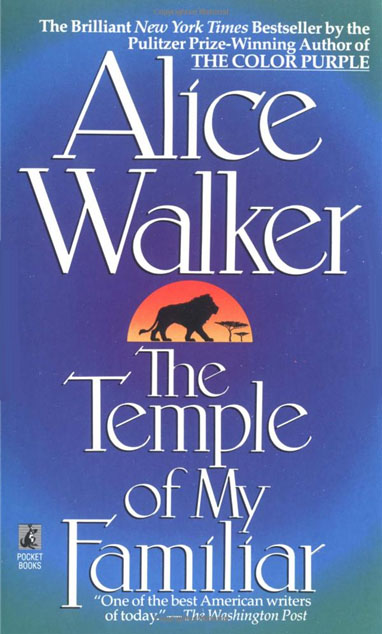
Alice Walker's book, The Temple of My Familiar, is one of the most moving fictionalised accounts of FGM.

It must have been 1992 or so when I first heard about the practice known as ‘female genital mutilation’, or simply, FGM. Sadly, it was not through a text or lecture on practices in a faraway land, but as a part of a public health debate in the greater Atlanta area.

The case was particularly troubling not merely because of the desire of a parent to have their young girl undergo a particularly severe form of the painful practice, but because it was being driven by the young girl’s mother. This was a fierce slap across the face to my young feminist leanings.

For those unfamiliar with the practice, the roughly 100 to 140 million girls and women who have been subjected to FGM have received no health benefit of any kind from the practice. It involves the partial or complete removal of the external female genitalia, and may result in severe bleeding, problems urinating, and potentially complications during childbirth. In its worst incarnation, known as ‘infibulation’, the vaginal opening is narrowed to such an extent that it needs to be cut open later to allow for sexual intercourse and/or childbirth’. Sexual pleasure is unsurprisingly limited if not altogether impossible for those who have been ‘circumcised’.

FGM is internationally recognised as a violation of the human rights of girls and women. While it is largely carried out in developing countries, it is not uncommon in the United States.

What’s more troubling is that it is becoming more common.

The practice in the US and in the UK is known as ‘clitoroplasty’. The procedure is increasingly on girls, young women and women when  the clitoris is deemed ‘too large’ or ‘unattractive’. For more on  the practice in the UK, try to find a programme entitled, ‘The Perfect Vagina‘.

Part of the concern and outrage surrounding FGM in general is that it is not merely the physical harm that are worrying, but also the psycho-social damage which lasts far beyond the physical wounds that make it so reprehensible. How then can we not be outraged by a physician at Cornell University in New York who takes that harm to an altogether different level?

Tell me, why is this a medically ‘necessary’ procedure? Who decides that a young girl, one who has not even enjoyed that right of passage known as puberty, has ‘abnormal’ genitals? And, by determining that a particular girl’s genitalia are ‘unattractive’ or ‘abnormal’, are we not then causing the very psychological harm we condemn for more ‘traditional’ brands of FGM? Finally, what sort of harm comes from ‘testing’ the ‘success’ of the procedure by using stimulators such as vibrators on girls as young as 6?!

And, how then can we ever attempt to advocate for reproductive rights or sexual freedom beyond our own borders ever again?