Water, water everywhere; not a drop to drink or use…

Not long ago, I was musing about how fortunate and privileged we are in our comfortable life here in the uber-developed North. Today, I’m realising just how incredibly privileged we are and how a mere 8-hour disruption is, well, disruptive to our normal routine and cushioned life.

First-world fortunate, indeed.

The story:

A few months ago, some maintenance men with clipboards and tape measures traipsed through our flat looking at the pipes in our kitchen and bathroom to determine how sound they were. They went to each and every flat in the building and we knew they would be carrying out this inspection well in advance. After the inspection, the decision was taken to replace the building’s entire plumbing and drainage system. Thus, the next few months will see loads of renovations taking place throughout our normally quiet and convenient life. All of the pipes and plumbing fixtures in our four-story, four-entrance apartment block will be replaced with shiny new pipes and fixtures. It all appears to be very well organised and orchestrated. And, we are given updates through our mail slots of impending disruptions and what to expect with plenty of notice.

Rather impressive, really.

The problem is that occasionally over the next several months, we will have no water nor drainage in our flat. Given that both my husband and I work from home, logistically, this is not quite ideal. A bloody nuisance when you think about all the various ‘functions’ which require drainage or running water.

Today — the first of those several days  — I’m truly astounded by how many tasks and ‘things’ require water and/or drains. And, I am so, so, so happy that it is for only 8 hours.

This also has me thinking about those who have no running water. And, those who have no drainage systems or modern plumbing.

UNICEF’s US-based website lists the following in relation to world wide stats on safe water and sanitation:

Water is life. Yet 768 million people do not have access to safe, clean drinking water, and 2.5 billion people live without proper sanitation. When water is unsafe and sanitation non-existent, water can kill.

Across the globe, nearly 4,000 children die each day from unsafe water and lack of basic sanitation facilities.

That’s quite staggering to me. The WHO/UNICEF Joint Monitoring Programme for Water Supply and Sanitation (JMP) lists diarrhoea as the leading cause of illness and death. Furthermore, 88% of diarrhoeal deaths are due to inadequate access to sanitation facilities, together with the inadequate availability of water for hygiene and unsafe drinking water.

Water is life, indeed.

To understand the importance of having clean and safe drinking water and adequate sanitation and just how much water we use along with how easily available it is to us in the developed North, take a day to make note of your daily water use. It’s eye-opening to say the least.

All the various, seemingly meaningless tasks which at some point require running (or at least clean) water and functioning drains add up and add up quickly.

We stocked up on bottles and buckets of water yesterday evening and also put out a few refuse buckets for the kitchen and bathroom sinks, mostly to remind us not to use the drains. Despite having spent a fair amount of time either traveling in places where water was a luxury or inconsistently available, numerous camping expeditions when it was all about humping water in and out in my backpack, and the completely unpredictable water cut-offs in Moscow and on holiday in Cuba, I’m still struggling with this inconvenience. Because, honestly, for us in our relatively posh life in Finland, this 8-hour disruption is a mere inconvenience rather than a daily fact of life.

And, I am extremely grateful!

UN Water estimates that each person—each individual human living on this giant rock racing through the universe—needs 20-50 litres of water each day to meet their basic needs for drinking cooking, and cleaning. Here in Finland, particularly in Helsinki, those 20-50 litres can be accessed quite easily by opening up any number of water taps in our flat.

From brushing our teeth, to using the toilet, washing our hands, making coffee, rinsing our coffee cups or spoons to get the bits of grounds off of them, drinking water because we’re simply thirsty, to showering, and all of the various things we do throughout the day which mean opening up the water tap, water most definitely is life.

And, I’m looking forward to opening up those lovely, luscious water taps at 16.00 (or in an hour and 40 minutes).
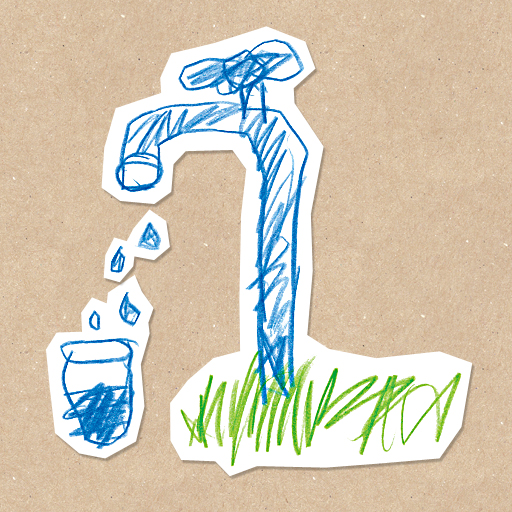
Image from Save the Children Australia
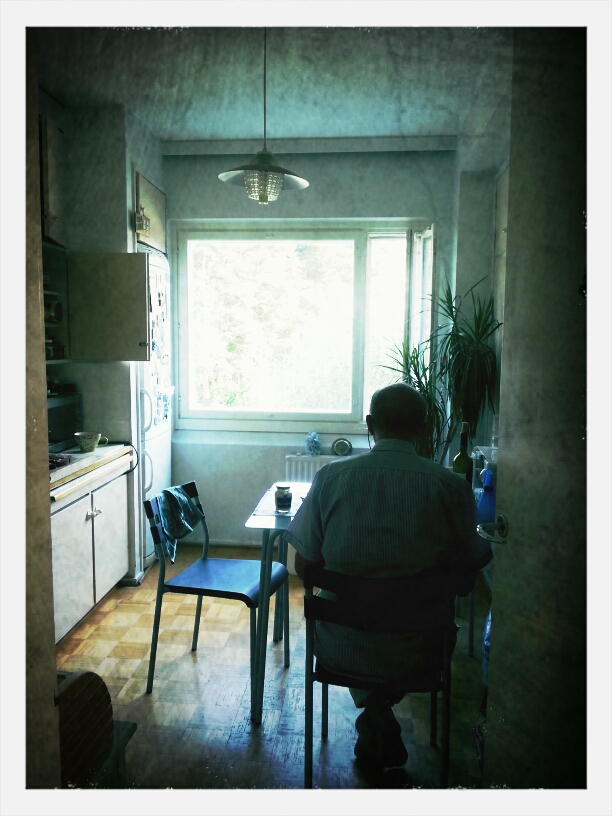
Image from Save the Children Australia

First-World Fortune

This week I have been reminded just how fortunate I am.

I have a loving, devoted, kind and principled husband, who also happens to be the one person on the planet with whom I could happily spend 24 / 7 / 365 and not become homicidal. Whatever issues in life we face, we face them together (and more often than not with some sort of ridiculous joke / quip attached to it which only makes sense to us). He places the same value on a just world and feels the same sorrow I do when we witness the various injustices which plague this planet of ours.

Perhaps it was his father’s visit this past week which brought home to me once again just how fortunate we are. In addition to have founding one another in this gigantic, crazy world, we have a solid roof over our heads, a full cupboard with more food than most people see in a year. We have our health and we have relatively healthy attitudes.

These are no small things. There are far, far too many in this world who don’t have a fraction of what we have and can only dream of having that fraction. There are also those who dare not dream for the dream is far too out of reach.

We have been thinking a lot about this simple truth: Whilst there are plenty of things we could (and at times do) b!tch about, we want for nothing really.

We live in a civilised, well-functioning country with all attendant social and health services making life relatively good. We have access to whatever health care services we need, and if we wanted, we could probably return to school for the further training of our over-educated brains. Our running water is clean and abundant and hot; the lights work, and our internet is fast. In winter, which is long, the heat is always on.

All too often, those of us who take these daily luxuries for granted, b!tch and moan about our First-World problems. We want a better-paying job, the latest and fastest technology (e.g., smarter smartphones or computers or whatever gadget du jour which may distract us from the world around us), or a bigger home with shiny, new conveniences.

We forget that the rest of the world would be happy to enjoy for a moment just a fraction of the multitudes of fortunes we b!tch about.

But, recognising and knowing that there are places where any running water is a treat (nevermind hot water or clean water), electricity is something which may or may not be available or will only work for portions of your day / week / month, etc. if at all, where food is scarce and your choice is between what’s there or nothing, where you may have access to great health care but vital medicines are scarce if available at all, and your complaints diminish.

Realising that we live in a place where violence is something we witness from afar makes all of our ‘troubles’ seem incredibly trivial and meaningless.

We are fortunate. Very.

Even though there may be moments when we forget this, we both resolved to remind ourselves often that we have infinitely more than many on this planet could ever hope to dream for, let alone actually hope to actually have. That we do so in a place which is peaceful and calm and free is simply priceless.

We spent much time this week looking out this window reflecting on our fortunes, which are many.

We spent much time this week looking out this window reflecting on our fortunes, which are many.

The Waiting Game

‘Of all the hardships a person had to face, none was more punishing than the simple act of waiting’. ― Khaled Hosseini, A Thousand Splendid Suns

I suck at waiting. Absolutely and completely suck at it. If you ever want to torture me, make me wait. My own version of hell is an endless cycle of waiting for other people or things to happen.

In a cruel twist of irony, I married a man who is perpetually ‘getting ready’. He can’t help it and nor can I. Mix a Cuban and a mostly East Coast American together and you get an anxious woman tapping her toes perpetually and sarcastically asking, ‘Can we go now maybe?’

Perhaps its also more than a little ironic that I loathe waiting but am also prone to procrastinatation. Of course, procrastination comes with those tasks I do not want to tackle, whilst anticipation is more about moments at which I am desperate to arrive.

Today, it’s about waiting for my darling father-in-law Medel to arrive. It’s been far, far too long since last seeing him (~3.5 years), and his visit will be all-too-brief. As we were readying to leave for the airport to meet him, Sod’s Law of course strikes and we learn that his flight is delayed 2.5 hours. That’s 2.5 hours more of waiting, but also 2.5 hours we want to spend with him! Pfft.

But, it’s not just that sort of anticipation which annoys me. Waiting for a package to arrive in the post. Waiting in a queue at the supermarket (particularly just before holidays in Finland). Waiting on the bus (although, in Helsinki, this is soooooo much easier thanks to Journey Planner). Waiting for that anticipated phone call or email.

I simply suck at waiting.

In my quest to be more patient and mostly less obnoxious when waiting for others (especially when waiting for my infinitely patient darling husband), I stumbled across this gem of ‘advice’. It’s nothing really profound or new, and all of the tips are fairly obvious and common sense, IMHO. There is, however, something about seeing them in print which helps. In particular, a gentle reminder such as ‘control what you can control and let the rest go’ is never amiss.

So, I shall endeavour to let go of the fact that my father-in-law’s plane is late, and just enjoy the fact that I can enjoy another cuppa whilst waiting. Patiently. <tap tap tap>

Dare to Defy the Impossible

I’ve been thinking a lot lately about possibilities and if anything is really impossible. A quote by Nelson Mandela has been stuck in my head for most of this week:

It always seems impossible until it’s done.

This lead me on a quest to find other quotes which speak of defying seemingly insurmountable odds and spitting in the face of the naysayers. Here are a few of my favourites:

‘Listen to the mustn’ts, child. Listen to the don’ts. Listen to the shouldn’ts, the impossibles, the won’ts. Listen to the never haves, then listen close to me… Anything can happen, child. Anything can be’. ―Shel Silverstein

‘Never say that you can’t do something, or that something seems impossible, or that something can’t be done, no matter how discouraging or harrowing it may be; human beings are limited only by what we allow ourselves to be limited by: our own minds. We are each the masters of our own reality; when we become self-aware to this: absolutely anything in the world is possible.

Master yourself, and become king of the world around you. Let no odds, chastisement, exile, doubt, fear, or ANY mental virii prevent you from accomplishing your dreams. Never be a victim of life; be it’s conqueror.’ ― Mike Norton

‘If nature has taught us anything it is that the impossible is probable’. ― Ilyas Kassam

‘Many things worth doing in the world had been declared impossible before they were done.’ ― Louis Dembitz Brandeis

‘My dear, just because something seems implausible doesn’t make it impossible. Think about how long people believed the world was flat.’ ― Angela Henry, The Paris Secret

‘Start by doing what is necessary, then what’s possible, and suddenly you are doing the impossible.’ ― Francis of Assisi

That last by Francis of Assisi particularly speaks to me. There are so many moments when just starting out and doing the tiniest of tasks resulted in possibilities which then accomplished what had at one point seemed impossible. It’s a nice a reminder to us all, and can serve as a gentle reminder to simply break any larger task which seems impossible into the various necessary components. Before long, we’ll be achieving the impossible. Nice!

And, then there’s this gem, from Dejan Stojanovic, which is simply perfect:

‘Possible impossibility emerges
From an impossible possibility,
Or possibly, impossible possibility
Blooms from the impossibly possible impossibility’.

However you define ‘impossible’ and regardless of what obstacles you think stand in your way, just get on with it. Dare to dream and dare to defy the odds. Then, everything is possible. And, the possibilities are endless.

Couldn't have said it better myself.

Couldn’t have said it better myself.

Why do today what you can put off until tomorrow?

I like to be busy. Not to the point of feeling the need to spend very long days chained to my desk without breaks and not so busy that I feel like I can’t just be for a few moments. But, being busy keeps boredom at bay and makes me feel like I’m doing ‘something’, for lack of a better descriptive. Idleness and the devil’s hands and all that. Being consistently occupied keeps me out of trouble and on ‘track’, whatever that track may be at a particular time.

Recently, however, I took an inventory of the many various little ‘things’ on my to-do mañana list. This list ranges from closets to sort through which have become too cluttered, the recycling mess, sewing curtains for our office, cleaning out my desk (which is daunting), and all the various admin tasks that I just put off because I don’t want to do them. When a friend posted an article about productivity, I started thinking more about my inability to stop procrastinating and resistance to start doing.

Once I get started on something, I am more likely to finish it and do so efficiently. It’s the process of starting that it is hardest for me. From cleaning out the refrigerator to writing a manuscript, I always find the first step (that is, beginning) the most challenging and the easiest to put off.

I’ve been experimenting lately with my time and trying out ways to just get going.

Routines help. Carving out a specific time and devoting that time slot to one task is working well for me. I tend to schedule my runs through our neighbourhood sometime between 13.00 and 15.00. Between 12.00 and 13.00, I’ll tend to plants on the balcony, read that paper that needs reviewing or spend a little time reading for me if I have the free-time available. Mornings with coffee are for responding to and filing emails. Afternoons and early evenings are reserved for administration and random tidying up around the office / home.

Not every day is the same, and certainly depending upon scheduling demands, etc., plans are likely to change to accommodate others. But, finding a routine and carving out times for specific tasks is helping me to not procrastinate quite as much. And, it allows me to get started if I know there is a start and end time to a particular task.

Mañana is great. But I’m rather tired of putting off for tomorrow what I could be doing today. And, I’m thoroughly enjoying the elimination of some stress and anxiety associated with that old bad-habit friend procrastination.

Besides, who knows when we won’t have any tomorrows left?

Hooray for moms!

I am continually amazed at just how awesome today’s moms are. Since moving to Finland, we  met some pretty amazing people, including talented and intelligent women and their incredibly inquisitive and lovely children.

This is my homage to them.

Perhaps it is because we live in the best place on the planet to be a mother or simply a consequence of age, but most of the women I know here have children, many of whom are young kids. (As I write, I’m anxiously awaiting news of the arrival of one friend’s baby girl!) From the newest editions to the planet’s population to young adults embarking on epic journeys, each of these families have enriched our lives and our time in Finland immensely.

Finland is a pretty fabulous place to have kids. From the incredible landscape and clean, well-organised environment to the impressive system of health and social services, families are well provided for and supported. Recently, the Finnish tradition of providing a box of clothes, baby supplies, and other necessities which in turn can serve as a baby bed was spotlighted in the media, and even sent to the royalist of families before the arrival of their own little bundle of joy. Finland makes it easier to be a parent and evens the odds for all as much as possible for each new life. Those are all great things.

But, that doesn’t mean that being a mother is at all easy or without its challenges. The demands of contemporary life—busy social calendars all situated in a foreign land and/or in multiple languages—are enough to exhaust (and at times frustrate) anyone. Add into this mix children particularly young ones, and I honestly don’t know how today’s expat moms survive with their sanity in tact! What’s more, many of the super moms I know either have husbands who travel a LOT and/or also have their own careers and jobs to juggle as well.

Nevermind the cape — I often imagine these women with two heads (to accommodate what I’d imagine as the necessary brain power to keep everything in its proper intellectual place) and more tentacles than a school of octopi!

Mutants they are not. They’re just fabulous women who love their children, and are shaping amazing little people. It’s an absolute honour to spend time with all these amazing moms and children. Whilst I don’t have photos of them all, I’ve included a few of the moments I’ve been fortunate to share with these fantastic families. Thank you for all that you do and for sharing your lives with us!

This slideshow requires JavaScript.

The ‘List’

A few weeks ago, a fellow expat living in Holland posted her wish list of goods she missed or wanted her sister to bring from the US. Every expat I know has that ‘list’ of items that they want and simply cannot find wherever they live. Doesn’t matter which country they call ‘home’ or which country issued their passport, they have a ‘list’.

It’s been a month or so shy of 14 years since I ‘moved’ overseas and I’m now in the second country to be ‘home away from home’. My list has changed over the years (mostly in length), and changed significantly from those first few years when I was going home for long stretches at a time a few times a year.

Those first few months in 1999 in Moscow, I gave a lecture in one of my classes about culture shock, something which became quite meaningful on a deeply personal level. Who knew it was possible to discuss half-and-half alongside one of those most basic of anthropological terms. Not only did it help my students understand the concept, but they also provided tips about a substitute (сливки or ‘slivki’, which is basically creamer and widely available) to help ease my discomfort, but I also found a kitten in the process (I had also discussed how sad it was to come home to a flat without my darling kitties). Thinking about that particular lecture now is rather mortifying but also reminds me of just how different ‘my list’ is now.

When we still lived in Moscow, many of my trips beyond the Russian border to any country outside the Iron Curtain involved mad dashes to the nearest book store, stocking up on clothes which fit, and coffee—fresh, luscious, dark roasted coffee. My freezer never had space for much more than large ziplocks stuffed with 1-lb coffee bean bags for the first few months after a trip home. During those years, in addition to coffee, I would normally come back with any combination of the following: books, clothes, cold medicines, ibuprofen, and, as vain as it sounds, Aveda and Origins products. When visiting the US, I would eat all of the TexMex / Mexican food I could find. And, steaks. The bigger, the better. Many a mad dash through airport shops before leaving the familiar ended in what was affectionately labelled ‘Duty Free Shit Happens’, that inevitable panic that ensues when leaving the borders for months at a time.

When we moved to Helsinki in 2007, that whole process of culture shock took over once again and I found myself missing items from Moscow. Mostly, we missed our life and friends desperately. Rather ironically, both my husband and I missed our beloved сливки. We missed the birds that sang outside our flat every morning. We missed the pet shop near our house with the lovely people from whom we bought cat food. We missed Moscow. We missed the familiar.

But something strange has happened over the last few years here in Helsinki. There aren’t many items that I’m desperate to get that can’t be found here or for which substitutes do not exist. Mostly now, I miss friends and family. I miss driving on highways across the US. I miss NPR — Yes, it’s all available online and via podcasts, but I miss turning my radio on in the morning to my favourite station and leaving it there.

But, I do have ‘a list’, in no particular order than:

  • Coffee beans from Java Joint (which sadly no longer exists)
  • Vintage fabrics for quilting and sewing
  • Freshly made tamales (I’ve learned to make them, but it just isn’t the same!)
  • Bigelow’s Mango Green Tea (thanks to a fellow expat friend living in Amsterdam)
  • NPR live from a radio
  • Big bottles of 200 mg ibuprofen tablets
  • Friends and family.

The more things change, the more they stay the same. All but one of those items have been on my list for the past 14 years. I’m pretty sure they will remain there no matter where I call ‘home’ and no matter how long I live beyond the US borders.

Is everything inherently political?

Recently, whilst discussing a future yarn bomb with some fellow crafters, the issue of combining politics with knit graffiti was raised. Without intending any flippancy, I made the off-hand comment that everything I do tends to be steeped in politics. I’ve been thinking about that a lot in the last few days, and I wonder if everything I do does have a political element.

That is, is everything inherently political to those more politically inclined?

Obviously, the things I do at home and outside my ‘day job’ are not necessarily political. Or not intentionally so. If that were the case, not only would I drive my husband and cat absolutely mad, I’d do my own head in (more so than I already have)!

Certainly though, because of my career choices, much of what I do for work tends towards the political sphere and can’t help but carry controversy amongst some. And, given how I work as well as where my ‘home office’ is, it’s difficult at best to separate work from everything else. But, did I choose my career because of my political interests? Or am I interested politically because of my own career choices? Does it really matter?

I don’t have any answer, and I’m not sure that it really matters. What I have noticed as I’ve bumbled along that merry-go-round called life is that I recognise the political in the mundane more often then not. Certainly, engaging in policy debates and discussions, working out how to make my own little corner of this gigantic world better and the outcomes of my own work all carry consequences, most often political.

But, perhaps more meaningful are the the products I consume, the small businesses I support, the news items and outlets I read and share, and the organisations and agencies with whom I work all of which speak more about my own ‘community’ and tend to reflect the sort of world I hope we can all eventually live in. If an agency has questionable ethics or a product was produced through less-than-admirable conditions, is it worth it? Not really, at least not to me. There is a human cost which has nothing to do with money in any currency, and recognising those costs is one aspect of the choices we make each day.

Perhaps that is political. Mostly, though, it’s more about hoping that each of my actions and those of my own small family have a positive impact on the world around us, and, in particular, support policies which are just and humane and place value on each individual rather than a particular class or ethnicity or gender. Or even place more value on one individual over another. We may not have all been given the same opportunities in life or born into similar circumstances, but we are all worthy and deserving.

If that makes everything I do inherently political, I’m okay with that.

On empathy…

My husband and I were talking yesterday about why two US Supreme Court decisions which have very little impact upon our lives meant so much to us both on a deeply personal level. He, being the incredibly poetic man that he is, quipped—‘you cry tears of joy because you have empathy’.

I don’t know if it is that, or simply that I am delighted for those individuals whom I adore who finally may marry whom they love and wish to spend their lives. That isn’t the case for every same-sex couple I know — in the US or elsewhere. But, it is slowly becoming a reality as we chip away at archaic notions of what’s right and what’s wrong. I’m not sure if my own beliefs surrounding the rights of LGBTQI stem from a sense of empathy or that there is simply nothing wrong with loving who you love. And, at the end of the day, as long as there is no lasting emotional or physical harm to either individual, it’s really no one else’s business.

But, what of empathy? What if we all worked harder to be a little more empathetic towards those with whom we only share differences?

Most likely, we’d find that we aren’t really that different and we share more than one characteristic. More than one ambition or hope overlaps even the most disparate pair. Or, perhaps, we simply talk about our differences using a language (or vernacular) which neither understands.

In my ‘day job’, an endless capacity for empathy pervades those who take up the difficult task of working with some of society’s ‘least desirable’ (as defined by some elite class). Typically, these are drug users, prisoners, sex workers, homeless, etc. Poverty, disease and an enduring suffering combined with a sense of hopelessness and self-loathing on unimaginable scales for most mortals greet many. Yet, in all of it, there is hope. There is acceptance. And, yes, there is love. We envision a world where we all are accepted and our rights as humans are acknowledged and upheld regardless of our individual circumstance. Human rights are human rights and they should be granted and accessible to all. That is, I don’t think anyone takes up this work without the understanding that, at the end of the day, we are all equal individuals entitled to the same opportunities and chances to fulfill our dreams. It doesn’t matter what label you attach to us; we’re all just people. We are all worthy.

Personally, I’d like to think that my own capacity for empathy helps shape all of my actions, both as an individual and in what I do for a ‘living’. I know that this isn’t the case for everyone nor is it a reality in my little utopian existence. Likewise, there is some debate about how much empathy may aide us in making the world that little bit better.

Whether its naivete, idealism or simply a pipe dream, there are moments when I am less empathetic to others, and that is something which I’ll strive to change. It may help. It may not. But, it certainly doesn’t hurt anyone to try it out.